

Key Takeaways
Car Depreciation
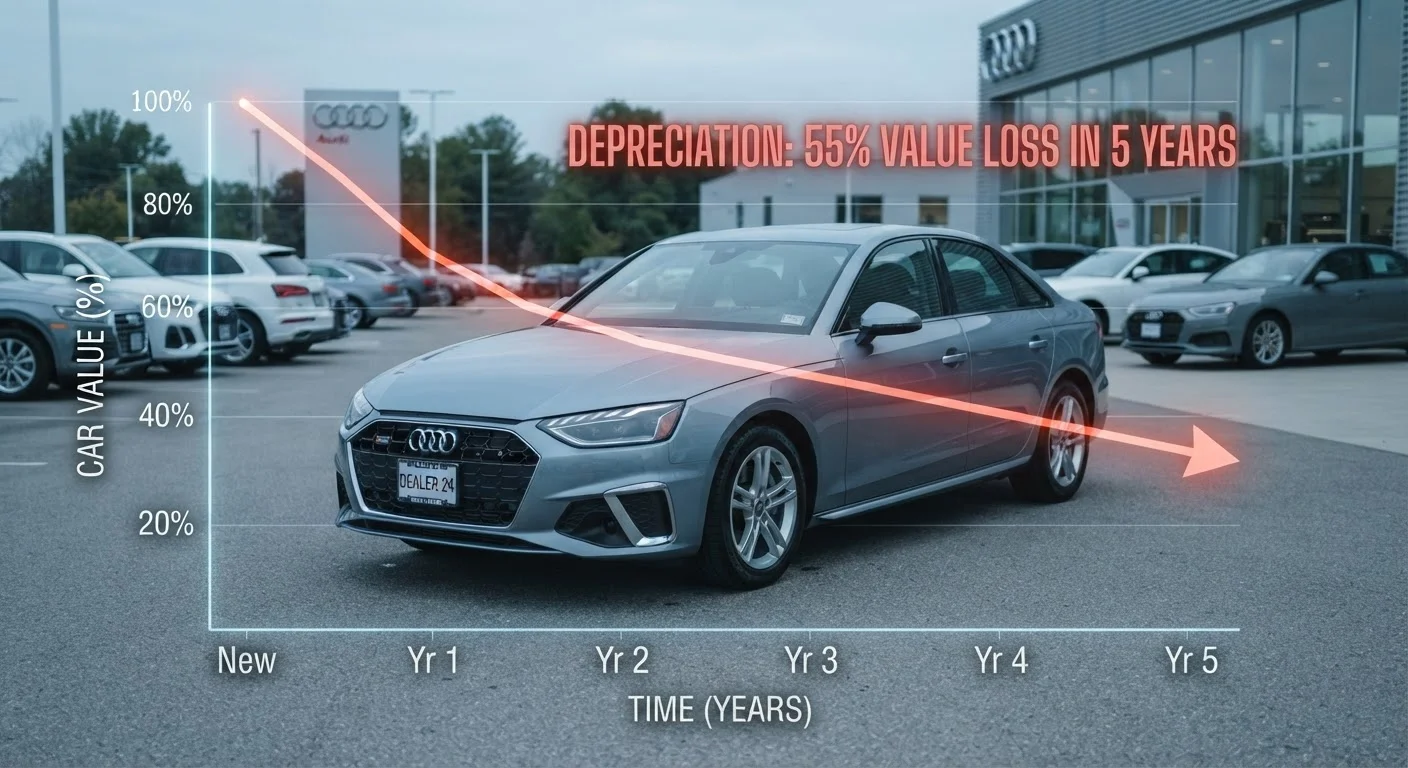
Depreciation is the loss in a vehicle's value over time. Every car is worth less tomorrow than it is today, and that shrinking value represents real money leaving your pocket whether you notice it or not. It's not a fee you pay on a bill — it's a cost you absorb silently every year you own the car.
Depreciation is calculated as the difference between a vehicle's purchase price and its market resale value at any given point; it is a recognized line item in total cost of ownership analyses used by automotive researchers and financial planners.
Why Depreciation Deserves More Attention
Most drivers focus on obvious car expenses: the monthly payment, the gas pump, the occasional repair bill. Depreciation rarely comes up in conversation, yet for many owners it accounts for more lost money than any of those line items combined.
According to data cited by automotive research organizations, depreciation can represent roughly 40% or more of the total cost of owning a new vehicle over a five-year period. That means a significant share of what you spend on your car isn't going toward fuel, maintenance, or insurance — it's simply value evaporating from an asset you're counting on.
See the full breakdown of annual car ownership costs to understand how depreciation fits alongside every other expense you're carrying.
~40%
Share of 5-year ownership cost from depreciation
Automotive research organizations commonly cite depreciation as representing roughly 40% or more of total new-vehicle ownership costs over five years.
15–25%
Typical first-year value loss for a new car
Industry analysts generally estimate new vehicles lose between 15% and 25% of their purchase value within the first twelve months, with variation by segment and demand.
~60%
Value remaining after 5 years for average car
Many mainstream vehicles retain roughly 40–60% of their original value after five years, depending on make, model, mileage, and market conditions.
How Depreciation Actually Works
The moment a new car is registered and driven off the dealership lot, its market value drops — because it's no longer new. From that point on, age, mileage, condition, and shifting consumer demand continue to push the value down.
The depreciation curve isn't linear. The steepest losses typically happen in the first one to three years. After that, the rate of decline tends to flatten, though it never fully stops. A car worth $40,000 today might be worth $28,000 in three years and $20,000 in five — not because anything broke, but simply because time passed.
Several factors influence how fast a specific vehicle depreciates:
- Make and model reputation — vehicles with strong reliability records and consistent demand tend to hold value better.
- Mileage — higher mileage signals more wear, reducing resale appeal.
- Condition — visible damage, stained interiors, and deferred maintenance all accelerate value loss.
- Market demand — fuel prices, economic conditions, and consumer trends can shift which types of vehicles buyers want.
- Color and features — unusual color choices or missing popular features can narrow the pool of interested buyers.
The Strategic Moves That Reduce Depreciation's Bite
You can't eliminate depreciation, but you can make smarter decisions that reduce how hard it hits you.
Consider buying used. A vehicle that's two to three years old has already absorbed the sharpest part of the depreciation curve. You step in at a point where the value loss has slowed, often getting a vehicle that still has significant useful life remaining at a meaningfully lower price. The new car vs. used car cost comparison walks through exactly how this math plays out.
Maintain the vehicle consistently. A documented service history, clean interior, and undamaged exterior tell future buyers the car was cared for — and that translates into a higher resale price. Daily driving habits that extend your car's life are worth building even if resale isn't your primary concern.
Think about resale demand before you buy. Certain vehicle segments, trims, and even colors consistently attract more buyers. Checking resale data before committing to a purchase is part of reading a vehicle's true cost — a process covered in the total cost of ownership guide.
Avoid excessive mileage. If your annual mileage runs well above average, your vehicle will depreciate faster than the same car with typical use. This doesn't mean avoiding the car — just factor it into your expectations at resale time.
Depreciation isn't the only hidden drain on your car budget. The ways drivers quietly waste money article surfaces other overlooked costs worth addressing alongside it.
This article is for general informational and educational purposes only and does not constitute personalized financial or purchasing advice. Consult a qualified financial professional for guidance specific to your situation.