

Key Takeaways
Tune-Up (Modern Vehicle)
A tune-up is a scheduled maintenance service that restores your engine's performance and efficiency by replacing worn ignition and fuel-system components. In today's vehicles, it typically centers on spark plugs, filters, and an inspection of ignition-related parts. Unlike older cars, modern vehicles no longer require distributor caps, points, or carburetor adjustments — so the scope is narrower but still meaningful.
Modern engine control units (ECUs) compensate for degraded components like worn spark plugs by adjusting timing — which can mask performance loss until problems become significant.
Why the Word 'Tune-Up' Causes Confusion
Ask ten drivers what a tune-up includes and you'll get ten different answers. That's because the term carries decades of automotive history — and the job has changed dramatically. On a 1970s vehicle, a tune-up meant replacing points, condenser, distributor cap, rotor, and carburetor adjustments. Today's fuel-injected, computer-managed engines have none of those parts. The confusion persists because shops and drivers still use the same word for a very different service.
This gap leads to real problems: drivers either pay for services they don't need, or they assume they're covered when they're not. Understanding what a tune-up actually involves on a modern vehicle helps you ask the right questions and avoid unnecessary costs. For a broader look at how outdated thinking affects car care decisions, see our piece on common car maintenance myths.
What a Modern Tune-Up Typically Includes
On most vehicles built in the last 25 years, a tune-up centers on three core items:
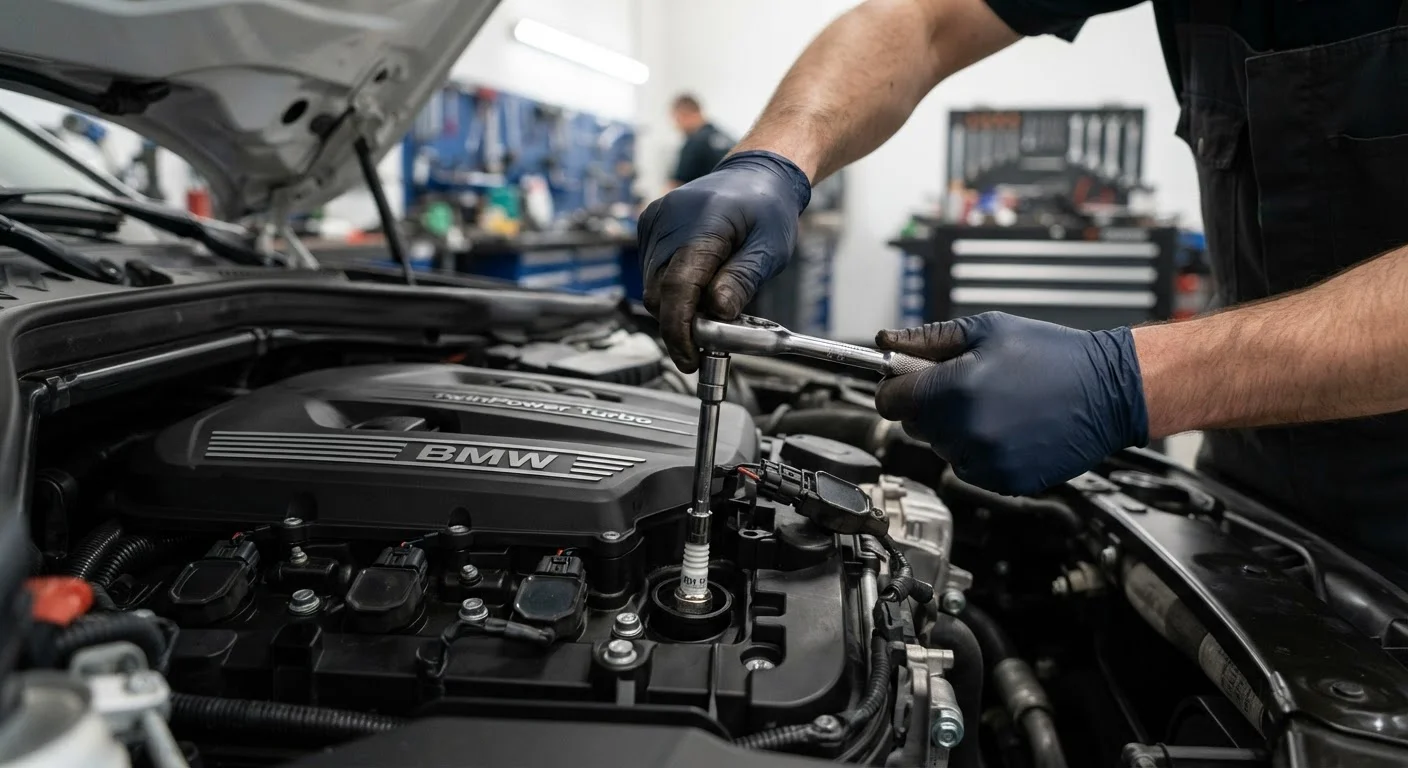
- Spark plug replacement: This is the heart of a modern tune-up. Worn plugs misfire, reduce power, and hurt fuel economy. The replacement interval depends on plug type — copper plugs wear faster than iridium or platinum versions, which can last significantly longer.
- Engine air filter replacement: A clogged air filter restricts airflow to the engine, reducing combustion efficiency. This is also one of the easier DIY maintenance tasks on most vehicles.
- Ignition system inspection: A technician will typically check ignition coils (which replaced distributors on modern cars), spark plug wires if present, and look for any signs of misfires or electrical issues.
Many shops also include a fuel system inspection — checking injectors for buildup and sometimes performing a fuel induction cleaning. Whether that's necessary depends on your mileage and driving patterns, not a fixed schedule.
Your Owner's Manual Beats Any Generic Schedule
Every manufacturer specifies exact intervals for spark plugs, filters, and inspections based on your engine design and intended use. A shop's generic "every 30,000 miles" recommendation may be too conservative for a vehicle with long-life iridium plugs rated for 100,000 miles — or too lenient for a high-performance engine. Always cross-reference recommendations with your manual before authorizing service.
It's worth noting what a standard tune-up does not cover: oil changes, transmission fluid, coolant, brake fluid, cabin air filters, and tire condition are all separate services. For items that often get overlooked, our article on maintenance items diligent drivers overlook is a useful companion read.
How to Know When Your Car Actually Needs One
The most reliable source is your owner's manual — not a mileage sticker on your windshield, not a general rule of thumb. Manufacturers specify spark plug intervals, filter change recommendations, and inspection milestones for your exact engine. These figures vary significantly between vehicles.
Watch for these signs that ignition components may be due for attention:
- Rough idle or engine vibration at a stop
- Reduced acceleration or sluggish throttle response
- Noticeably worse fuel economy over several fill-ups
- A check engine light accompanied by a misfire code
- Difficulty starting, especially in cold weather
None of these symptoms guarantee a tune-up is the fix — they can have other causes — but they're reasonable triggers for an inspection. Understanding which maintenance items are truly urgent can also help you prioritize your spending wisely.
30,000–100,000 mi
Typical spark plug replacement range
Interval varies significantly by plug type (copper vs. iridium/platinum) and engine design, per manufacturer specifications.
~4%
Potential fuel economy loss from worn plugs
The U.S. Department of Energy has noted that faulty or worn spark plugs can reduce fuel efficiency, with estimates in this general range depending on severity.
15–30 min
Typical DIY time for air filter swap
On most passenger vehicles with accessible filter housings, replacement requires only basic tools and no special training.
DIY or Professional Service: Knowing the Difference
Spark plug replacement is one of the more accessible DIY tasks in vehicle maintenance — on engines where the plugs are easy to reach. You'll need a torque wrench, a spark plug socket, and your vehicle's service manual to get the gap and torque specs right. Over-tightening or cross-threading a spark plug can cause costly damage, so patience matters. Air filter replacement is even simpler on most vehicles: remove a few clips or screws, swap the filter, and reassemble.
Where professional help makes sense: engines with coil-on-plug ignition systems buried under intake manifolds, turbocharged engines with tight packaging, or any situation where the diagnostic picture isn't clear. If a misfire code is present, a technician can pinpoint which cylinder is affected before parts are replaced blindly.
Building good maintenance habits extends well beyond tune-up intervals. Our guide on habits that quietly extend your car's life covers the day-to-day practices that reduce wear without adding cost.