

Key Takeaways
How One Skipped Service Becomes Several Expensive Repairs
Routine maintenance isn't just about keeping individual parts healthy — it's about preventing one worn or depleted component from putting undue stress on the systems around it. This is the compounding problem that catches many drivers off guard: a neglected task rarely fails in isolation.
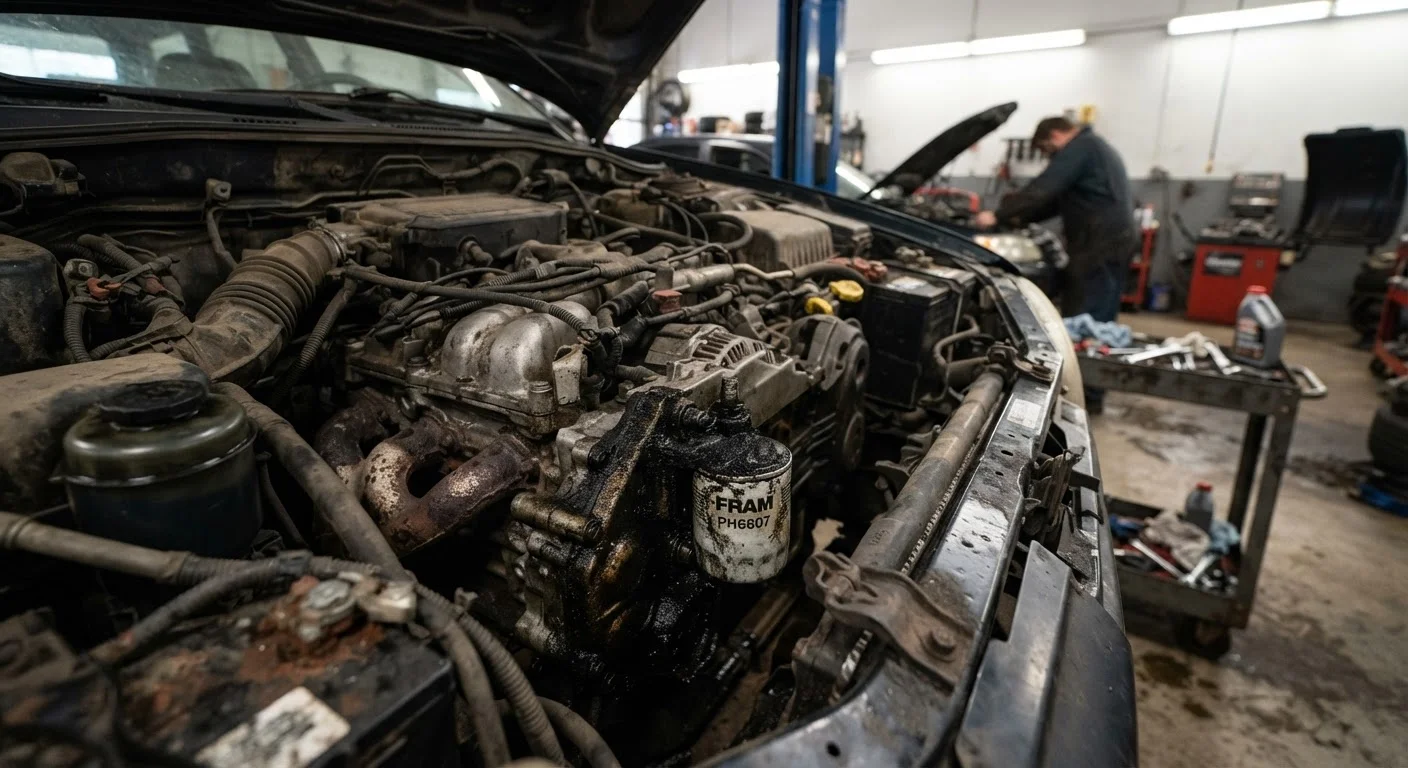
Consider engine oil. As oil degrades past its useful life, it loses viscosity and its ability to suspend contaminants. Those contaminants begin to coat components, restrict oil passages, and increase friction throughout the engine. What started as a skipped oil change can progress to sludge buildup, a failing oil pump, premature bearing wear, and eventually internal engine damage — each stage more expensive than the last.
The same pattern plays out across other systems. A clogged cabin air filter strains the HVAC blower motor. Low brake fluid masked by a slow leak leads to reduced hydraulic pressure and longer stopping distances. Understanding this chain reaction is the first step to breaking it. For a fuller picture of which items actually matter most, see which maintenance you can and can't skip.
Stretching oil changes well beyond the recommended interval to save money or time.
Why it happens: Modern engines and synthetic oils do last longer between changes, which can create a false sense of flexibility. Drivers often assume a few extra thousand miles won't matter.
Ignoring a low coolant warning or skipping coolant flushes on schedule.
Why it happens: Coolant doesn't visibly degrade the way oil does, so many drivers treat it as a set-and-forget fluid. Low coolant is also easy to dismiss when the temperature gauge looks normal — until it isn't.
Running a clogged air filter because it seems like a minor item.
Why it happens: Air filters are out of sight and the degradation is gradual, so there's rarely an obvious moment where something feels wrong. Drivers often skip them at oil changes to reduce the service bill.
Skipping tire rotations until uneven wear forces early replacement.
Why it happens: Tire rotation feels optional compared to more dramatic services. Without a visible consequence in the short term, it's easy to defer indefinitely.
Delaying a brake inspection after noticing squealing or a longer stopping distance.
Why it happens: Brake noise is easy to rationalize — dust, cold mornings, or minor wetness. Drivers often wait to see if it goes away rather than treating it as a signal.
Building the Habits That Keep Repairs Manageable
Avoiding the mistakes above doesn't require becoming a mechanic — it requires a light but consistent level of attention. Most of the early warning signs for the failures described here are detectable with a simple walk-around and under-hood check that takes less than five minutes.
Make it a habit to glance at your tires for uneven wear, listen for any new noises during braking or acceleration, and check fluid levels monthly. Your owner's manual remains the most reliable guide for service intervals tailored to your specific engine and drivetrain. Generic advice found online often doesn't account for the variation between a 4-cylinder commuter car and a turbocharged SUV.
Neglect Can Void Your Warranty
Many powertrain warranties require documented proof of routine maintenance performed at manufacturer-recommended intervals. If a major component fails and your service records show gaps, a dealer or manufacturer may deny the claim. Keep receipts, mileage logs, or shop invoices — even for tasks you handle yourself.
Drivers who stay consistent with the fundamentals — oil, coolant, brakes, tires, and filters — rarely face the kind of cascading repair bills that feel sudden but were months in the making. These habits that quietly extend your car's life complement every service interval on your calendar. And if you want to audit what you might already be overlooking, the maintenance items even diligent drivers miss is a useful next read.