

Money Basics

Monthly Budget Setup Checklist

Share
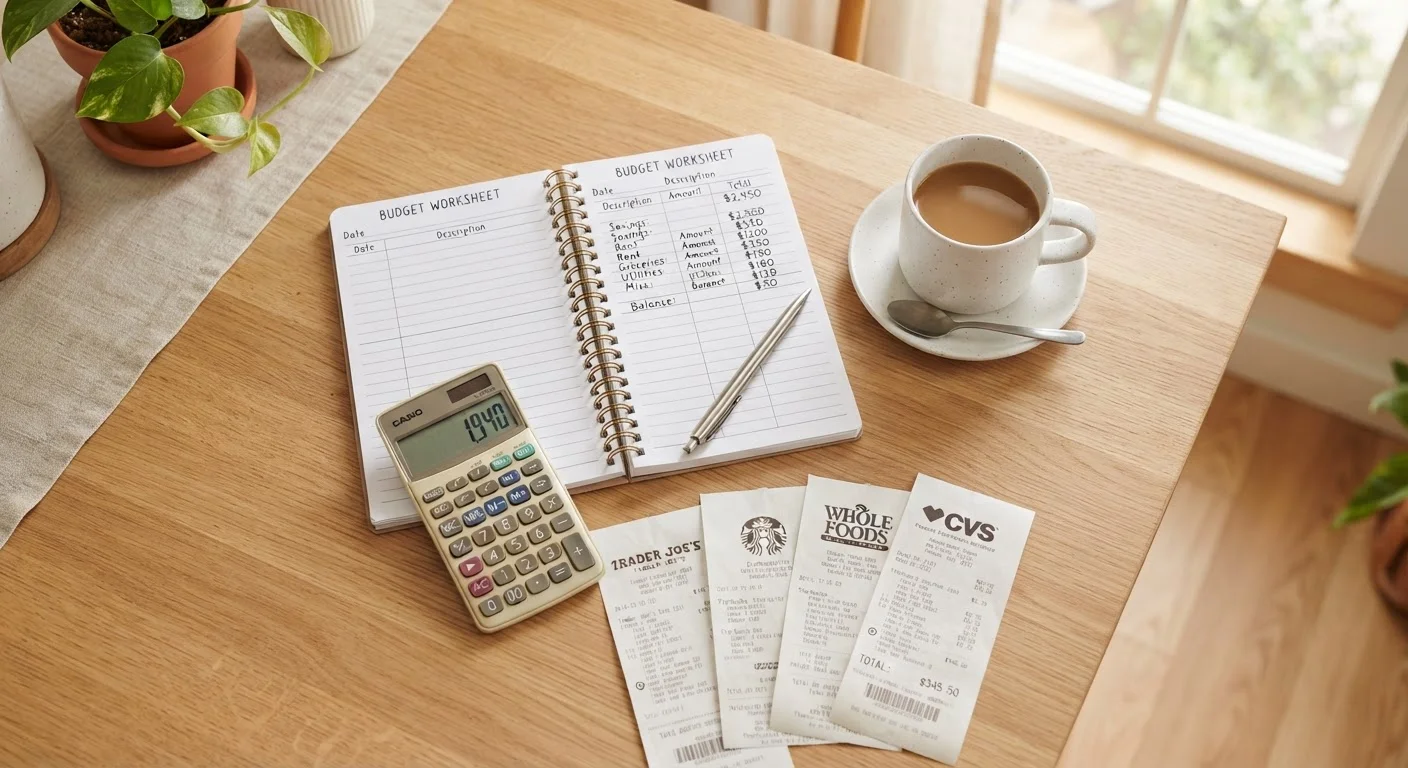
Open budget notebook on a kitchen table with calculator, coffee, and receipts

Key Takeaways

Gathering your income and expense numbers before you budget prevents guesswork.
Irregular expenses — like car repairs and annual fees — sink budgets when left out.
Every dollar you earn should be assigned a purpose before the month begins.
A budget that ignores savings isn't a complete plan.
Reviewing your budget at month-end makes the next month easier and more accurate.
30–60 min

Summary

22 items · 30–60 minutes

Why a Setup Checklist Makes Budgeting Stick

Most budgets fail not because of bad intentions but because of missing information. People sit down to plan their month without knowing their actual take-home pay, forgetting a subscription here, or overlooking a quarterly insurance bill there. Within weeks, the numbers don't add up, and the budget gets abandoned.

This checklist walks you through every step of building a monthly budget from scratch — from pulling your income numbers to assigning money to savings. Work through it once and you'll have a solid foundation. Work through it every month and budgeting becomes a reliable habit rather than a chore.

If you want deeper context on budgeting methods and frameworks, our full budgeting guide covers the landscape from start to finish. This checklist is the practical companion you reach for when it's time to actually sit down and do it.

Gather Your Income Information

Collect your last two to three pay stubs to confirm your actual take-home pay after taxes and deductions. Must
Add up any secondary income sources — freelance payments, side gigs, rental income, or government benefits. Must
If your income varies, use your lowest recent month as your baseline to avoid overspending on a high-income month. Should
Note the dates your paychecks arrive so you can match income to bill due dates. Should

List Your Fixed Expenses

Write down every recurring monthly obligation — rent or mortgage, car payment, minimum debt payments, and insurance premiums. Must
List each subscription service separately with its exact monthly cost so nothing hides in a lump estimate. Must
Record the due date for each fixed bill so you can check it against your pay schedule. Should

Estimate Your Variable Expenses

Review last month's bank and credit card statements to find your average spending on groceries, gas, and dining out. Must
Estimate utility costs using your last three months of bills and average them, since usage shifts seasonally. Must
Build in a realistic personal spending allowance — clothing, haircuts, hobbies — based on actual past habits, not wishful thinking. Should
Use a spending categories reference to make sure you haven't overlooked a whole area of your life. Nice to have

Account for Irregular and Annual Expenses

List every expense that doesn't arrive monthly — car registration, tax prep fees, holiday spending, annual subscriptions — and divide each by 12 to find a monthly sinking fund contribution. Must
Create a separate line in your budget for car maintenance, home repairs, or medical costs as a small monthly buffer. Should
Review last year's bank statements for one-off charges you forgot about and add them to your irregular list. Should

Set Savings and Financial Goals

Assign a specific dollar amount — not just "whatever's left" — to savings before you allocate money to discretionary spending. Must
Identify your primary savings goal for the month, whether it's an emergency fund, a vacation fund, or paying down debt faster. Must
Check out practical approaches at our saving money hub if you're unsure where to direct extra dollars. Nice to have

Balance and Confirm Your Budget

Subtract total planned expenses and savings from your take-home income — the result should be zero or very close to it, meaning every dollar has a job. Must
If expenses exceed income, identify which variable or discretionary categories you can reduce before the month starts. Must
Schedule a 15-minute mid-month check-in on your calendar to catch overspending before it snowballs. Should
Plan a brief end-of-month review to compare planned versus actual spending — this data makes next month's budget more accurate. Should

Tools to Have Ready Before You Start

You don't need specialized software to build a solid budget, but having the right resources at hand saves you from stopping and starting. Gather these before you begin.

Required

Bank and credit card statements (last 2–3 months)

Provides accurate data on your real spending habits across categories.

Required

Recent pay stubs

Confirms your exact take-home pay after taxes and deductions.

Required

Spreadsheet or budgeting worksheet

Gives you a structured place to enter income, expenses, and savings targets.

Required

List of recurring bills with due dates

Ensures fixed expenses are matched to the correct pay periods throughout the month.

Required

Calculator

Helps you divide annual expenses into monthly sinking fund contributions.

Optional

Calendar or reminder app

Used to schedule a mid-month check-in and an end-of-month budget review.

If your income varies month to month — freelance work, gig shifts, or seasonal jobs — see our guide on budgeting on an irregular income for strategies tailored to unpredictable paychecks.

Don't Let Irregular Expenses Wreck Your Plan

One of the most common reasons a first-month budget falls apart is forgetting expenses that don't show up every 30 days. Annual subscriptions, car registration, holiday gifts, and medical co-pays all feel like surprises — but they're predictable if you plan ahead.

The fix is a concept called a sinking fund — a dedicated savings pocket you add to each month so the money is there when the irregular bill arrives. For example, if your car registration costs $180 a year, you'd set aside $15 per month toward that cost.

Our article on irregular expenses goes deeper on this approach and shows you exactly how to calculate and categorize these costs. It's worth a read before you finalize your budget numbers.

Once your budget is running, automation can help you stay consistent — but it comes with trade-offs. Weigh the pros and cons of automating your budget before setting up automatic transfers.

Skipping Irregular Expenses Is the Most Common Mistake

If your budget only includes monthly bills, it will break the first time an annual or quarterly expense arrives. Always add a monthly sinking fund contribution for predictable irregular costs. Our article on why budgets fail in month two details how this and other early oversights unravel even well-intentioned plans.

This article provides general financial education and is not personalized financial advice. For guidance specific to your situation, consider consulting a qualified financial professional.

Money Basics Editorial Team is the collective byline for our editorial team and contributor network. Articles published under this byline or an editorial pen name are researched, written, and reviewed according to our editorial standards for clarity, consistency, and independence before publication.

View all articles by Money Basics Editorial Team →
Disclaimer: The content provided on our blog site traverses numerous categories, offering readers valuable and practical information. Readers can use the editorial team’s research and data to gain more insights into their topics of interest. However, they are requested not to treat the articles as conclusive. The website team cannot be held responsible for differences in data or inaccuracies found across other platforms. Please also note that the site might also miss out on various schemes and offers available that the readers may find more beneficial than the ones we cover.