

Money Basics

A Month-End Financial Audit: What to Review Before the Next Month Starts

Share
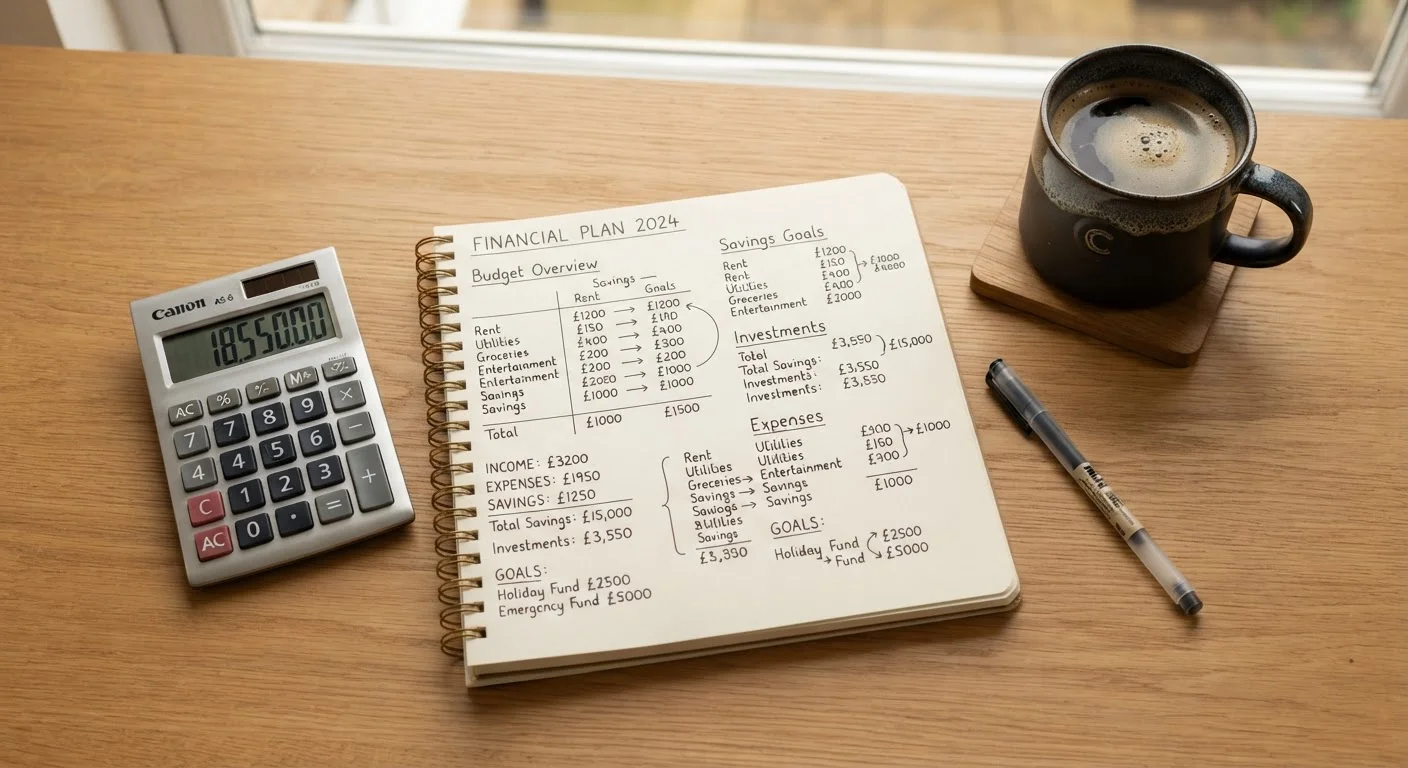
Notebook with financial notes next to a calculator and coffee mug on a wooden desk

Key Takeaways

Reviewing your finances at month-end helps you catch billing errors and unplanned spending before they compound.
Comparing actual spending to your budget reveals patterns you can act on right away.
Checking savings progress monthly keeps long-term goals from drifting out of sight.
A consistent review routine reduces financial stress by replacing uncertainty with clear numbers.
Small adjustments made each month add up to meaningful financial improvement over time.
30–60 min

Summary

22 items · 30–60 minutes

Why a Month-End Audit Is Worth 30 Minutes of Your Time

Most people check their bank balance occasionally and hope for the best. A month-end financial audit replaces that guesswork with a deliberate 30-to-60-minute review that answers three questions: Where did my money actually go? Am I moving toward my goals? What do I need to change next month?

You don't need a finance degree or fancy software to do this well. A bank's transaction history, a simple spreadsheet, and a quiet half-hour are enough. The budgeting basics hub has context if you're building these habits from scratch.

The checklist below is organized into logical stages — gather your numbers first, then review spending, then check savings and upcoming obligations. Work through it in order and you'll finish with a clear picture of where you stand and a concrete plan for the month ahead.

Required

Bank or credit union online portal

Download transaction history and statements for the month being reviewed.

Required

Spreadsheet (any free option works)

Compare budgeted amounts to actual spending by category and track the differences.

Optional

Budgeting or expense-tracking app

Automatically categorize transactions if you prefer not to sort them manually.

Optional

Paper notebook or digital notes app

Jot down observations, questions, and action items as you work through the checklist.

How to Use This Checklist

Set a recurring calendar reminder for the last two or three days of each month. Pull up your bank and credit card statements, your budget (even a rough one), and any notes you kept about irregular expenses during the month. If you've never built a budget before, the article Your First Monthly Budget is a practical starting point before you run this audit the first time.

For each item below, mark it done only after you've actually looked at the number — not just assumed it's fine. That moment of verification is where most billing errors and subscription creep get caught.

Unrecognized Charges Require Prompt Action

If you find a charge you don't recognize, contact your bank or card issuer right away — don't wait until next month. Federal consumer protection rules give you a limited window (commonly 60 days from your statement date) to dispute unauthorized credit card charges. Waiting too long can forfeit your right to a refund. When in doubt, call the number on the back of your card immediately.

Gather Your Documents

Download or open statements for every bank account and credit card used during the month. Must
Locate your budget from the start of the month — even if it was rough — so you have a baseline for comparison. Must
Collect any paper receipts, expense notes, or photos of receipts you captured during the month. Should
Note any one-time income or irregular income (freelance payment, tax refund, gift) you received this month. Must

Review Spending vs. Budget

Compare actual spending in each category to what you budgeted — write down the difference, positive or negative. Must
Identify the top two or three categories where you consistently overspent and note a likely reason for each. Must
Flag any transaction you don't recognize and research it before assuming it's legitimate. Must
Check for duplicate charges — two identical amounts from the same merchant in a short window. Must
Use your transaction history to categorize spending if you haven't already; the Tracking Every Dollar walkthrough explains a simple method. Should

Audit Subscriptions and Recurring Charges

List every recurring charge that posted this month and confirm you're still actively using each service. Must
Check whether any free trials converted to paid subscriptions without your notice this month. Must
Look for annual subscriptions that renewed — these can appear as large one-time charges easy to overlook. Should
Cancel or downgrade any subscription that hasn't been used in the past 30 days. Nice to have

Check Savings Progress

Confirm the planned savings transfer actually moved into your savings or emergency fund account. Must
Calculate the gap between your savings goal and your current balance, then note how many months remain. Must
If you underfunded savings this month, identify one spending category to trim to make it up next month. Should

Review Debt and Credit

Confirm minimum payments on all debts posted on time — log any late fees and dispute errors promptly. Must
Check your credit card utilization (balance ÷ credit limit) — keeping it below 30% generally supports a healthy credit score. Should
Note total interest paid this month across all balances so you can see the real cost of carrying debt. Nice to have

Plan for Next Month

List any known irregular expenses coming next month (annual fees, car registration, holidays) and build them into the budget now. Must
Set or adjust two or three specific spending limits based on what you learned from this month's review. Must
Use the Monthly Budget Setup Checklist to formalize your next-month plan once this audit is complete. Should

This article is for general informational and educational purposes only. It is not personalized financial, tax, or legal advice. Consult a qualified financial professional before making decisions specific to your situation.

Money Basics Editorial Team is the collective byline for our editorial team and contributor network. Articles published under this byline or an editorial pen name are researched, written, and reviewed according to our editorial standards for clarity, consistency, and independence before publication.

View all articles by Money Basics Editorial Team →
Disclaimer: The content provided on our blog site traverses numerous categories, offering readers valuable and practical information. Readers can use the editorial team’s research and data to gain more insights into their topics of interest. However, they are requested not to treat the articles as conclusive. The website team cannot be held responsible for differences in data or inaccuracies found across other platforms. Please also note that the site might also miss out on various schemes and offers available that the readers may find more beneficial than the ones we cover.