

Key Takeaways
Option A
Sinking Fund
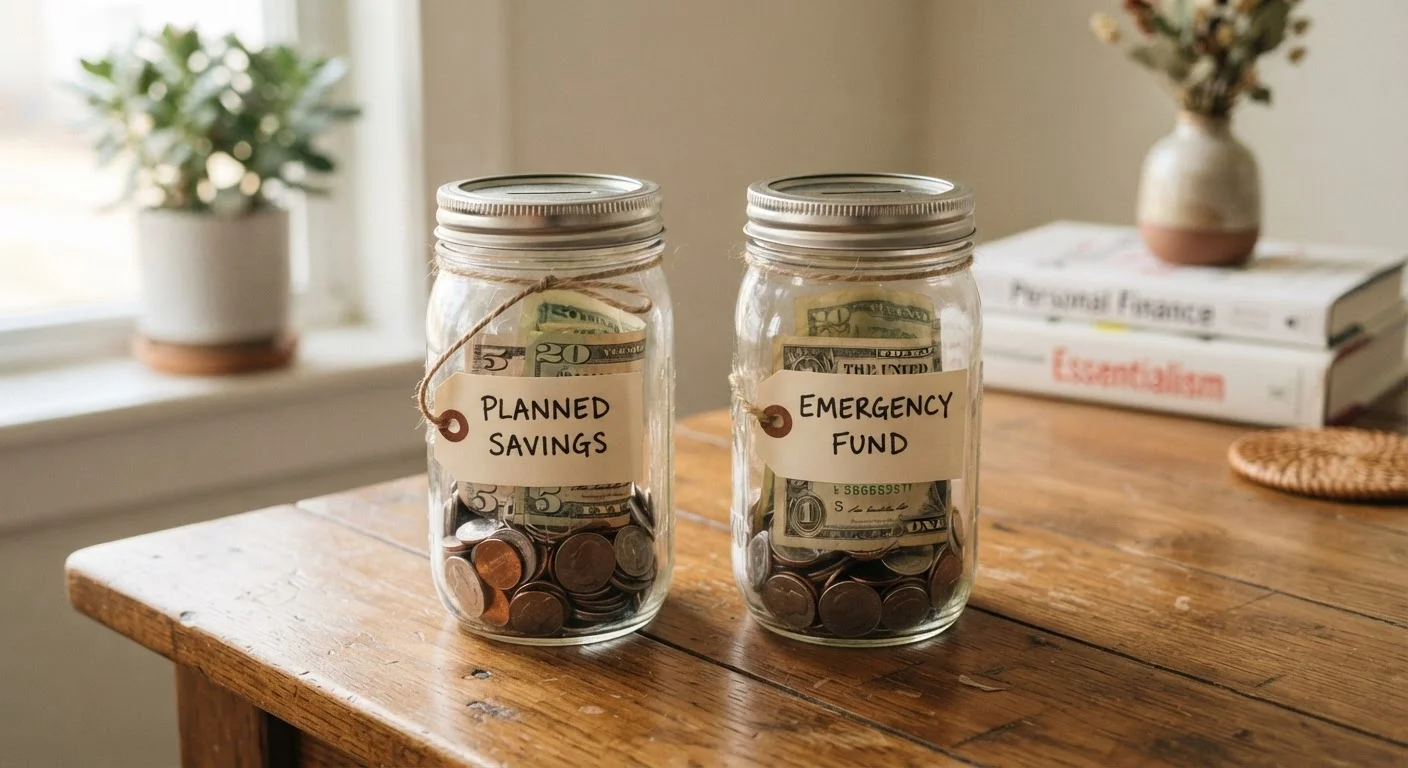
The planned savings account for expenses you see coming.
Best for: Anyone who wants to budget for predictable but irregular costs — like car registration, holiday gifts, or a vacation — without scrambling when the bill arrives.
Option B
Emergency Fund
The financial safety net for life's unexpected hits.
Best for: Anyone who needs a cushion against true financial surprises — job loss, a medical bill, or a sudden major repair — that could otherwise derail their budget.
If you want to stop dreading big, predictable bills
Sinking Fund
Spreading the cost of known expenses — car insurance renewals, holiday travel, annual subscriptions — across many months removes the financial sting when they arrive.
If you have no financial cushion for job loss or a medical crisis
Emergency Fund
Without a dedicated emergency reserve, any unexpected expense risks derailing your budget or pushing you into debt. Build this first if you have nothing set aside.
If you're already stable but want a complete savings system
Both
Using sinking funds alongside an emergency fund means planned costs don't eat into your safety net, and your safety net stays available for true emergencies only.
What Each Account Actually Does
Think of a sinking fund as a savings account with a scheduled job. You pick an upcoming expense — say, $1,200 for car insurance due in 12 months — and set aside $100 a month until you reach the goal. When the bill hits, the money is already there. No stress, no debt, no surprise. Sinking funds work especially well for the irregular expenses most budgets ignore: annual fees, back-to-school shopping, planned home maintenance, or holiday gifts.
An emergency fund, by contrast, is not aimed at any specific expense. It exists purely as a buffer against events you cannot predict — a layoff, a burst pipe, an unexpected medical bill, or a car breakdown on the highway. You don't touch it for anything you could have planned for; it only activates when genuine financial disruption strikes.
The simplest way to keep them straight: if you knew it was coming, that's a sinking fund situation. If it blindsided you, that's what your emergency fund is for.
How They Compare Side by Side
The two accounts share some surface-level similarities — both involve setting money aside regularly, both work best in a separate account away from daily spending — but their structures are fundamentally different.
| Criterion | Sinking Fund | Emergency Fund |
|---|---|---|
| Purpose | Save for a known, planned expense | Cover unexpected financial shocks |
| Goal amount | Specific dollar target per expense | 3–6 months of living expenses (general guidance) |
| Timeline | Fixed end date tied to the expense | Ongoing — replenish after use |
| When you spend it | On schedule, for a planned purchase | Only during a genuine financial crisis |
| Number of funds | Often several running at once | Typically one dedicated account |
| Examples | Car insurance, vacation, holiday gifts | Job loss, medical bills, major repairs |
Notice that a sinking fund has a finish line: once you've saved the target amount, you spend it and potentially start a new one. An emergency fund never really closes. You replenish it after a withdrawal and let it grow over time as your income and expenses change. Consider keeping both in a high-yield savings account so your idle dollars earn more while they wait.
Building Both Without Overcomplicating It
Most financial educators suggest prioritizing a starter emergency fund — often cited as $500 to $1,000 — before aggressively funding other savings goals. Once that cushion exists, you can layer in sinking funds for the predictable costs showing up on your calendar. Over time, the goal for a full emergency fund is typically three to six months of essential living expenses, though the right amount depends on your income stability, household size, and expenses.
A practical approach: list every large, irregular expense you expect in the next 12 months. Divide each total by the number of months until it's due. That's your monthly sinking fund contribution per goal. Add those up, then look at what's left in your budget for the emergency fund top-up. The pay-yourself-first principle pairs well here — automating transfers on payday means you save before you have a chance to spend.
Understanding your fixed versus variable expenses makes this process cleaner. Fixed costs are easy to plan around; variable ones take more estimating. Either way, having both funds running simultaneously means a car repair doesn't raid your vacation savings, and a job loss doesn't wipe out the money you earmarked for holiday gifts.
This article is for general informational purposes only and does not constitute personalized financial advice. For guidance specific to your situation, consider speaking with a qualified financial professional.