

Key Takeaways
What Subscription Creep Actually Means
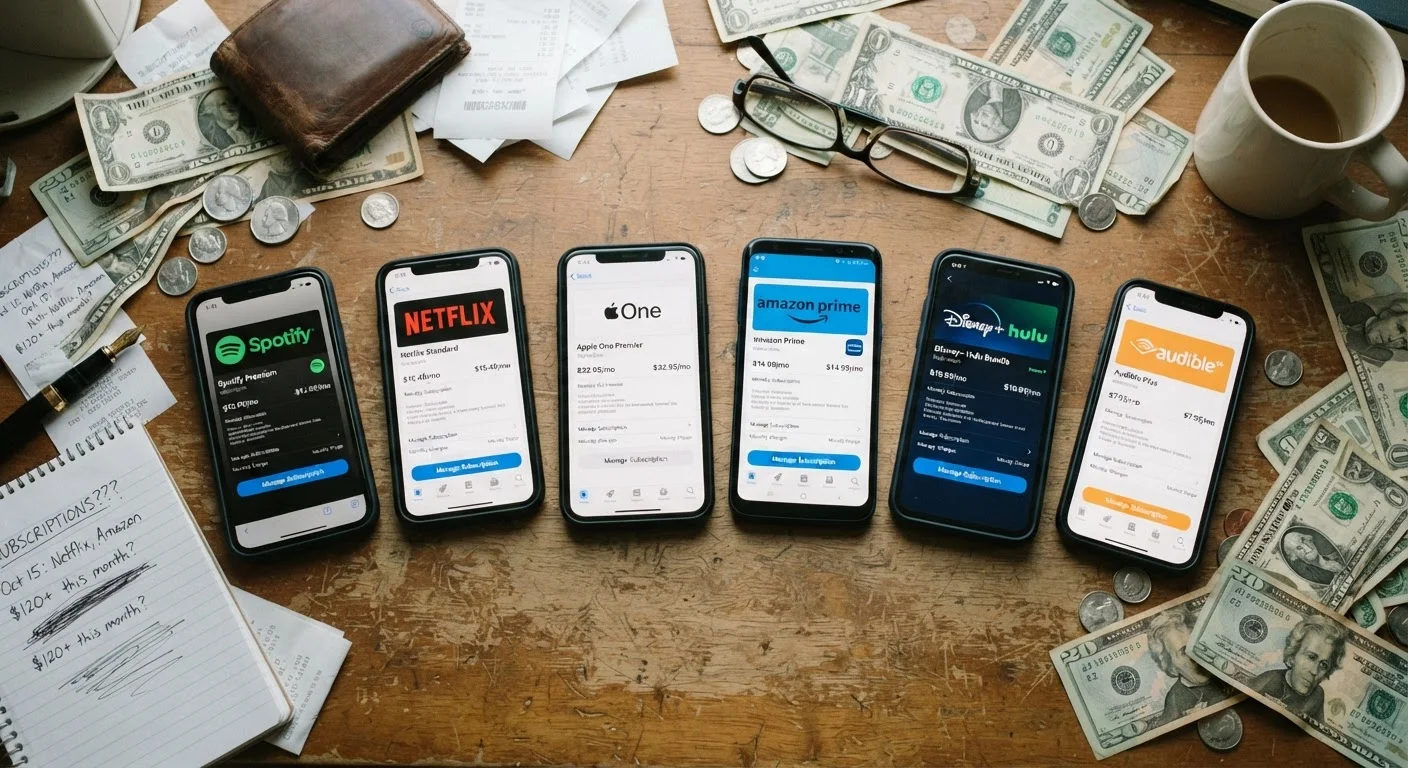
Subscription creep is what happens when your recurring charges grow slowly, one small sign-up at a time, until your total monthly spending on subscriptions is far higher than you'd ever consciously agree to. It's not one big decision — it's dozens of small ones that never get revisited.
Think about the last 12 months. A streaming service here, a fitness app there, a cloud storage upgrade, a news site, a food delivery membership. Each one felt reasonable at the time. Together, they can easily add up to hundreds of dollars a year — money that leaves your account on autopilot, every month, whether you're getting value or not.
The good news is that subscription creep is one of the easier budget leaks to fix, once you know where to look. It doesn't require lifestyle overhauls or sacrifice — just a deliberate look at what you're actually paying for. If you're working on building a broader spending plan, the budgeting basics hub is a solid place to start.
The Mistakes That Let Subscriptions Pile Up
Subscription creep rarely happens because someone is careless with money. It happens because subscription services are specifically designed to be easy to start and easy to forget. Understanding the patterns that let charges accumulate is the first step toward stopping them.
Signing up for free trials without setting a cancellation reminder.
Why it happens: The offer feels risk-free in the moment, and the charge date feels far away. Most people intend to cancel but never set a concrete reminder.
Paying for shared or family plans that only one person still uses.
Why it happens: Family plans are set up during a busy period and rarely revisited. Household members stop using a service, but no one pulls the plug because the cost feels shared and therefore small.
Missing price increases because auto-pay makes the charge invisible.
Why it happens: When a service raises its price by a few dollars, most people don't notice because they never manually look at the charge. The new amount just slides through.
Keeping subscriptions on the assumption they'll be used "next month."
Why it happens: People feel guilty canceling something they paid for, so they keep it active hoping to get value from it eventually. This is a classic sunk-cost trap — holding onto something because of what you already spent, not what it's currently worth.
Ignoring annual subscriptions because they bill infrequently.
Why it happens: Annual charges only appear once on a bank statement, making them easy to overlook during month-to-month budgeting. Many people forget they even signed up.
Subscriptions aren't the only category where small, recurring costs go unnoticed. Irregular expenses like annual fees and seasonal bills work the same way — infrequent enough to miss, consistent enough to matter.
How to Do a Simple Subscription Audit
This Is General Information, Not Financial Advice
The guidance in this article is educational and applies to general budgeting concepts. It is not personalized financial advice. For decisions specific to your financial situation, consult a qualified financial professional.
A subscription audit doesn't need to be complicated. Set aside 20 minutes and work through these steps:
- Pull up the last two months of bank and credit card statements. Look at every line item — not just the ones you recognize. Subscription charges sometimes appear under parent company names that don't match the product name you know.
- Search your email for the word "subscription," "renewal," and "receipt." This catches annual charges and services you may have signed up for through a different payment method.
- List every recurring charge. Write down the service name, the amount, and how often it bills.
- Ask the 30-day question for each one: Did I actually use this in the past 30 days? If yes, keep it for now. If no, mark it for cancellation or review.
- Cancel anything you marked. Don't defer this step — do it the same day while you have momentum.
You may also find that reviewing subscriptions surfaces other patterns in your spending. Many of the same habits that let subscriptions pile up also show up in other areas — similar to how grocery overspending builds up quietly through accumulated small decisions.
This article is for general informational and educational purposes only and does not constitute personalized financial advice. For guidance tailored to your specific situation, please consult a qualified financial adviser or other licensed professional.