

Key Takeaways
Why Standard Pet Gear Often Falls Short for Senior Animals
Most pet supplies are designed with healthy adults in mind. A food bowl at floor level, a bed with a 6-inch step-up lip, or a collar-and-leash setup that puts pressure on the neck — these work fine for a young, mobile animal. For a pet with stiff joints, reduced muscle mass, or declining senses, the same gear can cause daily frustration or even pain.
Dogs are typically considered seniors around age 7 to 10 depending on size, with larger breeds aging faster. Cats generally enter their senior phase around 10 to 12 years. But the calendar isn't the whole story — what matters most is the individual animal's physical condition, which a vet is best positioned to assess. For guidance that spans your pet's whole life, the Pet Health Basics hub is a useful starting point.
The gear adaptations that matter most tend to address three core challenges: joint and mobility limitations, reduced muscle strength and balance, and sensory decline such as diminished vision or hearing. The steps below walk through how to identify which of these your pet is facing and make targeted changes — without overbuying.
Consult Your Vet Before Major Changes
Changes in your pet's mobility, appetite, or comfort level can signal underlying health conditions — not just aging. Before investing in adaptive gear, schedule a veterinary visit to rule out treatable causes. Gear supports quality of life but does not replace medical care.
What You'll Need Before You Start
This process doesn't require specialized expertise, but it does require honest observation and a veterinary partnership. Gather your notes on your pet's behavior before any shopping, and keep your vet's input at the center of your decisions.
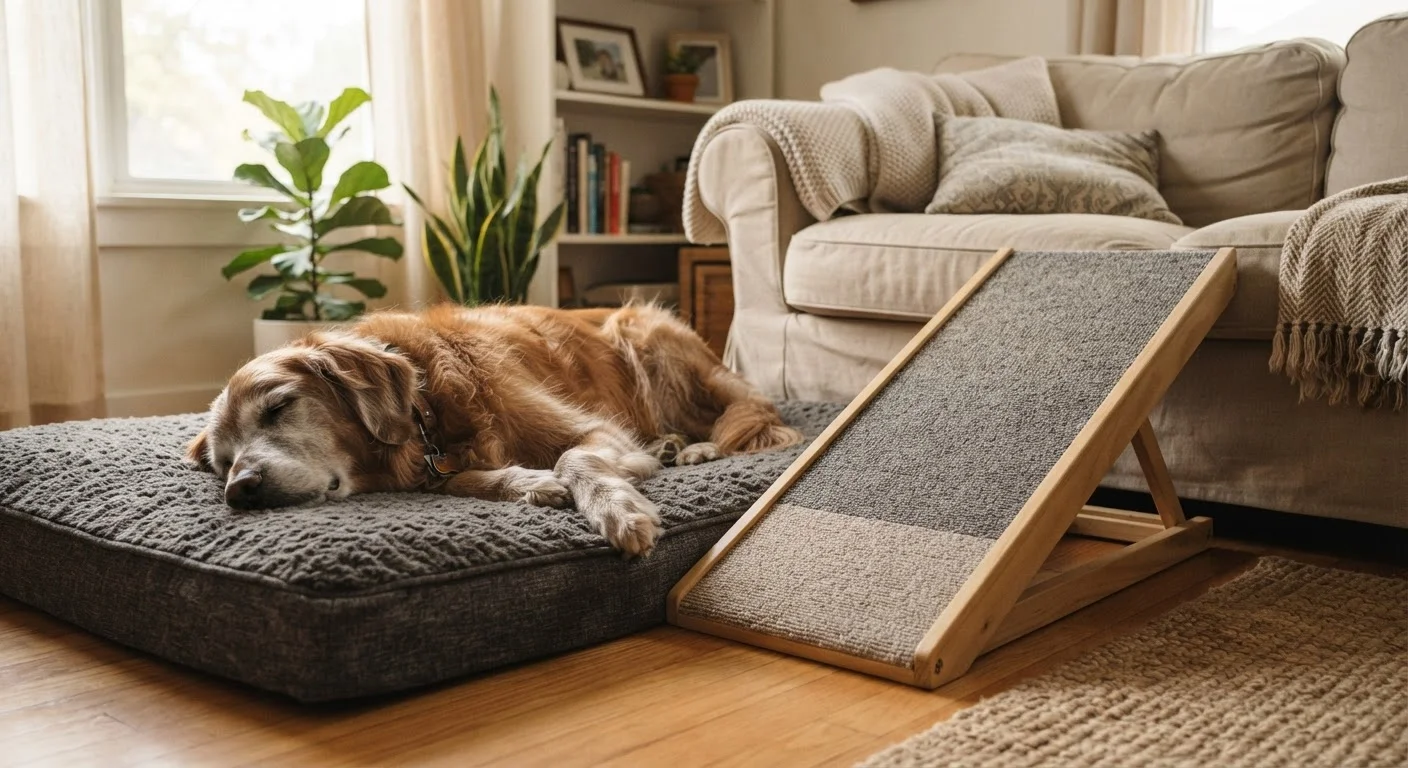
Orthopedic or memory-foam pet bed
Provides pressure-relieving support for joints affected by arthritis or general age-related stiffness.
Pet ramp or low-rise steps
Allows pets with reduced mobility to access furniture, vehicles, or elevated sleeping spots without jumping.
Raised feeder or elevated food bowl
Reduces neck and shoulder strain during meals, particularly helpful for large dogs or pets with spinal issues.
Non-slip floor mats or rugs
Provides traction on hard flooring surfaces where arthritic pets commonly slip and lose confidence.
Harness with rear or full-body support
Assists owners in helping dogs with weak hindquarters navigate stairs or stand up safely.
Low-entry litter box (cats)
Makes it easier for older cats with stiff joints to enter and exit without having to step over a high side wall.
What you will need
Observe your pet's daily routine for signs of strain
Before buying anything, spend a few days watching how your pet moves through their normal day. Note whether they hesitate before jumping onto furniture, struggle to stand after lying down, eat with their neck strained downward, or slip on smooth floors. These observations are your roadmap — they tell you where gear can genuinely help rather than just adding clutter.
Schedule a veterinary visit to identify physical limitations
Many of the changes that look like normal aging — reluctance to climb stairs, reduced appetite, changes in posture — can be signs of treatable conditions like arthritis, dental pain, or neurological changes. Your vet can identify what's driving the behavior and recommend whether physical supports, medication, or both are appropriate. This step shapes every gear decision that follows.
Upgrade your pet's sleeping surface
A firmer, pressure-distributing bed is one of the highest-impact changes for a senior pet. Older animals spend more time resting, and joints that press against thin cushioning or hard floors can cause or worsen soreness. Look for beds with dense foam bases and low entry sides. Our guide on what makes pets actually use their beds covers the behavioral factors that determine whether your pet will take to a new sleeping spot.
Add ramps or steps where your pet used to jump
Repeated jumping on arthritic or weakened joints accelerates wear and increases injury risk. A ramp or set of low-rise steps near a couch, bed, or vehicle can remove that strain entirely. Introduce the ramp at floor level first, rewarding any engagement with it. Gradually raise it to the target height over several sessions.
Improve floor traction throughout your home
Hard flooring is a common hazard for senior pets whose muscle tone has declined. Slipping — even without a fall — creates anxiety and causes pets to avoid movement, which accelerates physical decline. Non-slip rugs, yoga mat runners, or peel-and-stick carpet tiles in high-traffic areas provide reliable footing. Focus on hallways, the area around food and water bowls, and any spot where your pet regularly stands up from rest.
Evaluate and adjust feeding setup
For dogs with neck, shoulder, or spinal stiffness, eating with their head lowered to floor level puts unnecessary strain on those areas. A raised feeder positioned at roughly chest height can ease that tension. For cats, low-sided dishes reduce the need to lean over a bowl edge. Our article on feeding gear that's actually worth having helps separate genuinely useful tools from marketing noise.
Reassess gear every few months as your pet's needs evolve
Senior pets change faster than younger animals. A ramp that worked well at ten may need a gentler incline at thirteen. A bed that suited your dog's early arthritis may need additional bolster support as the condition progresses. Build in a quarterly review — alongside vet check-ins — to make sure the gear you have still fits the animal in front of you. For a broader look at supporting your pet through every life stage, see our guide on adapting care from puppyhood to senior years.
Introduce New Gear Slowly
Senior pets can be creatures of habit and may resist unfamiliar equipment. Place new items like ramps or raised feeders near familiar spots, use encouragement rather than force, and give your pet several days to investigate at their own pace. Patience matters more than speed here.
Getting the Right Fit for Your Pet's Situation
Not every senior pet needs every adaptation listed above. A 10-year-old cat who still leaps confidently onto counters doesn't need a ramp — yet. A large dog with documented hip dysplasia absolutely needs floor traction and joint-supportive bedding regardless of age. Let observed symptoms and veterinary guidance drive your priorities, not product marketing aimed at the senior pet category.
It's also worth noting that some gear transitions require patience. Older pets with established habits may take days or weeks to accept a new bed, ramp, or feeding setup. Forcing the change tends to backfire; gradual, positive introduction works better. If your senior pet also has behavioral needs that have shifted with age, the broader strategies in our guide on lifelong pet training and enrichment can help you support both physical and mental wellbeing together.