

Key Takeaways
Start With What You Can Actually Spend
Most budget travel advice skips the first and most important step: defining a real number. Before picking a destination, decide the total you can spend without financial stress — not what you hope to scrape together. A workable domestic trip budget includes transportation, lodging, food, activities, and a contingency of roughly 10–15% for the unexpected.
Once you have that number, work backward. If your total is $800 for a long weekend, you can quickly see what's realistic: a driving destination within a few hours, budget lodging, and modest daily food spending. Trying to force a $1,500 trip into an $800 budget guarantees either debt or a miserable experience. See our practical walkthrough for estimating real travel costs before committing to any destination.
Lock In Your Number Before You Search
Open a search for flights or hotels before you have a budget and you'll anchor to prices, not to what you can afford. Write down your total available spending first — then open the browser. This one habit prevents most budget overruns at the planning stage.
Where to Flex: High-Impact Savings
These are the categories where smart choices produce the largest savings with the least sacrifice.
Timing
Traveling off-peak — shoulder seasons, mid-week, or avoiding school-break windows — can reduce lodging and activity costs substantially. The tradeoff may be shorter hours at some attractions or unpredictable weather, but the savings are often the most significant lever available. A balanced look at off-peak trade-offs is worth reading before locking in dates.
Transportation Mode
Driving rather than flying often saves money when traveling within 500 miles, especially for groups or families where per-seat costs on flights multiply quickly. If flying, understand that ultra-low-cost carriers frequently add fees for bags, seat selection, and even carry-ons. Low base fares can balloon fast — add everything up before booking.
Lodging Type
Hotels aren't the only option. Vacation rentals, hostels, campgrounds, and state park cabins often deliver comparable comfort at lower prices. Flexibility on lodging type — rather than just hunting for cheap hotels — opens up more options. Hotel savings go beyond comparison platforms covers negotiation and timing strategies worth knowing.
60–70%
Share of trip budget typically spent on transport and lodging
General travel budgeting guidance consistently identifies these two categories as the dominant cost drivers for domestic trips.
10–15%
Recommended contingency buffer for any trip budget
Financial planners and travel advisors broadly recommend leaving this cushion to absorb unexpected costs without derailing the overall budget.
~500 miles
Driving distance threshold where road trips often beat flying
For solo travelers or small groups, flying typically becomes cost-competitive with driving beyond this range when all-in costs are compared.
Where Not to Cut Corners
Budget travel has a failure mode: cutting costs in places that generate larger costs later.
Travel Insurance
A non-refundable trip that gets canceled due to illness or a family emergency is a complete financial loss without coverage. Travel insurance is not a luxury when prepaid costs are significant.
Vehicle Condition
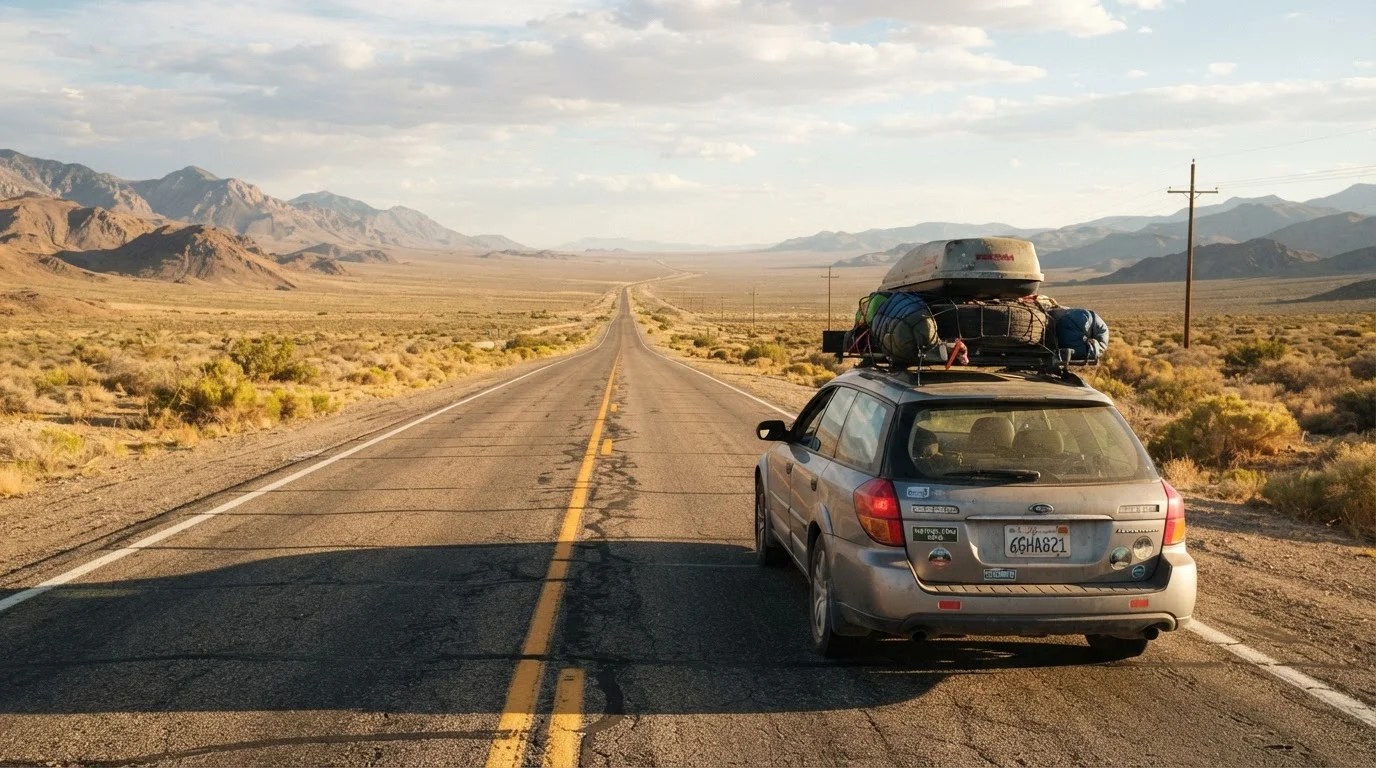
A road trip in a car with deferred maintenance — bald tires, low fluids, a warning light you've been ignoring — is a gamble. A breakdown mid-trip costs far more in towing and repairs than a pre-trip checkup would have. Have the car looked at by a qualified mechanic before a long drive.
Don't Skip Pre-Trip Vehicle Checks
A breakdown on a road trip is not just an inconvenience — it's a budget emergency. Towing, emergency repairs, and last-minute lodging while you wait for a fix can cost hundreds of dollars. Have a qualified mechanic inspect your vehicle before any long drive, especially if maintenance has been deferred.
Realistic Food Budgets
Severely underestimating food costs is one of the most common budget mistakes. Eating out three times a day in an unfamiliar city adds up fast. Budgeting honestly — and planning to offset some meals with groceries or a cooler — is smarter than hoping you'll find cheap options on the road.
Structuring Your Days Without Overspending
Once you arrive, daily spending is the budget's biggest variable. A few habits make a large difference.
- Plan at least one free or low-cost activity per day. National and state parks, free museum days, public beaches, and historic districts cost little or nothing. Build them into each day rather than leaving evenings and afternoons as open spending opportunities.
- Set a daily cash envelope or spending limit. Knowing you have $60 for the day creates friction before impulse purchases. Many travelers find a cash envelope more concrete than checking an app.
- Eat one meal per day from a grocery store. Breakfast from a supermarket — yogurt, fruit, bread — saves $10–$20 per person compared to sit-down dining without meaningfully reducing the trip experience. The same approach applies to snacks and drinks.
For more on managing on-the-ground spending, see practical guidance on managing food, transport, and activity costs while traveling.
The Costs Most Travelers Forget Until It's Too Late
These line items are easy to overlook in initial planning and easy to overspend on once you're traveling.
- Parking and tolls
- Urban destinations and highway routes often have significant tolls and daily parking fees. Check these in advance — parking in some cities can run $30–$50 per day.
- Resort and destination fees
- Some hotels charge mandatory resort fees not included in the advertised rate. Always check the full nightly rate before booking.
- Souvenir and incidental spending
- Small purchases accumulate. Budget a specific discretionary amount rather than treating souvenirs as outside the budget.
- Gas on road trips
- Calculate approximate fuel costs using your vehicle's real-world highway MPG, not the EPA estimate. Factor in current gas prices along your route, which can vary significantly by state and region.
Cost-saving habits that work across destinations and travel styles covers more of these overlooked categories in detail.
Putting It Together: A Simple Planning Order
The sequence of decisions matters as much as the decisions themselves. Here's a planning order that keeps budget constraints front and center:
- Set your total budget first. Everything else follows from this number.
- Choose a destination and dates that fit the budget — not the other way around.
- Book transportation and lodging early (or at least compare options). These two categories consume most of your budget and offer the largest savings when chosen deliberately.
- Estimate food costs realistically — a mix of dining out, groceries, and packed meals is both cheaper and more sustainable than eating every meal at a restaurant. Strategies for stretching a limited food budget can help you think through the grocery side of this.
- Identify free and low-cost activities before departure so you're not improvising.
- Leave a 10–15% buffer unspent in your plan. Trips rarely go exactly as budgeted, and that buffer is what keeps an unexpected expense from becoming a financial problem.
If you're newer to this process, a first-timer's roadmap to budget travel planning walks through each stage in more detail. The goal isn't a perfectly optimized trip — it's a trip you can afford, enjoy, and not regret financially when you get home.