

Key Takeaways
How a Car Battery Actually Works
Your car battery is a 12-volt lead-acid unit that stores chemical energy and converts it to electrical power on demand. When you turn the key or press the start button, the battery delivers a large burst of current to the starter motor, which cranks the engine. Once the engine is running, the alternator takes over — it recharges the battery and powers everything else electrical while you drive.
Understanding this two-part system matters: a failing alternator can drain a healthy battery, and a failing battery can stress an otherwise sound alternator. Symptoms that look like a battery problem are sometimes alternator problems, so knowing how they interact saves you from replacing the wrong part.
Most passenger vehicle batteries use flooded lead-acid chemistry, though absorbed glass mat (AGM) batteries are increasingly common in vehicles with stop-start systems or heavy accessory loads. AGM batteries are sealed, handle deeper discharge cycles better, and typically cost more — but they are not interchangeable with standard flooded batteries without checking your vehicle's requirements first.
Signs Your Battery Is Starting to Fail
Battery decline is gradual, which is why it can catch drivers off guard. Watch for these warning signs:
- Slow or labored cranking — the engine turns over sluggishly, especially on cold mornings.
- Battery warning light — illuminated on the dashboard indicates a charging system issue.
- Swollen or bloated case — caused by excessive heat; a physically deformed battery should be replaced immediately.
- Corrosion on terminals — a white or blue-green powdery buildup around the posts that can interrupt electrical flow.
- Electrical gremlins — flickering lights, slow power windows, or accessories behaving erratically.
- Frequent need for jump-starts — needing more than one jump in a short period is a clear sign the battery can no longer hold a charge.
Have your battery load-tested — not just voltage-checked — each fall before cold weather arrives. A battery that passes a voltage test in September can still fail a load test, giving you accurate advance warning.
Cold temperatures dramatically reduce a battery's ability to deliver current. A load test simulates real-world demand and reveals weaknesses that a resting voltage reading will not detect.
If you jump-start your car successfully, drive for at least 30 continuous minutes afterward — don't just park it again. The alternator needs sustained run time to meaningfully recharge a depleted battery.
Short drives after a jump-start don't restore enough charge and can leave the battery in a partial state where sulfation begins, accelerating permanent capacity loss.
Age alone is a useful signal: most lead-acid batteries have a realistic service life of three to five years, though this shortens significantly in climates with extreme heat or cold. If your battery is approaching that range and showing any of these symptoms, treat it as a probable replacement, not just a recharge candidate.
How to Test and Charge Your Battery
Before replacing a battery, it's worth testing it to confirm the diagnosis. Two tools are commonly used:
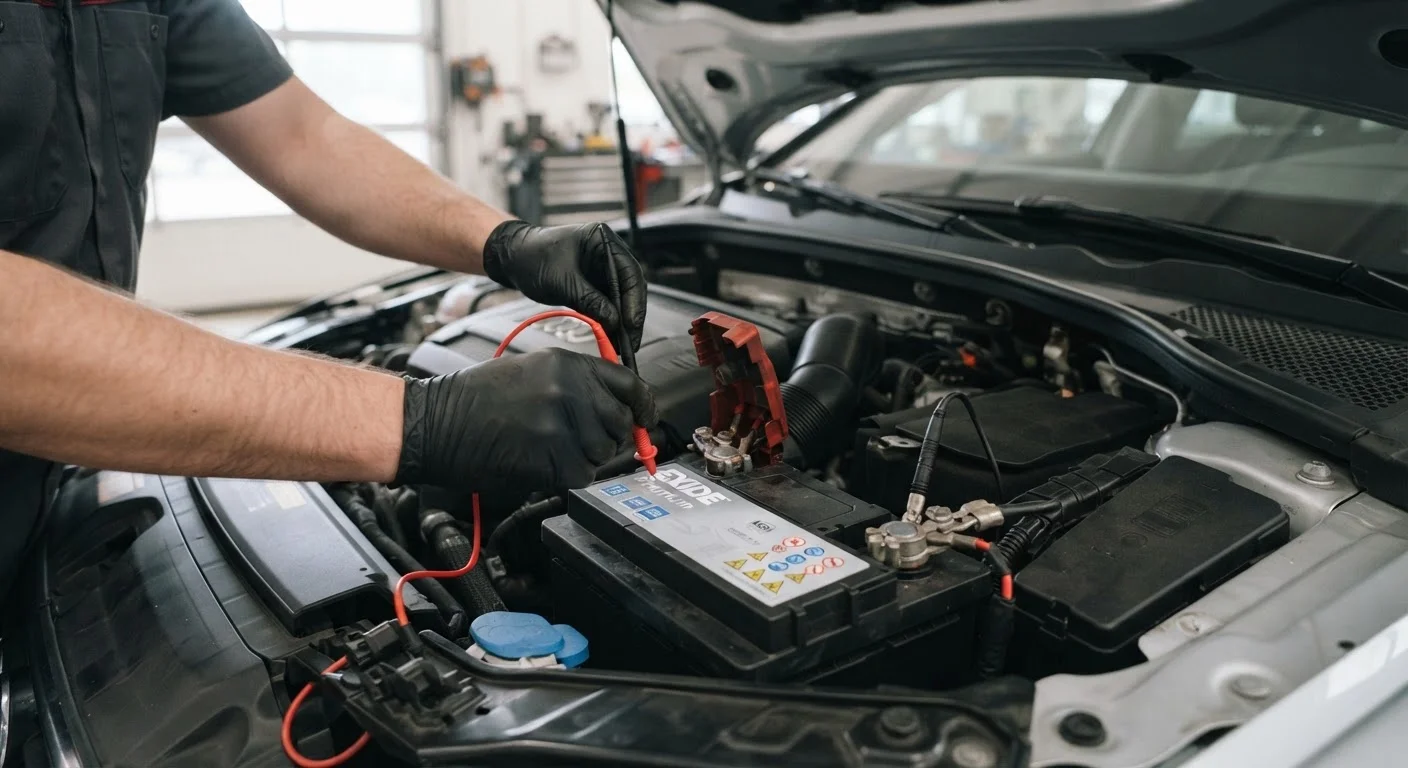
- Multimeter (voltage test): With the engine off, a healthy, fully charged battery reads approximately 12.6 volts. Between 12.0 and 12.4 volts indicates a partial charge. Below 12.0 volts signals a significantly discharged or failing unit.
- Load tester: This applies a simulated electrical load and measures how well the battery holds voltage under stress. It's far more accurate than a simple voltage reading and is available at most auto parts stores — many will test your battery for free if you bring the vehicle in.
If the battery tests as dischargeable but structurally sound, a smart charger (also called a trickle or automatic charger) can restore it safely. These devices monitor charge state and stop automatically, preventing overcharging. Avoid fast-charging options when possible — they work quickly but generate heat that shortens battery life over time.
When connecting or disconnecting a battery, always work on the negative terminal (black, marked –) first when removing, and last when reconnecting. This reduces the risk of sparking across a live circuit.
When to Replace Instead of Recharge
Recharging only makes sense when the battery's internal plates are still intact. Once a battery has deeply discharged multiple times, sulfation occurs — lead sulfate crystals form on the plates and permanently reduce capacity. A load test is your best diagnostic here: if the battery fails under load even after a full charge, replacement is the right call.
Other clear replacement indicators include:
- The battery is three or more years old and failing any performance test.
- The case is cracked, bulging, or leaking — handle with care and recycle properly.
- The vehicle requires frequent jump-starts with no alternator fault detected.
When selecting a replacement, match the CCA (cold cranking amps) rating at minimum to what your owner's manual specifies. CCA measures how much current the battery can deliver at 0°F — critical for cold-climate starts. Also match the group size (physical dimensions and terminal placement) to ensure proper fit.
Note: This article provides general guidance on battery selection criteria. For decisions specific to your vehicle and situation, consult your owner's manual or a qualified mechanic.
Habits That Help Your Battery Last Longer
Battery longevity isn't just about luck — it's shaped by everyday driving patterns. Short trips under 20 minutes are particularly hard on batteries because the alternator doesn't have enough run time to fully recharge what the starter motor used. Drivers who primarily make short urban trips may find their batteries depleting faster than expected.
A few habits that genuinely help:
- Drive longer routes periodically — a 30-minute highway drive once a week gives the alternator time to fully top off the battery.
- Clean terminals annually — a mixture of baking soda and water, applied with a brush, neutralizes corrosion safely. Rinse and dry thoroughly before reconnecting.
- Limit accessory load at idle — running the heater, seat warmers, and audio system with the engine barely running draws more than the alternator can replace.
- Use a maintenance charger for stored vehicles — a battery left discharged in a parked car for weeks will sulfate. A trickle charger keeps it topped up safely.
For more on how daily driving behaviors affect your vehicle's overall health, see our guide to habits that quietly extend the life of your car.
DIY or Shop? Knowing Your Limits
Replacing a car battery is one of the more accessible DIY tasks for most drivers — the process typically involves removing two terminal clamps and a hold-down bracket. However, a few situations genuinely call for a professional:
- Vehicles with battery management systems (BMS): Many modern cars — particularly European makes and hybrids — require a software registration procedure after battery replacement. Skipping this step can cause the charging system to behave incorrectly, reducing the new battery's lifespan. This requires a scan tool, not just a wrench.
- Batteries located under seats or in trunks: Some vehicles place the battery in non-standard locations with complex access. Mishandling cables in these configurations can damage nearby components.
- Any uncertainty about the alternator: If you're not sure whether the battery or the alternator is the root cause, a shop diagnostic is worth the cost — replacing a battery when the alternator is failing will leave you stranded again quickly.
Our article on DIY car maintenance vs. taking it to a shop offers a useful framework for thinking through which tasks are worth handling yourself and which ones carry real risk. Battery replacement sits firmly in the middle — doable for many, but with meaningful exceptions worth knowing before you start.