

Key Takeaways
Our Verdict
DIY maintenance makes strong sense for straightforward, low-risk tasks like fluid top-offs, air filter swaps, and wiper replacement. For anything involving brakes, suspension, electrical systems, or complex diagnostics, a qualified mechanic is generally the safer and more cost-effective choice in the long run. Most drivers benefit from doing both — handling the easy stuff themselves while trusting professionals with jobs that carry meaningful consequences if done incorrectly.
| Best for | Recommended |
|---|---|
| Drivers comfortable with basic tools and routine upkeep | DIY Maintenance |
| Complex repairs, safety-critical systems, or unfamiliar vehicles | Professional Shop |
| Those looking to reduce overall ownership costs without taking on risk | Hybrid Approach |
Why the DIY vs. Shop Decision Matters
Every time your car needs attention, you face the same question: handle it yourself or take it in? The answer shapes how much you spend, how quickly the job gets done, and — in some cases — how safe your vehicle is afterward. The good news is that the decision isn't all-or-nothing. Most drivers land somewhere in the middle, doing routine tasks at home while leaving technical work to professionals.
Understanding where that line sits starts with an honest look at three things: what the job actually involves, what tools it requires, and what happens if something goes wrong. See our Car Costs & Savings hub for a broader look at what car ownership actually costs and where savings are realistic.
Tasks That Are Genuinely DIY-Friendly
Several common maintenance items are straightforward enough that most drivers can handle them at home with minimal tools and a bit of confidence.
- Engine air filter replacement: Usually involves opening a plastic housing with a clip or one screw. Takes five minutes and requires no special tools.
- Cabin air filter swap: Typically located behind the glove box or under the dashboard. Check your owner's manual for location — most take under ten minutes. This is one of the overlooked maintenance items that's easy to handle yourself.
- Wiper blade replacement: Blades click into standard connectors. Instructions come printed on the packaging.
- Fluid top-offs: Windshield washer fluid, coolant reservoir, and power steering fluid are usually accessible under the hood with clear fill markings. Always confirm the correct fluid type in your manual.
- Tire pressure checks: A quality gauge costs a few dollars and takes seconds. Keeping tires properly inflated affects handling, fuel efficiency, and tire life.
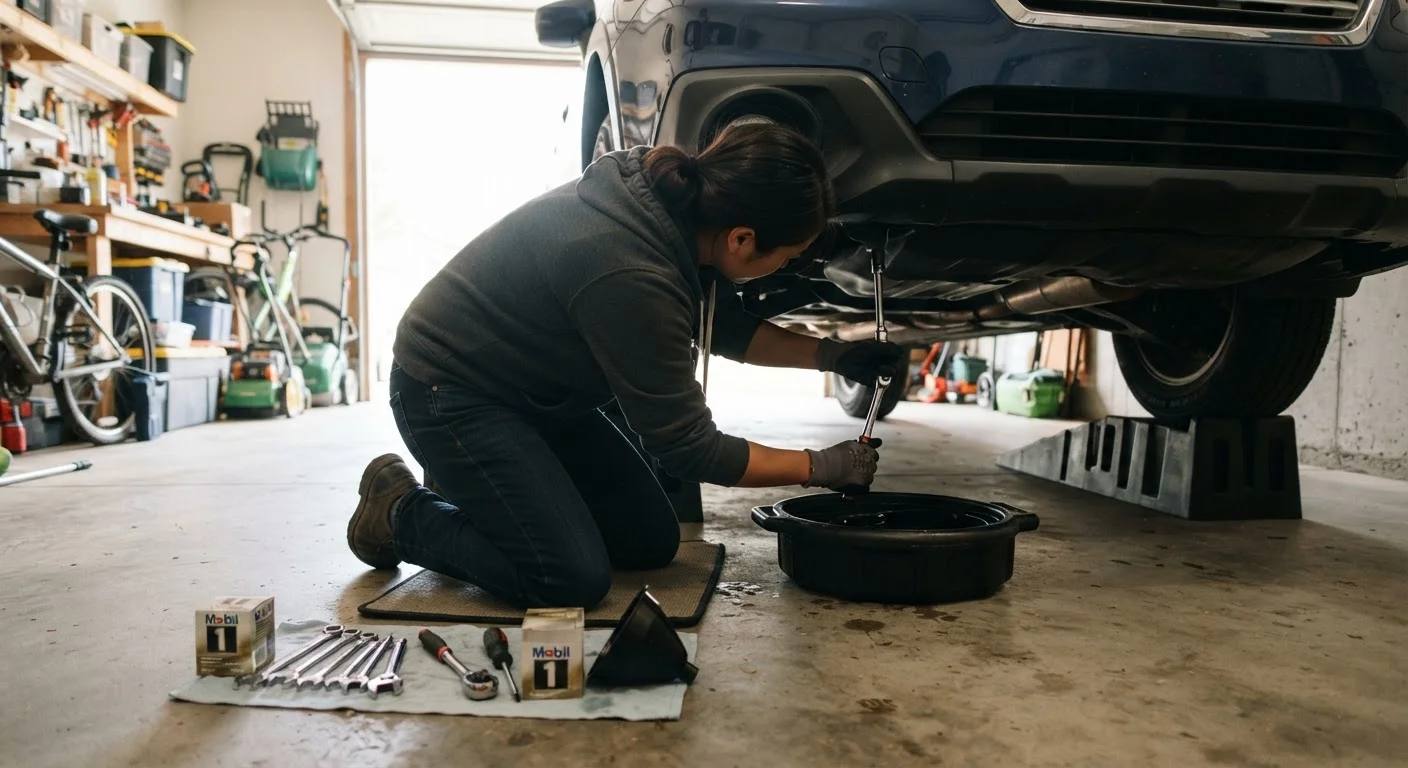
Oil changes fall into a gray zone — technically doable at home, but they require proper disposal of used oil, the right drain plug torque, and filter handling. Many drivers find the shop price competitive enough that DIY oil changes aren't worth the hassle, while others prefer the control. It's a personal call.
| Task | DIY Feasibility | Tools Needed | Risk If Done Wrong | Typical Shop Cost Saved | |
|---|---|---|---|---|---|
| Engine air filter | Easy | None or basic | Low | Minimal | |
| Cabin air filter | Easy | None or basic | Low | Modest | |
| Wiper blades | Easy | None | Very low | Minimal | |
| Oil change | Moderate | Basic + drain pan | Low-moderate | Moderate | |
| Brake pads | Advanced | Specialty tools | High | Significant | |
| Suspension components | Shop recommended | Specialty tools | High | Significant | |
| Electrical diagnostics | Shop recommended | Scan tool required | Moderate-high | Variable |
Jobs That Belong at a Shop
Some maintenance and repair tasks carry enough risk — to you or the vehicle — that professional handling is the sensible default.
- Brake system work: Pads are sometimes a DIY job for experienced hands, but calipers, brake lines, and bleeding the system involve hydraulic components where an error has direct safety consequences. This is not the place to learn on the fly.
- Suspension and steering components: Ball joints, tie rods, and wheel bearings require precise torque specifications and alignment verification. Improper installation affects handling and tire wear in ways that aren't always immediately obvious.
- Electrical and computer diagnostics: Modern vehicles have layered electronic systems. A warning light might reflect one of dozens of possible codes — a shop with a proper scan tool and experience interpreting results will reach the correct fix faster and more reliably.
- Transmission service: Fluid changes are sometimes DIY-approachable, but internal transmission work requires specialized knowledge and equipment.
- Battery replacement on newer vehicles: Some modern cars require a computer reset when the battery is replaced to preserve systems like idle relearn and power window calibration. A shop can handle this correctly. Learn more about when battery replacement makes sense.
Don't Let Cost Be the Only Factor
It can be tempting to attempt a complex repair to avoid a shop bill, but safety-critical systems like brakes and steering are not good candidates for trial-and-error learning. An incorrect repair on these systems may not show a problem immediately — it may reveal itself under hard braking or in an emergency maneuver. When the consequence of an error is a safety incident, the professional labor cost is money well spent.
How to Make the Call on Any Given Job
When you're unsure, a simple framework helps:
- Look it up first. Your owner's manual describes what's needed. Reputable forums for your specific vehicle model often show whether real owners do it themselves or consistently recommend a shop.
- Price out the tools. If a job requires a specialty tool you'll use once, factor that cost in. Sometimes the tool investment makes DIY worthwhile long-term; sometimes it doesn't.
- Assess the failure mode. Ask: if I make a mistake here, what's the worst realistic outcome? A loose air filter housing is low stakes. A misassembled brake caliper is not.
- Know your vehicle's quirks. Older, simpler vehicles are generally more forgiving for DIY. Newer vehicles with tight engine bays, electronic complexity, or unusual designs can turn routine tasks into frustrating problems.
It's also worth checking what your owner's manual actually requires — some service intervals are negotiable, and knowing which ones aren't helps you prioritize where to spend your time and money.
For a reality check on some persistent assumptions, our piece on car repair cost myths is a useful companion read.
This article is for general informational purposes only. Always consult a qualified mechanic before performing any maintenance you are uncertain about, particularly on safety-critical systems.