

Key Takeaways
Oil Change Interval
An oil change interval is the recommended distance or time period between engine oil replacements as specified by your vehicle's manufacturer. It tells you how long your engine oil can effectively lubricate and protect engine components before it breaks down and needs to be swapped out. Following this interval — rather than a generic rule of thumb — keeps your engine protected without unnecessary service costs.
Modern vehicles often use an oil life monitoring system (OLMS) that calculates intervals based on driving conditions, engine temperature cycles, and load — not just mileage. These algorithms are calibrated by engineers for that specific engine.
Where the 3,000-Mile Rule Came From — and Why It Stuck
The 3,000-mile oil change recommendation was reasonable advice — for vehicles built decades ago. Early engine tolerances were looser, conventional motor oil degraded faster, and mechanics understandably promoted a conservative margin. The interval became so embedded in automotive culture that quick-lube shops still advertise it today.
The problem is that engines and oil formulations have changed dramatically. Modern engines are built to tighter specifications, and motor oil — particularly full synthetic — is engineered to maintain its protective properties far longer than older formulas. Continuing to follow a rule designed for a previous era doesn't protect your engine better; it mostly means paying for service you don't yet need.
Understanding how conventional and synthetic oils differ is a useful starting point for knowing why your recommended interval may be longer than you expect.
What Your Owner's Manual Actually Says
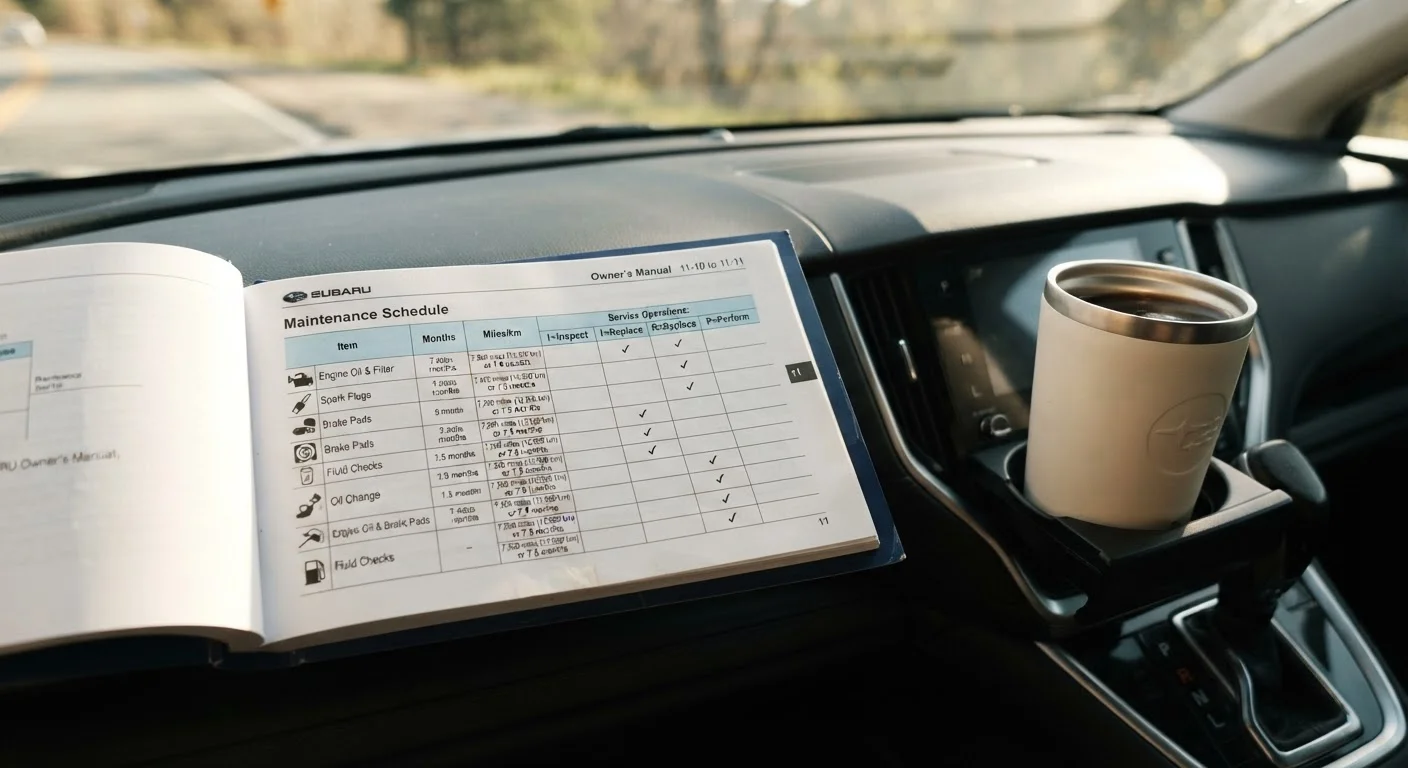
Your owner's manual is the single most authoritative source for your vehicle's oil change interval. It's written by the engineers who designed your specific engine, not by a service center with a financial interest in frequent visits. Look for the maintenance schedule section — it will typically list intervals in miles, months, or both, and many manuals include two schedules: one for normal driving and one for severe conditions.
Most vehicles manufactured in the last decade recommend oil changes somewhere between 5,000 and 10,000 miles. Vehicles using full synthetic oil and equipped with an oil life monitoring system may go even longer under normal conditions — some manufacturers specify up to 15,000 miles in ideal circumstances. The specific number varies by engine design, oil type, and how your vehicle is used.
5,000–10,000 mi
Typical modern oil change interval
Most vehicle manufacturers now recommend intervals significantly longer than the traditional 3,000-mile guideline, depending on oil type and engine design.
Up to 15,000 mi
Maximum interval for some synthetic-oil vehicles
Certain manufacturers specify extended intervals for vehicles running full synthetic oil under normal driving conditions, per their official owner's manuals.
2 schedules
Maintenance tracks in most owner's manuals
The majority of owner's manuals include separate maintenance schedules for normal and severe driving conditions, each with different recommended intervals.
If you've misplaced your printed manual, the manufacturer's official website typically offers a free digital version searchable by year, make, and model. Some vehicles also display the recommended interval directly on the dashboard through the oil life monitor.
Normal vs. Severe Driving: Which Schedule Applies to You?
Many owner's manuals quietly include two maintenance tracks, and the distinction matters. Normal conditions generally mean highway-heavy driving, moderate temperatures, and trips long enough to fully warm up the engine. Severe conditions — which apply to more drivers than you'd expect — include frequent short trips under five miles, heavy traffic, towing, very cold or very hot climates, and dusty environments.
Short urban commutes are particularly hard on oil. When an engine never fully reaches operating temperature, moisture and fuel residue accumulate in the oil, accelerating degradation. If most of your driving fits the severe description, following the tighter interval in your manual is the right call — not the 3,000-mile rule, but the manufacturer's own severe-duty recommendation.
This kind of driving awareness is exactly what separates routine maintenance from habits that genuinely extend your car's life.
How to Read and Use Your Oil Life Monitor
If your vehicle was manufactured after roughly 2010, there's a good chance it has an oil life monitoring system. These systems use algorithms — not a physical sensor in the oil — to estimate remaining oil life based on engine speed, temperature cycles, load, and trip length. When the monitor alerts you, it's drawing on real operational data specific to how you've been driving.
Oil life monitors are generally reliable, but they work best when used alongside your manual. The monitor tells you when oil is likely degraded based on driving patterns; the manual tells you the absolute maximum interval the manufacturer approves. If the monitor hasn't triggered but you're approaching the manual's mileage ceiling, change the oil anyway.
After each oil change, reset the monitor according to your manual's instructions — otherwise the system continues counting from an incorrect baseline. Engine oil is just one part of your vehicle's broader fluid system; see our guide on understanding your car's fluid system for a complete picture of what needs regular attention.
This article is for general informational and educational purposes. For maintenance decisions specific to your vehicle, always consult your owner's manual and, when in doubt, a qualified mechanic.