

Key Takeaways
Why These Myths Have Such a Strong Hold
Meal planning has a reputation problem. Somewhere between aspirational social media posts and the idea of spending an entire Sunday in the kitchen, many people decided it simply wasn't for them — too time-consuming, too restrictive, or too complicated for a regular weeknight.
The problem isn't meal planning itself. It's that the version most people picture has very little to do with what actually works. These myths don't just create a false impression; they actively prevent people from building a habit that could reduce stress, cut food waste, and make weeknight dinners significantly less chaotic.
Understanding what meal planning actually means — and what it doesn't require — is the first step to making it work in a real household.
Myth
You need to spend all day Sunday cooking and prepping to make meal planning worth it.
Fact
Effective meal planning can take as little as 15 minutes of thinking and a single grocery list — no batch cooking required.
The marathon Sunday prep session is one version of meal planning, but it's not a requirement. Planning and prepping are two separate activities. Planning simply means deciding in advance what you'll eat during the week. Prepping — chopping vegetables, cooking grains ahead of time — is optional and can be done in smaller sessions throughout the week if it helps.
Many people find that even a brief planning session on Thursday or Friday — just long enough to sketch out a few dinners and write a shopping list — reduces mid-week decision fatigue significantly. You don't have to cook anything in advance to get that benefit.
Myth
Meal planning only works if you follow the plan exactly every day.
Fact
A plan that bends without breaking is more useful than a rigid schedule you'll abandon by Wednesday.
Life interrupts even the most carefully considered plans. A late meeting, an unexpected invitation, or simply not wanting what you planned for Tuesday — these are normal occurrences, not planning failures. The purpose of a meal plan isn't compliance; it's reducing the number of unplanned decisions you make during a busy week.
Building in flexibility from the start — planning meals that use overlapping ingredients, keeping a couple of easy backup options on hand, or leaving one night deliberately open — makes a plan far more durable. Thinking of your plan as a framework rather than a contract changes how you relate to it entirely.
Myth
You need to be a good cook to meal plan effectively.
Fact
Simple, repeatable meals are the most reliable foundation for any meal plan, regardless of cooking skill.
Meal planning doesn't favor elaborate recipes. It favors predictability. Meals you've made before, know how to time, and can execute without consulting a recipe are exactly what a sustainable weekly plan is built on. A rotation of eight to ten familiar dinners — things like pasta, sheet pan vegetables, grain bowls, or eggs — is more than enough to build from.
If you want to build foundational cooking skills alongside your planning habit, that's valuable — but it's a parallel project, not a prerequisite. Start with what you already know how to make.
Myth
Meal planning is only worth it for large families.
Fact
People cooking for one or two often benefit more from planning, because waste and portion management are harder to manage without it.
Cooking for a single person or a couple presents its own planning challenges: standard recipes yield too many servings, produce spoils before it's used, and the temptation to order out is stronger when cooking for a small number feels like a lot of effort for little payoff. Planning specifically addresses each of these friction points.
For smaller households, planning around ingredients that serve multiple meals — a can of beans used in both Tuesday's tacos and Thursday's soup — reduces waste and shopping cost. The strategy looks different by household size, but the benefit is just as real.
Myth
Meal planning is expensive and only works if you buy a lot of groceries upfront.
Fact
Planning typically reduces grocery spending by cutting impulse purchases and food waste — it doesn't require a large upfront investment.
Shopping without a plan is what tends to be expensive: unplanned purchases, ingredients bought for one recipe that never get used, and frequent last-minute takeout add up quickly. A shopping list built from a real plan does the opposite — it creates boundaries around what you're buying and why.
Starting with a modest plan of three or four meals per week, built around affordable staples and whatever's already in your pantry, keeps the upfront cost low. Over time, most people find their grocery spending stabilizes or decreases — not because they're depriving themselves, but because less food goes to waste.
What Getting Started Actually Looks Like
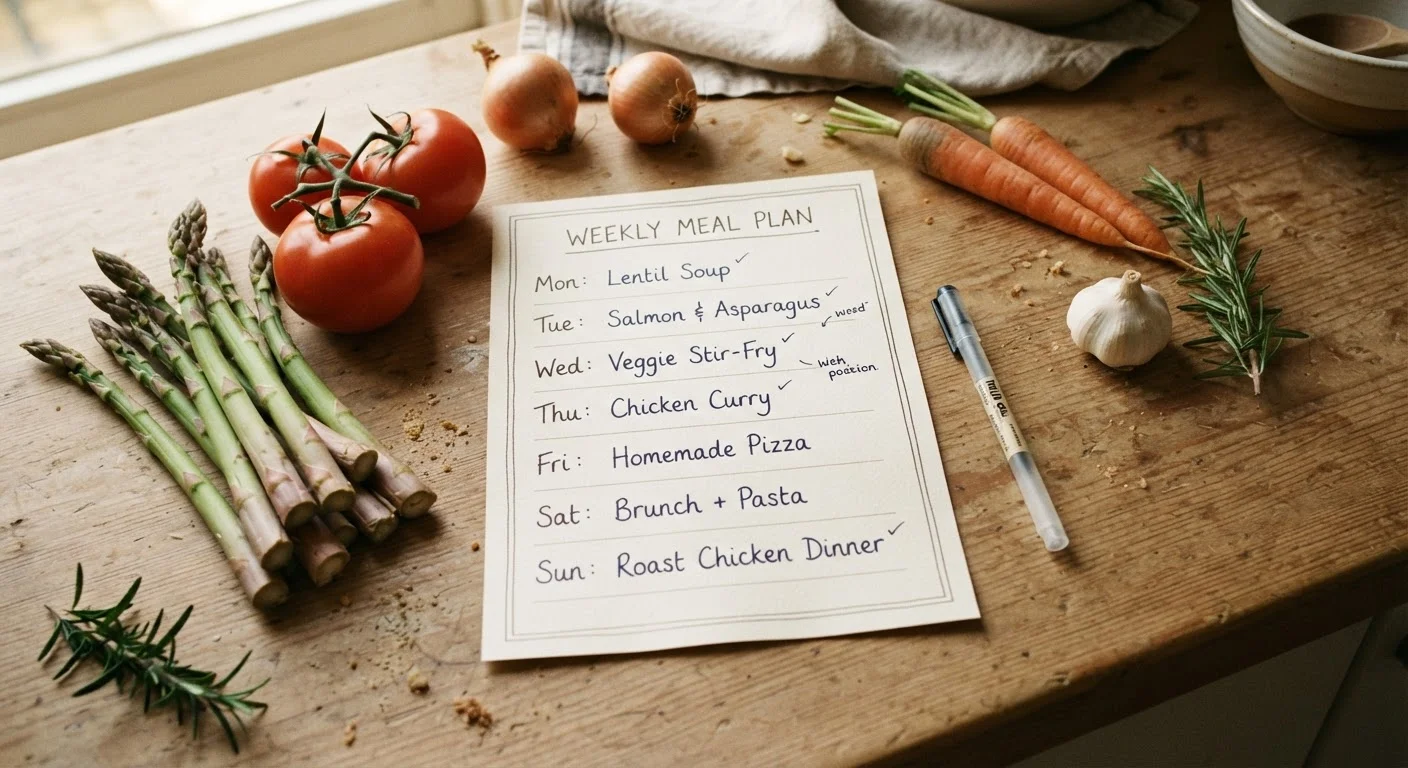
Once these myths are out of the way, the starting point becomes much more accessible. A realistic first meal plan might cover just three or four dinners, use two or three overlapping ingredients, and take less time to write than a grocery run takes to complete.
The core concepts of weekly meal planning — deciding what you'll eat, shopping with intention, and building light structure into your week — don't require a culinary background or a perfectly stocked pantry. They require a decision to start small and adjust from there.
If the idea of a full seven-day plan still feels like too much, a realistic weekly plan typically plans only four or five meals, leaves room for leftovers and takeout, and builds in at least one flexible night. That's not a failure of discipline — it's how sustainable planning actually works.
For households navigating different schedules or varying appetites, scaling your plan to your household size makes the difference between a plan that holds and one that falls apart by Tuesday. And when your plan does shift mid-week — because it will — flexible meal planning strategies help you adapt without abandoning the routine entirely.