

Key Takeaways
Meal Planning
Meal planning is the practice of deciding in advance what you'll eat over a set period — typically a week. It can be as simple as jotting down five dinner ideas before you go grocery shopping. At its core, it's a decision-making tool that reduces daily stress and helps you use food and money more efficiently.
Meal planning exists on a spectrum from loose intention-setting to detailed prep schedules with portioned containers. Neither extreme is required — effective planning is whatever version reduces your mid-week scramble.
The Simple Core of What Meal Planning Is
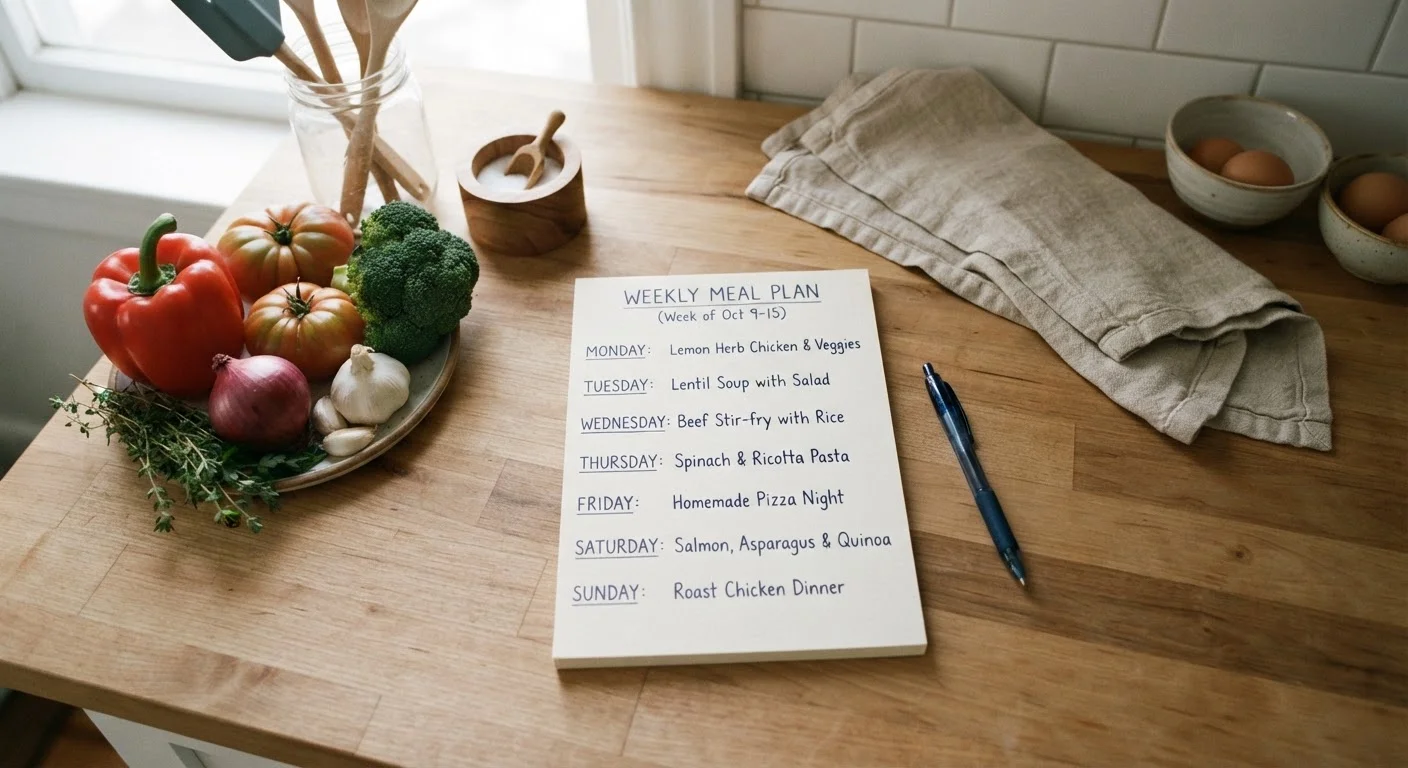
Strip away the Instagram aesthetics and the color-coded binders, and meal planning is just this: deciding what you'll eat before hunger makes the decision for you. That's it. You look at the week ahead, pick some meals, write them down, and shop accordingly.
This advance decision-making is valuable because the alternative — figuring out dinner at 6 p.m. while tired and hungry — leads to expensive takeout, random grocery runs, and food that spoils because you bought it without a plan for it. Meal planning is a tool to get ahead of that pattern.
The form your plan takes is irrelevant. A note in your phone, a whiteboard on the fridge, a printed template, or a scrap of paper all work equally well. What matters is that you've committed, loosely, to a direction before the week begins.
Meal Planning vs. Meal Prep: A Quick Distinction
These two terms are often used interchangeably, but they describe different activities. Meal planning is the decision-making phase — choosing what you'll eat. Meal prep is the physical work of preparing food in advance. You can plan without prepping, or do both together. Understanding the difference helps you figure out which part of the process actually fits your life.
What Meal Planning Doesn't Require
A lot of people delay starting because they imagine meal planning demands things it doesn't. Here's what is genuinely optional:
- Sunday batch cooking. Spending four hours prepping containers of food is one style of meal prep — it isn't meal planning itself. You can plan meals and still cook each one fresh throughout the week.
- Planning every meal. Most people benefit most from planning dinners, since those require the most effort and ingredients. Breakfast and lunch can stay flexible or habitual without undermining the system.
- Elaborate recipes. A plan built around simple, repeatable meals — pasta, sheet pan chicken, tacos — is just as valid as one with complex dishes. Simpler meals often produce less waste and more follow-through.
- Perfect adherence. Life interrupts plans. If you cooked three of your five planned dinners, you still saved decisions, bought less randomly, and probably wasted less food than if you hadn't planned at all.
If you've been avoiding meal planning because it seemed like too much, several common myths may be what's actually in the way.
The Real Purpose: Fewer Daily Decisions
Researchers who study decision-making have documented that people tend to make worse choices as a day goes on and decision fatigue builds. Meal planning works partly by front-loading one block of food decisions — what to eat this week — so you don't have to make them repeatedly at inconvenient moments.
When you already know that Tuesday is pasta and Thursday is stir-fry, you don't debate it at 5:30 p.m. You just start cooking. That reduction in friction is often what people find most valuable, beyond any savings on groceries.
“The best meal plan is the one that removes the most friction from your week — not the most nutritionally optimized or the most elaborate. Consistency beats complexity every time.”
— Food & Kitchen Editorial Team, Editorial team covering practical cooking and meal planning strategies
Thinking of meal planning as a decision-reduction system — rather than a cooking performance — makes it much easier to sustain. You're not committing to perfection; you're just narrowing your choices in advance so the week runs smoother.
How Much Planning Is Enough?
There's no universal right answer, but a useful starting point for most households is planning three to five dinners per week, leaving room for one leftover night and one flexible night (takeout, a simple meal, or whatever sounds good). That structure gives you direction without locking you into a rigid schedule.
From there, you can expand. Some households plan lunches too, or keep a running list of breakfasts. Others build a rotating set of meals they cycle through monthly. A realistic weekly plan explores what that fuller structure can look like in practice.
~$1,500
Average annual food waste per U.S. household
The USDA has estimated that American households discard a significant share of the food they purchase, with unplanned shopping being a key contributor.
15–30 min
Typical time to write a weekly meal plan
Most experienced meal planners report that deciding on the week's meals and building a grocery list takes less than half an hour once the habit is established.
The goal is a version of meal planning that you'll actually maintain — not the most thorough version imaginable. A simple, consistent plan beats an elaborate one that collapses by Wednesday. For a deeper look at how meal planning connects to your overall weekly food routine, see the full picture of meal planning as a system.