

Key Takeaways
Why Meal Planning Is a System, Not Just a List
Most people think of meal planning as writing down five dinners on a sticky note. That approach isn't wrong, but it's incomplete. A genuinely useful meal plan connects four things: what you can afford to spend, what your schedule actually allows, what you already have on hand, and how leftovers flow into the next day. Miss any of those links, and the plan tends to fall apart by Tuesday.
Think of weekly food management as a loop: budget informs the plan, the plan drives the shopping list, the shopping list guides what you prep, and what you prep determines how smoothly the week runs. When those stages reinforce each other, even a busy household can eat well without daily decision fatigue. For anyone who hasn't done this before, our complete starting point guide covers the foundational concepts in detail.
Step 1: Set Your Weekly Food Budget
Before you plan a single meal, know how much you're working with. A food budget doesn't have to be precise down to the dollar, but it should be realistic. Look at your last two or three grocery receipts and calculate an average — that's your baseline. From there, decide whether you want to hold steady, pull back, or allow a little more for a special occasion this week.
Factor in all food spending, not just groceries. If the family eats out twice a week, those meals are part of the food budget. Leaving them out creates a false picture of what's actually available for home cooking. For broader household budgeting strategies, the Budgeting Basics hub offers useful frameworks for tracking spending across categories.
When building your weekly plan, anchor it around one or two proteins you can cook in bulk and use multiple ways — a whole roasted chicken, for example, covers dinner, next-day sandwiches, and a quick soup.
Ingredient versatility is the single most reliable way to reduce both cooking time and grocery spend without sacrificing variety.
Write your grocery list on your phone's notes app and share it with anyone else who shops for your household — it prevents duplicate purchases and lets others add items in real time.
Miscommunication about what's needed at home is one of the most common causes of over-buying and food waste in multi-person households.
Once you have a weekly number, divide it roughly: most households find that allocating the majority to proteins and fresh produce — the items most likely to spoil — and keeping a smaller reserve for pantry restocking works well as a starting structure.
Step 2: Build a Realistic Meal Plan
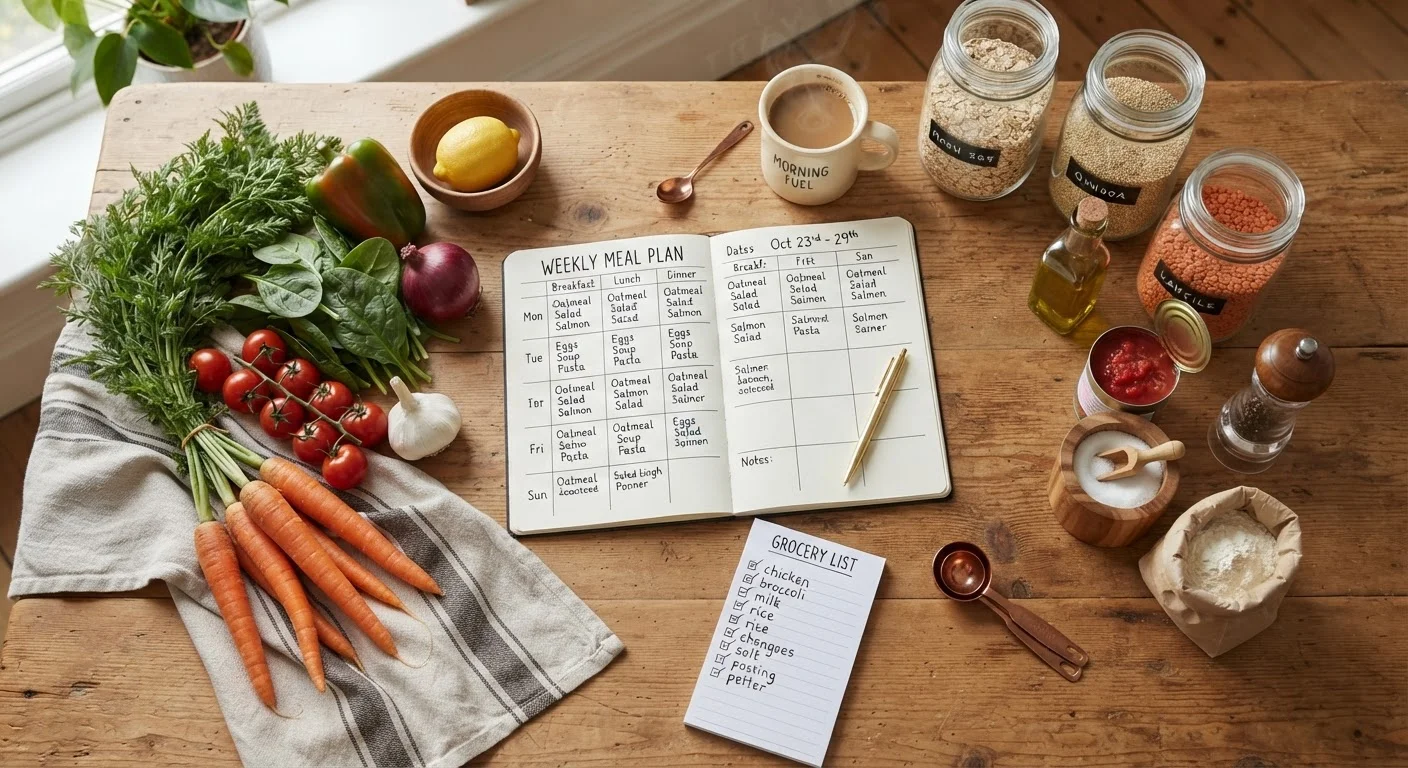
A good meal plan reflects your actual week, not an idealized version of it. Before filling in meal slots, check your calendar. Nights with late pickups, long commutes, or social commitments need different meals than open evenings. Our anatomy of a realistic weekly meal plan walks through exactly how many meals to plan and where to leave breathing room.
A practical structure for most households: plan dinners for five nights, leave one night flexible (takeout, leftovers, or whatever sounds good), and let one night be a designated use-it-up meal built around what's left in the fridge. Lunches can largely be last night's dinner repurposed. Breakfasts usually need less planning — a few reliable options rotate well without getting stale.
If rigid plans stress you out more than they help, flexible meal planning strategies offer a middle path: plan ingredients rather than specific meals, so you can mix and match based on how the week unfolds.
Step 3: Shop With a Purpose
A grocery list built directly from your meal plan is far more effective than one assembled from memory. Before writing anything down, do a quick pantry and fridge scan — check what proteins, grains, canned goods, and condiments you already have. Buying a second can of chickpeas because you forgot about the one in the back of the cupboard is a small but recurring budget drain.
Organize your list by store section (produce, proteins, dairy, dry goods) to reduce backtracking and impulse buys. If you shop at more than one store, keep lists separate. Our pre-shopping checklist runs through the full sequence — pantry check, schedule review, and meal slots — to make sure nothing gets missed before you head out.
Step 4: Prep Strategically, Not Exhaustively
Batch cooking entire meals on Sunday sounds efficient in theory, but it often leads to burnout or fridge containers that nobody wants by Thursday. A more sustainable approach is to prep components, not complete dishes. Cook a large pot of grains, roast a sheet pan of vegetables, and portion out a protein or two. These building blocks can be mixed into different meals across the week without eating the same thing four nights in a row.
Keep prep sessions under 90 minutes. Focus on the tasks that actually slow you down on weeknights: chopping vegetables, cooking grains, marinating proteins. Anything that takes five minutes at dinnertime doesn't need to be done in advance. A well-organized kitchen supports this kind of efficient prep — the Kitchen Organization hub has practical tips for setting up your space to make cooking faster and less stressful.
Step 5: Reduce Mid-Week Scramble and Food Waste
The biggest threat to a meal plan isn't ambition — it's the Thursday fridge problem: wilting greens, an open can of something, a half-used onion, and no clear plan. Building a deliberate use-it-up meal into your weekly plan (typically Thursday or Friday) keeps this from becoming waste. It also tends to produce some surprisingly creative meals.
Treat leftovers as an asset, not an afterthought. When planning, intentionally cook more than you need for one meal so that tomorrow's lunch or the following night's dinner is already handled. This one habit can meaningfully reduce both grocery spending and the time you spend cooking. For a deeper look at connecting planning to waste reduction, reducing food waste through smarter weekly planning covers the specific habits that make the biggest difference.
At the end of each week, take two minutes to assess what worked and what didn't. Which meals were too ambitious? What did you overbuy? Small adjustments each week build a personalized system that gets more efficient over time — one that fits your household's real tastes, schedule, and budget rather than a generic template.