

Food & Kitchen

Before You Grocery Shop: A Weekly Meal Planning Checklist

Share
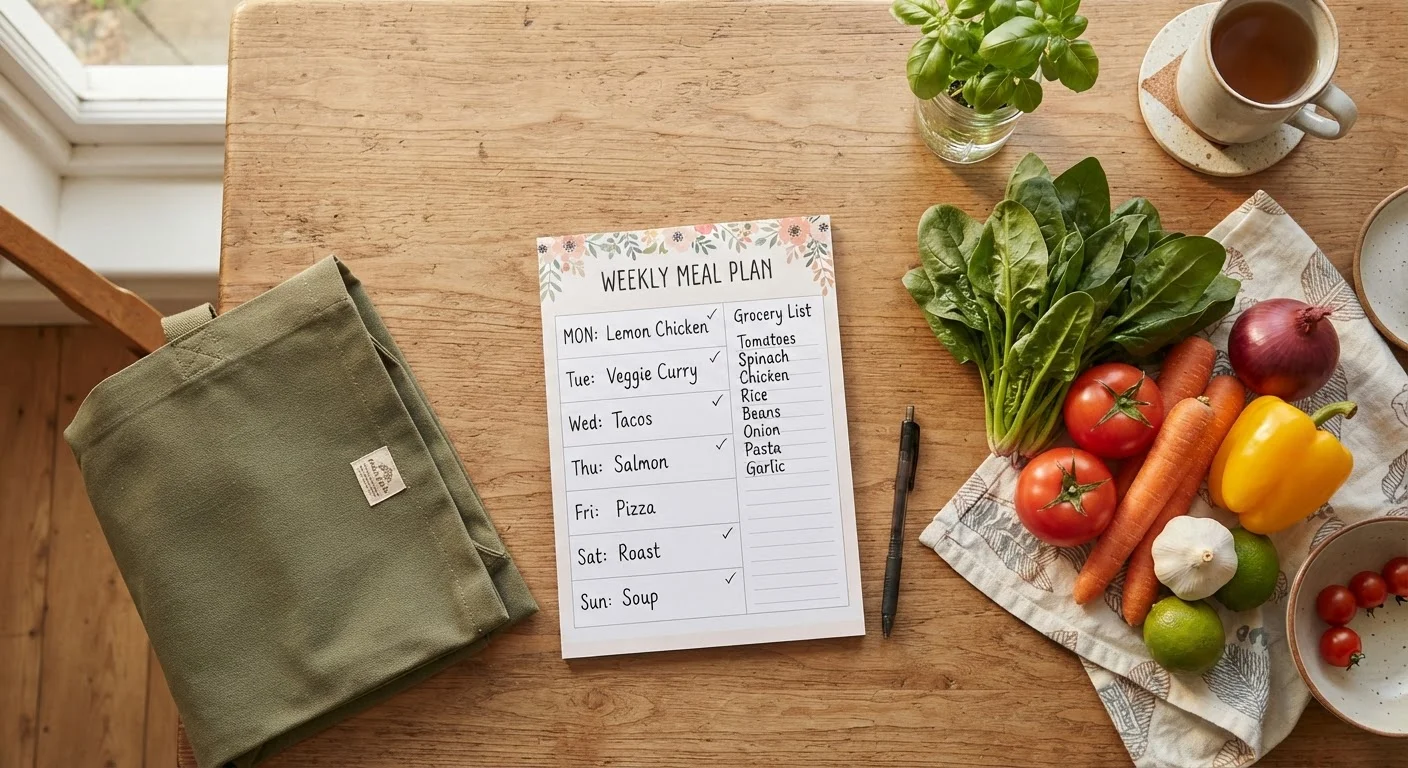
Overhead flat lay of a weekly meal plan notepad beside fresh vegetables and a grocery bag on a kitchen table

Key Takeaways

Checking your pantry, fridge, and freezer before shopping prevents duplicate purchases and reduces food waste.
Reviewing your weekly schedule helps you match meal complexity to the time you actually have each day.
Building your grocery list from a finalized meal plan—not the other way around—keeps spending focused.
Designating a leftover or flexible meal slot reduces last-minute takeout spending.
A consistent pre-shop routine takes under 30 minutes and pays off throughout the entire week.
20–40 min

Summary

22 items · 20–40 minutes

Why a Pre-Shop Checklist Changes Everything

Most grocery trips go sideways before you even leave the house. Without a clear plan, you buy what looks good, forget what you already have, and end up with a fridge full of half-used ingredients and a nagging sense that nothing goes together. The fix isn't complicated—it's a repeatable routine.

This checklist walks you through the five key steps to complete before you write a single item on your grocery list. Whether you're new to meal planning or just looking to tighten up your process, running through these steps consistently can help you spend less, waste less, and cook with a lot less stress. If you're starting from scratch, our complete beginner's guide to weekly meal planning covers the foundational concepts in detail.

Required

Notepad or Meal Planning Worksheet

Used to map out meals by day of the week and assign ingredients before building your shopping list.

Required

Grocery List App or Paper List

Keeps your shopping focused and organized by store section to reduce impulse purchases.

Optional

Kitchen Inventory Log

A simple running list or photo of your pantry and freezer contents to reference without rummaging through cabinets.

Required

Weekly Calendar

Used during schedule review to match meal complexity to the actual time available each day.

The 5-Step Pre-Shop Checklist

Work through each group below in order. The sequence matters: you need to know what you have and when you're cooking before you decide what to buy.

Step 1: Audit Your Pantry, Fridge, and Freezer

Scan the fridge for perishables that need to be used within the next 3–4 days and flag them for early-week meals. Must
Check the freezer for proteins or meals that can be thawed and incorporated into this week's plan. Must
Look through dry goods and canned items to identify staples you already have so you don't buy duplicates. Must
Note any condiments, sauces, or specialty ingredients nearing their expiration date that should be used up. Should

Step 2: Review Your Weekly Schedule

Identify the nights you'll have 30 minutes or less to cook and mark those as quick-meal slots. Must
Spot days when you won't be home for dinner at all, so you're not planning meals that won't get made. Must
Flag one day with more free time for a batch-cooking or meal-prep session to feed multiple nights. Should
Build in one flexible or leftover night to act as a buffer against last-minute changes. Should

Step 3: Assign Meals to Days

Match meal complexity to the time you have each day—simple stir-fries on busy nights, slower meals on open evenings. Must
Plan at least one meal that generates intentional leftovers you can repurpose for lunch the next day. Should
Ensure that perishable ingredients flagged in Step 1 are used in the earliest meals of the week. Must
Sketch out breakfasts and lunches, even roughly—these account for a large portion of your grocery spend. Should
Consider seasonal or on-hand produce as the anchor for at least one or two meals rather than building around proteins. Nice to have

Step 4: Build Your Grocery List

Write your list organized by store section (produce, proteins, dairy, dry goods) to avoid backtracking. Should
Cross-reference each item against your pantry audit—only list what you genuinely need. Must
Add a realistic quantity next to each item based on the specific recipes you've planned. Must
Include one or two versatile backup items (eggs, canned beans, frozen vegetables) in case a planned meal falls through. Nice to have

Step 5: Set a Spending Limit

Decide on a grocery budget for the week before you shop, not while you're in the store. Must
Estimate your total roughly by reviewing your list—if it seems high, cut a meal or simplify ingredients. Should
Identify one or two meals where a lower-cost protein or plant-based option could swap in without affecting the plan. Nice to have

Once you've completed all five steps, your grocery list should almost write itself. You're buying with purpose rather than guessing. For more ways to stretch ingredients across the week, see our guide on planning meals around what you already have.

Avoiding the Most Common Planning Pitfalls

Even with a checklist, a few habits can undermine your plan before the week begins.

Don't Plan to the Last Detail—Build in Flexibility

Over-planning every meal with complex recipes is one of the fastest ways to abandon your plan by Wednesday. Aim for simple, familiar recipes on most nights and save ambitious cooking for weekends. A plan you actually follow is more valuable than a perfect plan you don't.

Skipping the Pantry Check Is Expensive

Shopping without checking what you already have is a leading cause of duplicate purchases and food waste. Even a five-minute scan of your fridge and dry goods before writing your list can prevent buying items you already own. For a more thorough approach, a well-organized kitchen makes this step much faster every week.

One often-overlooked strategy is building in a flexible meal slot—a night where you commit to using whatever needs to be used up. This single habit can dramatically cut food waste, which is as much a budget issue as an environmental one. Our article on reducing food waste through smarter weekly planning goes deeper on how to make this work consistently.

It also helps to think of meal planning as part of your broader household budget routine. If you track monthly spending, a well-executed weekly plan is one of the most direct levers you have on food costs. The Budgeting Basics hub has practical strategies for connecting your grocery habits to your larger financial goals.

Food & Kitchen Editorial Team is the collective byline for our editorial team and contributor network. Articles published under this byline or an editorial pen name are researched, written, and reviewed according to our editorial standards for clarity, consistency, and independence before publication.

View all articles by Food & Kitchen Editorial Team →
Disclaimer: The content provided on our blog site traverses numerous categories, offering readers valuable and practical information. Readers can use the editorial team’s research and data to gain more insights into their topics of interest. However, they are requested not to treat the articles as conclusive. The website team cannot be held responsible for differences in data or inaccuracies found across other platforms. Please also note that the site might also miss out on various schemes and offers available that the readers may find more beneficial than the ones we cover.