

Key Takeaways
Why Food Waste Is Really a Planning Problem
The average American household throws away a significant portion of the food it purchases — not because people are careless, but because most of us shop without a clear plan for how ingredients will actually get used. A bunch of cilantro bought for one recipe, half a bag of spinach with nowhere to go, meat that thaws too late — these are planning failures, not personal ones.
Food waste is a budget problem just as much as an environmental one. When groceries go bad before you use them, you're essentially paying for food twice: once at the store and again when you replace it. Approaching meal planning as a weekly food management system — rather than just a dinner schedule — is the mindset shift that makes the difference.
Best Practices for Waste-Reducing Weekly Planning
The following practices work together. You don't need to adopt all of them at once, but each one addresses a specific point in the week where food commonly goes to waste.
Audit your fridge and pantry before writing your grocery list each week.
Shopping without knowing what you already have leads to duplicate purchases and forgotten ingredients that spoil. A quick inventory prevents this and often reduces how much you need to buy. It also keeps older items from getting buried behind new ones.
Schedule perishable ingredients for early in the week.
Fresh produce, delicate herbs, and proteins with short shelf lives are most likely to go bad if saved for later in the week. Placing meals that use them on Monday or Tuesday means you eat them while they're still good. Hardier ingredients — root vegetables, frozen proteins, grains — can anchor your Thursday and Friday meals.
Buy ingredients that can serve double duty across multiple meals.
Single-use specialty ingredients are a leading cause of partial-container waste. When one ingredient can appear in two or three different meals, you're more likely to use the whole quantity before it goes bad. This also simplifies your shopping list.
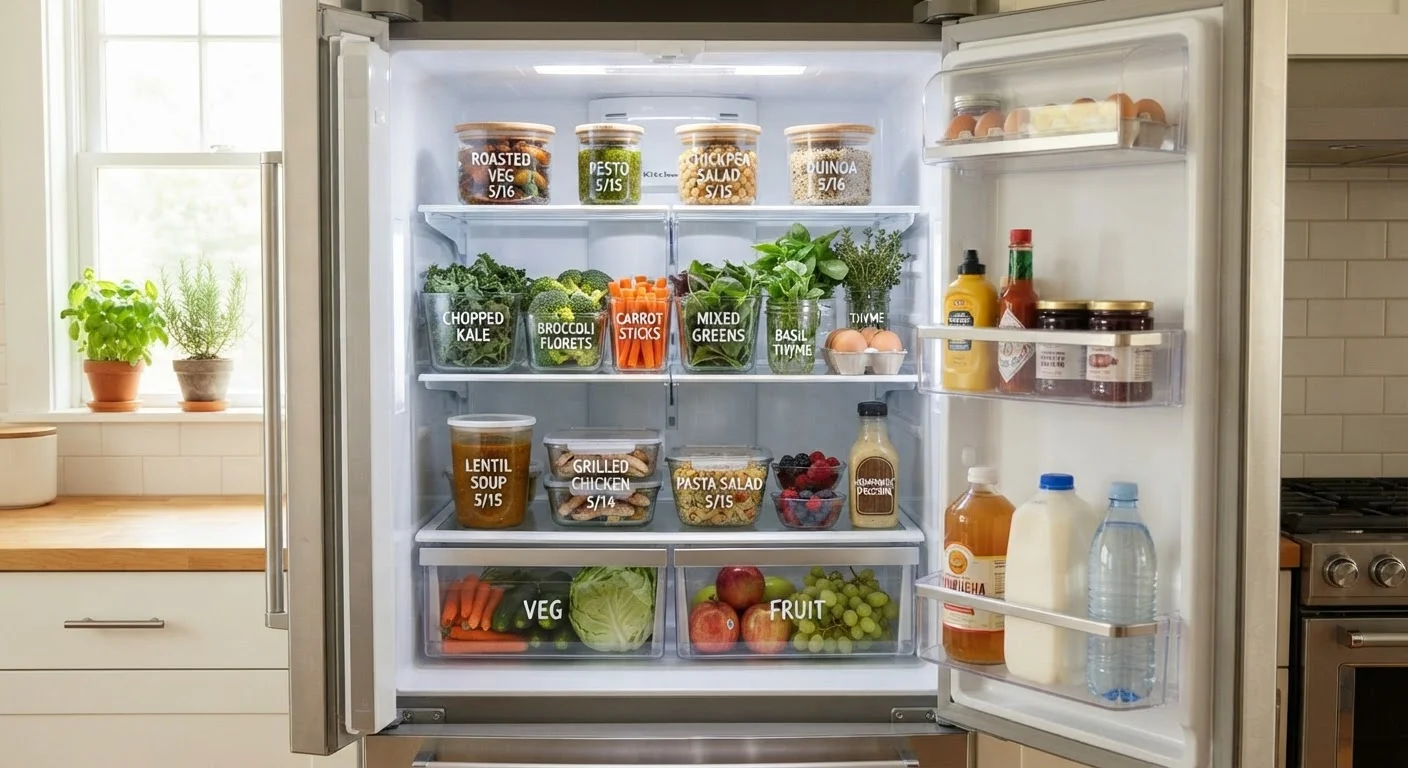
Store food correctly and label leftovers with the date.
Even well-planned meals generate leftovers, and unlabeled containers are often forgotten until they're no longer safe to eat. Dating leftovers removes the guesswork about whether something is still good and reminds you to eat it before cooking something new. Proper storage also extends freshness significantly.
Track what you actually throw away each week.
Most people underestimate how much food they waste because they don't pay close attention to what goes in the bin. Keeping a simple note — even just on your phone — of what gets tossed and why reveals repeating patterns you can adjust in future plans. It turns a vague problem into a specific, solvable one.
Start With What You Already Have
Before writing a single item on your grocery list, open your fridge, freezer, and pantry. Identify anything that needs to be used soon — wilting herbs, open cans, proteins approaching their use-by date — and build at least one or two meals around those items first. This habit alone can meaningfully reduce what you throw away each week.
Planning around what you already have is a skill that gets faster with practice. A quick five-minute check before shopping is also part of a broader pre-shopping checklist that helps you avoid redundant purchases and impulse buys.
Build Flexibility Into Your Plan
One of the most common reasons food goes to waste is that rigid meal plans don't survive contact with real life. A late meeting, an unplanned dinner out, or simply not feeling like cooking a particular dish means a planned meal gets skipped — and its ingredients sit unused. Flexible meal planning addresses this directly by building in buffer nights and using versatile ingredients that can move between dishes.
If you're also working within a tight grocery budget, budget-conscious planning strategies can help you prioritize flexible staples that stretch across multiple meals without creating waste. And if your kitchen organization makes it hard to see what you have on hand, improving your kitchen setup can make the weekly check-in faster and more reliable.
The goal isn't a perfect plan — it's a realistic one that you'll actually follow through on, five days out of seven.