

Key Takeaways
Our Verdict
Paper and digital planning both produce effective meal plans when used consistently. Paper wins on simplicity and immediate usability, while digital tools reward households that invest time in setup and value features like recipe syncing and shared lists. The method you'll actually return to each week — not the one with the most features — is the right one.
| Best for | Recommended |
|---|---|
| Those who want a fast, no-setup, distraction-free planning session | Paper list |
| Households that share grocery shopping duties and need real-time list access | Digital app |
| People who cook from saved recipes and want automatic ingredient aggregation | Digital app |
| Anyone who struggles to maintain a digital habit or finds apps overwhelming | Paper list |
Why Your Planning Tool Actually Matters
The most carefully crafted meal plan is useless if you abandon it by Tuesday. Yet many people focus energy on what to plan rather than how they'll plan — and then wonder why their routine never sticks. The format you use to organize your weekly meals directly affects whether you'll sit down and do it at all.
If you're building a meal routine from the ground up, our complete starting-point guide covers the core concepts. But once you have the basics, the practical question becomes: paper list or digital app? Each has genuine trade-offs worth understanding before you commit time and mental energy to either one.
The Case for Paper Planning
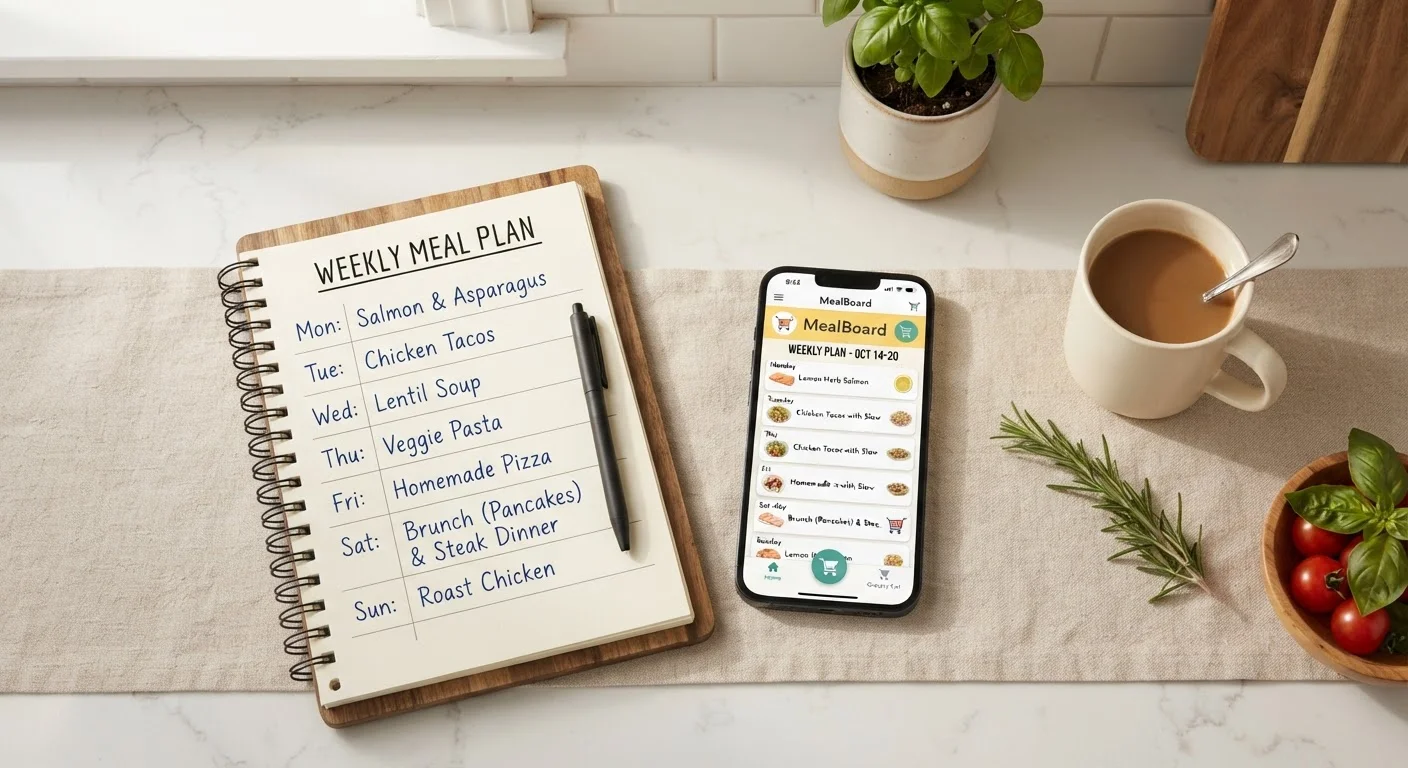
A paper meal plan requires zero setup, no account, and no learning curve. You write down five to seven dinners, jot a grocery list underneath, and you're done. For many households, this low-friction entry point is exactly why it works — there's no app to open, no password to remember, and no temptation to scroll while you plan.
Handwriting also tends to slow people down in a useful way. Physically writing out meals encourages a moment of genuine consideration — do we actually have time for that slow-cooker recipe on Thursday? Research in cognitive psychology suggests handwriting engages memory differently than typing, which may help people remember their plan without checking it constantly.
The downsides are real, though. Paper lists can't sync between family members, get lost on the counter, and offer no help aggregating ingredients across multiple recipes. You'll rewrite similar lists week after week with no accumulated benefit. If you cook from online recipes, you'll be toggling between a screen and your notepad constantly. Paper also offers no built-in storage — last month's successful week is gone unless you photographed it.
| Paper List | Digital App | |
|---|---|---|
| Setup time | None — start immediately | Moderate — account, preferences, learning curve |
| Grocery list sharing | Not possible in real time | Syncs instantly across devices |
| Recipe integration | Manual — toggle between paper and screen | Auto-imports ingredients from saved recipes |
| Reusing past plans | Only if physically saved or photographed | Searchable history, easy to duplicate |
| Distraction risk during planning | None | Moderate — notifications, browsing temptation |
| Long-term time savings | Flat — same effort each week | Increases over time as library builds |
| Works without internet/power | Always | Most apps require connectivity |
The Case for Digital Apps
Digital meal planning tools earn their place through accumulation. The more you use them, the more useful they become — saved recipes, past weekly plans, and auto-generated grocery lists that consolidate ingredients across every dish you've scheduled. For a household that cooks from structured recipes and shops with a shared list, the time savings over several weeks can be substantial.
Shared access is another meaningful advantage. If two people share grocery duties, a synchronized digital list eliminates the classic scenario of someone buying the wrong thing because they didn't see the updated paper. Apps also make it easy to search and reuse past plans, which is genuinely helpful on a hectic Sunday when you don't have energy to think creatively.
The friction comes upfront. Most apps require setup time — entering preferred recipes, learning the interface, and building a habit of opening the app rather than grabbing a notepad. Some people invest that time and never look back. Others find the onboarding tedious enough that they quietly revert to sticky notes. The case for flexible meal planning is also worth reading here: apps with rigid weekly structures can feel constraining if your schedule varies a lot.
Choosing What Will Actually Stick
Before committing to either format, consider three honest questions:
- How often do you cook from recipes versus memory? Heavy recipe users benefit more from app integration. Cooks who rely on a rotating set of familiar dishes may find paper perfectly sufficient.
- Is meal planning a solo or shared task in your household? Shared access to a digital list is a concrete advantage. Solo planners often find paper equally effective.
- Where does your planning session typically happen? If you plan at the kitchen table with a coffee, paper may feel natural. If you plan on your commute or in short windows throughout the week, a phone app is the more practical format.
A hybrid approach also deserves consideration: plan meals on paper for the tactile, focused experience, then transfer your grocery list to your phone before shopping. Many home cooks settle here naturally. For a broader look at how planning fits into your overall weekly routine, see meal planning as a weekly food management system.
The format question also applies beyond meal planning — if you're weighing analog versus digital for household budgeting, the same logic applies. Our article on budgeting by spreadsheet vs. pen and paper explores those trade-offs in useful parallel.