

Key Takeaways
Credit Report
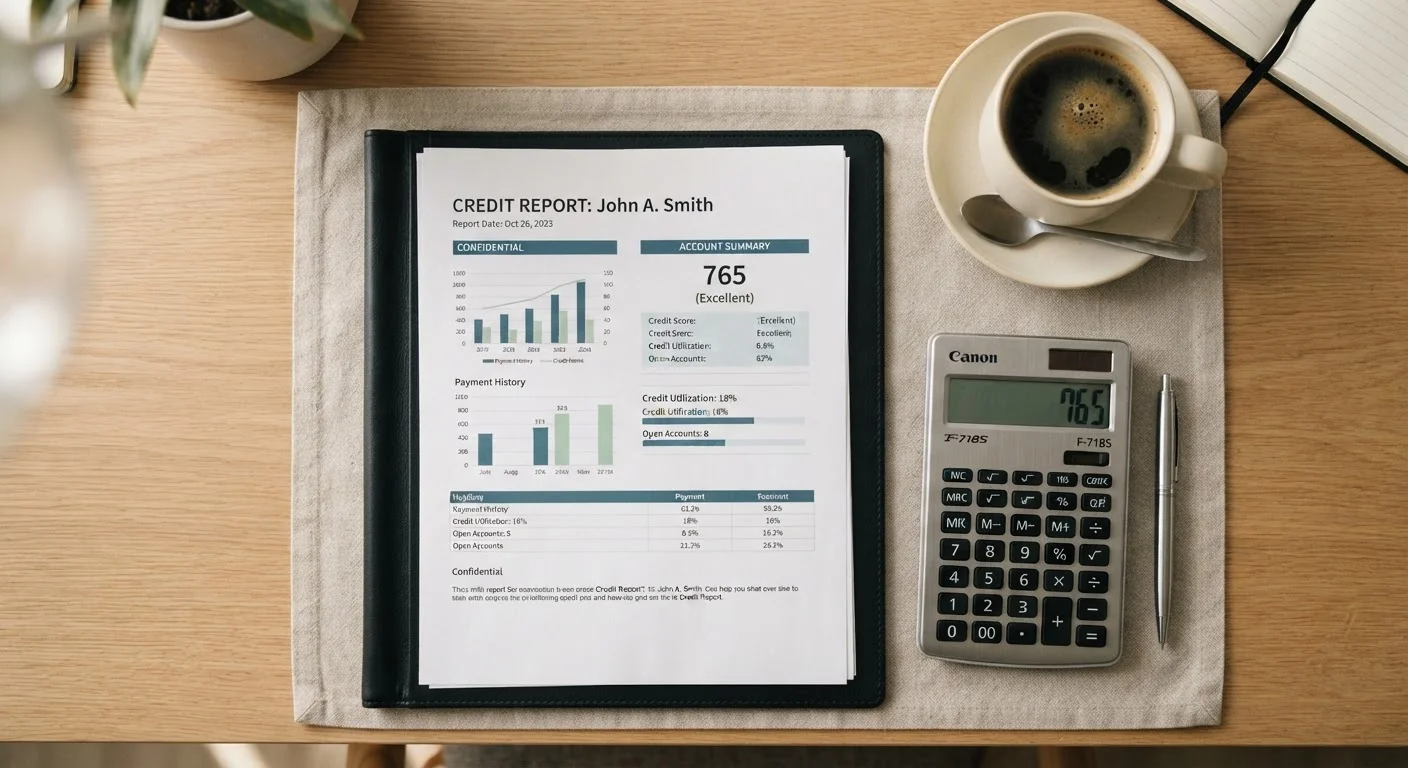
A credit report is a detailed record of your borrowing history, maintained by the three major credit bureaus — Equifax, Experian, and TransUnion. It lists every credit account you've opened, your payment history, outstanding balances, and any negative marks like late payments or collections. Lenders review this document to decide whether to approve you for a loan, credit card, or other credit product.
Credit reports are governed by the Fair Credit Reporting Act (FCRA), which gives consumers the right to dispute inaccurate information and access their reports for free.
The Report vs. the Score: Why Both Matter
Most people have heard of a credit score, but far fewer have actually read their credit report. That gap matters — because the report is the foundation everything else is built on. Your credit score is a number, typically ranging from 300 to 850, that a scoring model like FICO or VantageScore calculates by analyzing the information inside your report. No report, no score.
Understanding the report itself puts you in a stronger position. You can catch errors that may be dragging your score down, spot signs of identity theft early, and see exactly which behaviors are helping or hurting you. For a broader view of how credit and debt work together, the complete foundation for smarter borrowing is worth reading alongside this article.
What's Actually Inside Your Credit Report
A credit report is divided into four main sections. Here's what each one contains:
- Personal information: Your name, current and past addresses, Social Security number (partially masked), date of birth, and employment history. This section doesn't affect your score — it's used to identify you.
- Account history (also called "tradelines"): Every credit account you've opened, including credit cards, auto loans, student loans, and mortgages. For each account, the report shows the lender's name, account type, date opened, credit limit or loan amount, current balance, and payment history month by month.
- Inquiries: A log of who has accessed your report. Hard inquiries — from lenders when you apply for credit — are visible to other lenders and can slightly lower your score. Soft inquiries — from your own checks or pre-approval screenings — are only visible to you.
- Public records and collections: Serious negative events such as bankruptcies, accounts sent to collections, or civil judgments. These carry significant weight and remain on the report for years.
Your Three Reports Can Differ
Because each bureau collects data independently, your report may look slightly different at Equifax than it does at Experian or TransUnion. Not every lender reports to all three bureaus, so an account might appear on two reports but not the third. This is why it's worth reviewing all three, not just one.
Because each bureau collects data independently, your report may look slightly different at Equifax than it does at Experian or TransUnion. Not every lender reports to all three bureaus, so an account might appear on two reports but not the third.
How Different Account Types Shape Your Profile
Not all accounts on your report are treated equally. Credit cards are a form of revolving credit — your balance fluctuates and you have ongoing borrowing access. Auto loans and mortgages are installment loans — fixed amounts repaid in scheduled payments over time. Both types appear on your report, but they affect your credit profile in distinct ways. The difference between revolving credit and installment loans goes deeper on this distinction if you want to understand the mechanics.
Payment history is the single largest factor in most scoring models — typically accounting for roughly 35% of a FICO score. A single missed payment can appear on your report and affect your score for years, even after the account is eventually paid off.
Common Mistakes and How to Avoid Them
Errors on credit reports are more common than most people expect. Accounts that don't belong to you, incorrect payment statuses, and outdated information that should have aged off are all documented types of errors. If you find something wrong, you can file a dispute directly with the bureau that's reporting it — the process is free and can be done online.
Before you get into the details of disputes or score strategy, it also helps to clear up some common misunderstandings about how credit works. The things people get wrong about credit scores covers several beliefs that are only partly true — including some that may be affecting decisions you're making right now.
This article is for general informational and educational purposes only and does not constitute personalized financial, legal, or credit advice. For guidance specific to your situation, consider consulting a qualified financial advisor or credit counselor.