

Key Takeaways
Where This Myth Comes From
Ask around and you'll hear it often: "I keep a small balance on my card every month to show the lenders I'm using credit." It sounds reasonable — like showing up to class so the teacher knows you exist. The problem is, credit scoring models don't work that way.
The belief likely took root because people conflated using credit with carrying credit. Yes, you need to use your card periodically for it to help your score. But using it and leaving an unpaid balance are two different things. You can swipe the card, get the usage recorded, and still pay every dollar by the due date. Your score benefits either way — but your wallet only benefits from one approach.
For a fuller picture of how credit activity is tracked in the first place, see how your credit report works. This myth is also one of several covered in our roundup of things people get wrong about credit scores.
Common Myths — and What's Actually True
Let's go through the most persistent misconceptions about carrying a balance and correct each one directly.
Myth
Carrying a small balance each month shows lenders you're responsible and boosts your credit score.
Fact
Carrying a balance has no positive effect on your credit score. Paying in full works just as well — and costs you nothing in interest.
Credit scoring models like FICO and VantageScore assess whether you use credit and pay on time — not whether you leave a balance unpaid. What gets recorded is that you made a payment, not the size of what you kept owing. The only thing a carried balance guarantees is interest charges.
Myth
If you pay your balance in full every month, the card looks inactive and doesn't help your score.
Fact
Paying in full is ideal. As long as purchases appear on the statement before you pay, the card registers as active.
Scoring models look at whether a card has recent activity and whether payments are made on time. A card you use and pay off completely each cycle checks both boxes. "Inactive" typically refers to a card with no purchases at all — not one being paid in full regularly.
Myth
Credit card companies want you to carry a balance because it proves you're a reliable borrower.
Fact
Issuers profit from interest when you carry a balance — that's a business incentive, not a credit-building one.
It's worth separating what benefits a credit card issuer from what benefits your credit score. Issuers earn revenue from interest on unpaid balances, so a carried balance helps them. Your score, however, is calculated by independent scoring companies using formulas that don't reward debt balances — they reward consistent, on-time repayment. These are very different things.
Myth
Paying only the minimum shows you know how to manage credit responsibly.
Fact
Minimum payments keep your account current but grow the balance over time through interest, which can raise your utilization and increase financial strain.
Making at least the minimum payment avoids a late payment mark on your report — that part is true. But minimum payments are designed to keep you in debt longer, not to help you get ahead. As the balance lingers and grows, your credit utilization (the share of available credit you're using) can creep up, which tends to drag scores down rather than lift them. Paying the full balance avoids this cycle entirely. You can read more about the specific mechanics in our guide on habits that quietly erode credit scores.
What the Interest Actually Costs You
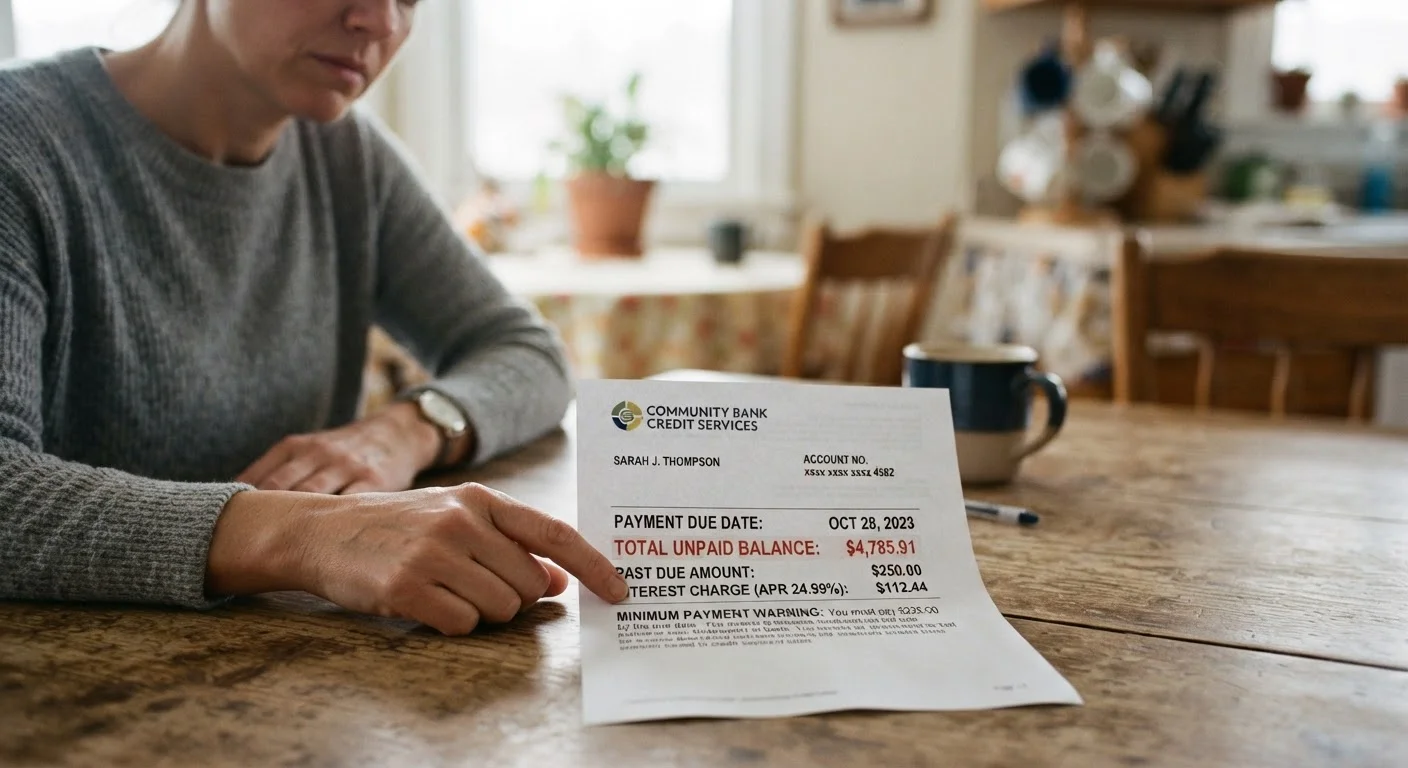
Here's the concrete part that often gets skipped: credit card interest is expensive. The average credit card APR in the U.S. has been well above 20% in recent years. On a $1,000 balance, that's more than $200 in interest per year — and that's before compounding works against you.
If you're carrying a balance under the assumption that it's building your score, you're paying for a benefit that isn't arriving. The money going to interest is money that could be going toward an emergency fund, a debt payoff, or simply staying in your account.
20%+
Average U.S. credit card APR
Federal Reserve data has consistently shown average credit card interest rates exceeding 20% annually in recent years, making carried balances costly.
35%
Payment history share of FICO score
According to FICO, payment history is the single largest factor in its scoring model — rewarding on-time payments, not carried balances.
The smarter approach: use your card for normal purchases, then pay the full statement balance before the due date. Your payment history — which is the largest factor in most scoring models — gets a positive mark, your utilization stays low, and you owe zero interest. That's the strategy that actually works. For more on managing the utilization side of this equation, see how credit utilization affects your score.
This article is for general informational and educational purposes only. It is not personalized financial, credit, or legal advice. For guidance specific to your situation, consult a qualified financial professional.