

Key Takeaways
Start here
Why Obedience Training Matters From Day One
Learn the method
The Foundation: Positive Reinforcement
Practice the basics
The Core Commands Every Dog Should Learn
Add real-world skills
Loose-Leash Walking: The Skill New Owners Underestimate
Build the habit
Building a Consistent Training Routine
Know your limits
When to Seek Professional Help
Why Obedience Training Matters From Day One
Basic obedience training isn't just about impressing people at the dog park. It's a safety net. A dog that reliably responds to come or leave it is far less likely to bolt into traffic, eat something dangerous, or scare a child. Training also structures the relationship between you and your dog, giving your dog clear, predictable expectations — which most dogs find genuinely calming.
New owners sometimes treat training as optional or a future project. In practice, every interaction you have with a new dog is already teaching them something. Starting intentional training early simply ensures those early lessons are the ones you actually want your dog to learn. Before your first session, check our preparation checklist for training sessions to set yourself up for success.
The Foundation: Positive Reinforcement
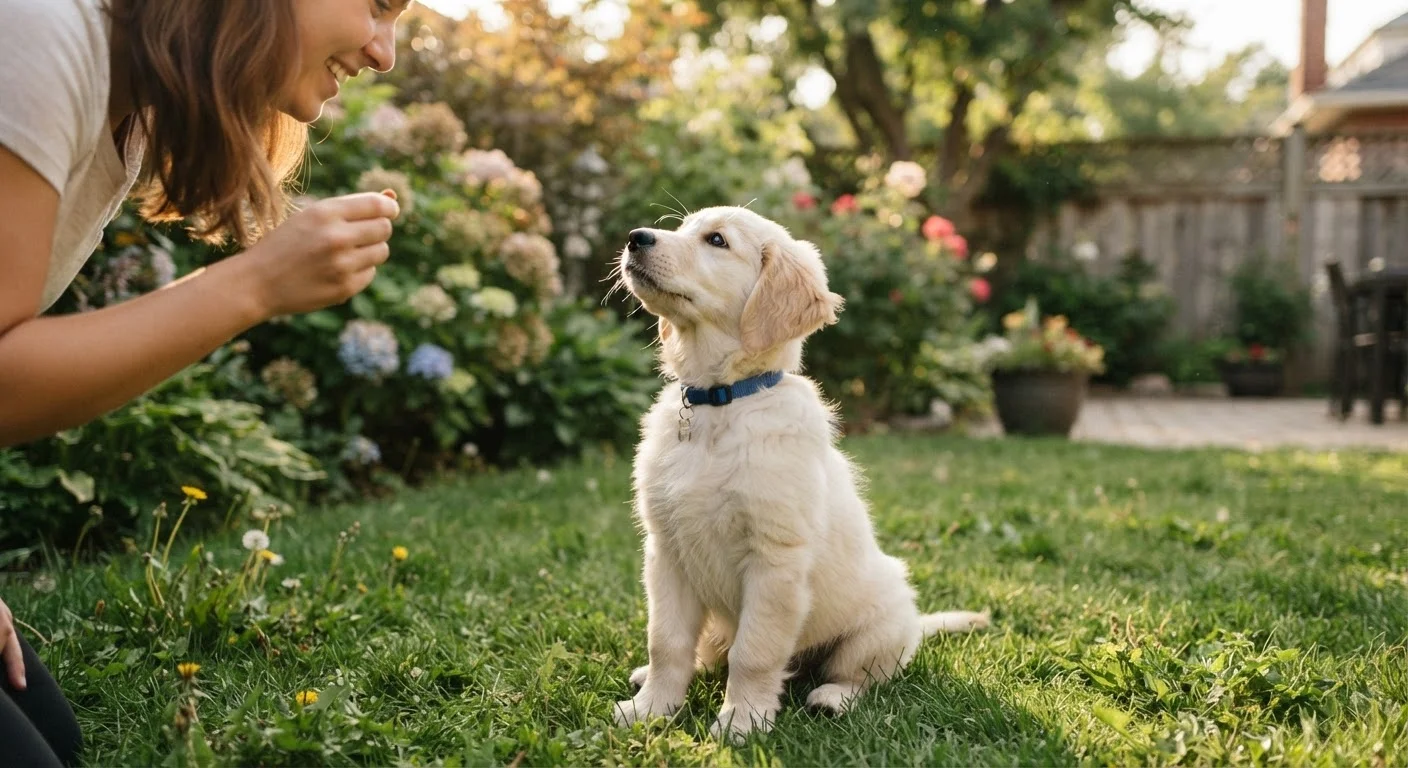
Positive reinforcement means immediately rewarding a behavior you want to see repeated — typically with a small treat, verbal praise, or a brief play reward. The timing matters: the reward needs to arrive within a second or two of the behavior so your dog connects cause and effect. This approach is well-supported by animal behavior science and endorsed by major veterinary organizations.
A few practical principles to keep in mind:
- Mark the moment. A short, consistent word like "yes" or a training clicker signals exactly when the dog did the right thing, bridging the gap before the treat arrives.
- Keep rewards meaningful. Use treats your dog genuinely gets excited about, not just whatever is convenient.
- Fade treats gradually. Once a behavior is reliable, reward intermittently rather than every time — this actually strengthens the habit.
Some common misconceptions about training can derail well-intentioned owners before they start. Our article on pet training myths clears up the most persistent ones.
Pair Training With Your Dog's Existing Routine
You don't need to carve out separate "training time" to make progress. Ask your dog to sit before placing their food bowl down, or practice a quick stay before opening the door for a walk. Embedding small repetitions into everyday moments builds reliability faster than formal sessions alone.
The Core Commands Every Dog Should Learn
Start with five commands that provide the most practical safety and control:
- Sit
- The easiest entry point for most dogs. Lure your dog's nose upward with a treat until the hind end naturally drops, then mark and reward. Practice before meals and greetings.
- Stay
- Build duration slowly — one second, then three, then ten. Don't add distance until the dog holds still reliably for a count of five or more.
- Come (recall)
- Always make coming to you the best thing that happens in your dog's day. Never call your dog to you for something unpleasant — go get them instead.
- Down
- Lure from a sit position by moving the treat toward the floor. Slightly harder than sit for many dogs, so keep sessions short and reward small progress.
- Leave it
- Teach the dog to disengage from an object on cue. Start with a low-value item and work up. This command can prevent your dog from picking up hazardous objects.
Positive reinforcement
A training method where you reward the behavior you want, making the dog more likely to repeat it. The reward follows immediately after the correct behavior.
Marker word
A short, consistent sound or word (like "yes") used at the exact moment a dog does something right, signaling that a reward is coming. A clicker serves the same purpose.
Proofing
The process of practicing a command in increasingly distracting or unfamiliar environments so the dog responds reliably — not just at home.
Luring
Using a treat held in your hand to guide your dog into a desired position, such as moving the treat upward to encourage a sit.
Loose-leash walking
Walking with your dog without constant pulling tension on the leash, so both dog and owner can move comfortably side by side.
Veterinary behaviorist
A veterinarian with advanced specialty training in animal behavior who can diagnose and treat complex behavioral issues, including those with a medical component.
Loose-Leash Walking: The Skill New Owners Underestimate
Pulling on the leash is one of the top complaints from new dog owners, and it's also one of the most fixable — if you're patient. Loose-leash walking means your dog moves alongside you without constant tension on the leash, which is more comfortable for both of you and reduces the risk of injury, especially with larger dogs.
A workable approach for beginners:
- Start indoors or in a low-distraction yard where your dog can actually focus.
- Take one step. If the leash stays loose, mark and reward.
- The moment tension appears, stop moving entirely. Wait for slack, then continue.
- Gradually build duration and add distractions over multiple sessions.
The right equipment also plays a role. See our guide on choosing between a collar, harness, or head halter based on your dog's build and behavior.
Building a Consistent Training Routine
Consistency is the variable that most reliably predicts training success. That means the same cue words, the same rules, and the same responses from every person in the household. If one family member lets the dog jump on them while another corrects it, the dog receives conflicting information and the behavior becomes harder to change — not easier.
Practical structure that works for busy households:
- 2–3 sessions per day, 5–10 minutes each. Tie sessions to existing routines — before morning walks, after meals, before playtime.
- End on a win. Finish every session with something the dog does well so the experience stays positive.
- Keep a simple log. A quick note on what you practiced and how it went helps you spot patterns and progress.
Training needs also shift as your dog ages. Our lifelong training guide covers what to expect at each stage.
When to Seek Professional Help
Most basic obedience skills are within reach of any patient owner. But some situations genuinely call for professional support — and recognizing that early saves time and prevents problems from worsening.
Consider consulting a certified professional trainer (look for credentials from recognized organizations like the Certification Council for Professional Dog Trainers) or a veterinary behaviorist if your dog shows:
- Growling, snapping, or biting — even minor incidents
- Intense fear responses to common stimuli
- Signs of separation anxiety that worsen despite your efforts
- Regression after previously learning a skill
If separation anxiety is a specific concern, our article on separation anxiety training strategies explains the gradual desensitization approach behaviorists typically recommend. Group obedience classes are another excellent option for mild challenges — they provide structured guidance alongside valuable socialization opportunities for your dog.