

Key Takeaways
Why the Socialization Window Is a Biological Reality
The socialization window isn't a training concept someone invented — it reflects real developmental neuroscience. During the period from roughly 3 to 16 weeks, a puppy's brain actively forms associations between novel stimuli and emotional responses. The nervous system is, in a meaningful sense, writing its default settings. Experiences encountered during this phase are processed with a kind of openness that gradually diminishes as the brain matures and becomes more selective about what it accepts as "normal."
This is why two puppies from the same litter can grow into very different adult dogs based purely on their early environments. A puppy raised in a quiet home with limited human contact may find the ordinary chaos of family life genuinely stressful as an adult — not because anything is wrong with the dog, but because its brain never had the opportunity to file those experiences as safe. Socialization is not about producing a fearless dog. It is about building a dog with a wide enough comfort zone to navigate everyday life without chronic stress.
Keep a Socialization Log
Jot down each new experience your puppy encounters — type of person, environment, sound, or animal — and note their reaction (calm, curious, nervous). Over time, you'll spot patterns and can address any consistent stress triggers before they become entrenched fears. A simple notebook or phone note works perfectly.
Understanding this early is half the battle. The other half is knowing how to act on it — which is exactly what the steps in this guide are designed to help you do. For a broader view of where puppy training fits across a dog's life, this lifelong training guide provides useful context.
What Good Socialization Actually Looks Like
Common misconceptions about socialization focus purely on quantity — the idea that a puppy simply needs to "meet lots of dogs" or "see lots of people." In reality, a single frightening encounter with an aggressive dog can outweigh dozens of neutral ones. Quality and emotional tone matter far more than raw numbers.
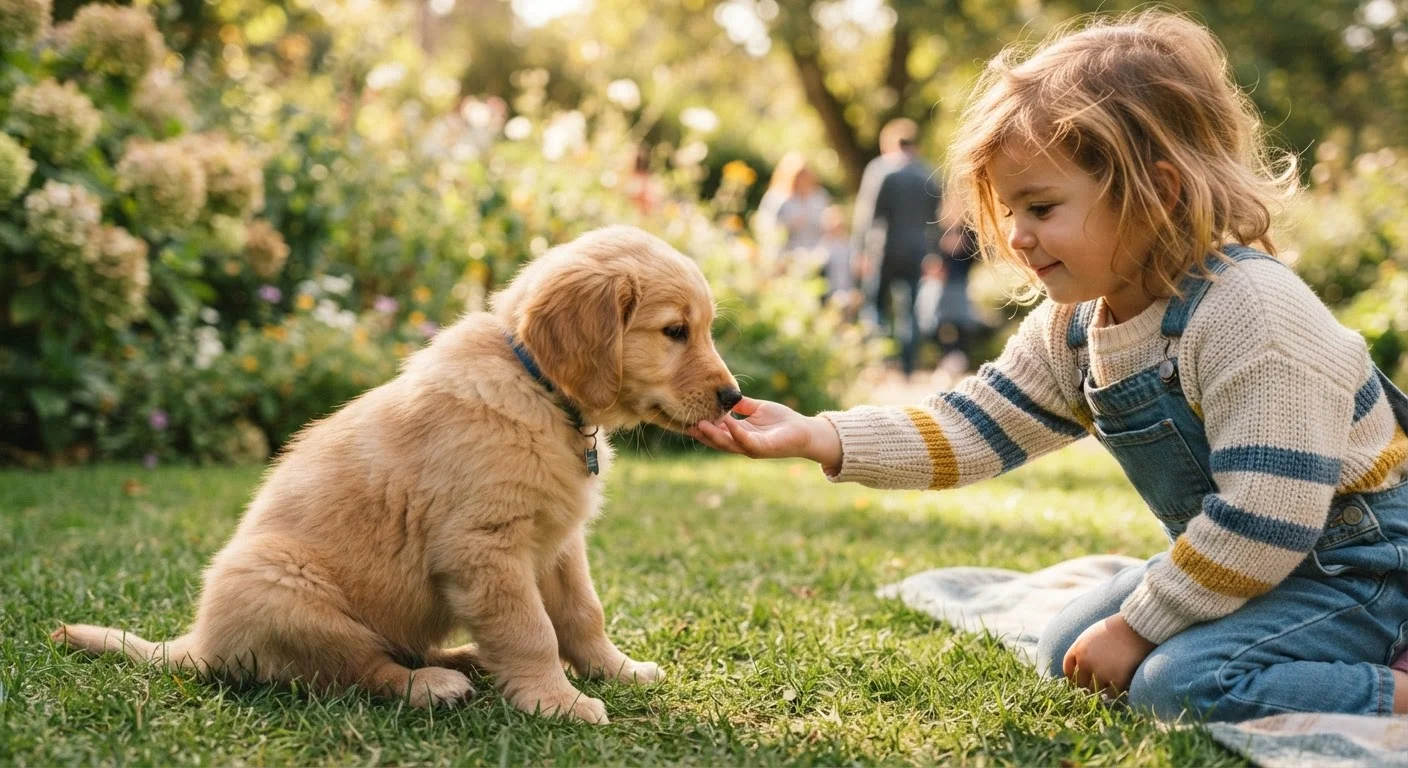
Good socialization is characterized by a puppy that is curious, engaged, and recovering quickly from brief moments of uncertainty. It looks like a puppy sniffing an unfamiliar person's shoes before accepting a treat. It looks like a puppy startling at a loud noise and then shaking it off and moving on. What it does not look like is a puppy being physically held in front of something it is trying to flee, or being forced to interact with an over-exuberant dog while showing visible distress signals.
Don't Flood Your Puppy With Stimulation
More exposure does not automatically mean better socialization. Forcing a puppy into overwhelming or scary situations — loud crowds, aggressive dogs, rough handling — can backfire and create lasting fear associations. Always let the puppy set the pace and watch for stress signals like yawning, lip-licking, tucked tail, or attempting to hide.
Before each socialization session, it helps to think through your setup — treats, environment, timing, and your puppy's current energy level. Our training session preparation checklist walks through exactly that process and applies directly to puppy socialization outings.
Vaccination Timing Creates a Real Tension
Puppies aren't fully vaccinated until around 16 weeks — right when the socialization window is closing. Skipping socialization entirely to wait for full vaccination carries its own risks, as undersocialized dogs are more prone to fear and aggression. Work with your veterinarian to find a middle path: puppy classes that require proof of age-appropriate vaccines, visits with healthy, vaccinated dogs in clean environments, and controlled exposure to people and settings that avoid high-risk areas like dog parks.