

Key Takeaways
Backed by decades of behavioral science research
Positive reinforcement through food rewards is one of the most studied training methods in animal behavior. It reliably accelerates skill acquisition across species, from dogs and cats to birds and small mammals.
Accessible to owners with no prior training experience
Unlike some methods that require precise timing of aversive events, treat delivery is intuitive for most people. A treat given within one to two seconds of a correct behavior is enough to build a clear association.
Low risk of fear or aggression side effects
Reward-based methods avoid the stress responses that punishment can trigger, making training sessions a positive experience that strengthens the pet-owner relationship rather than straining it.
Works across a wide range of behaviors and species
From basic obedience to complex behavioral modification, food rewards are versatile enough to address almost any training goal, regardless of the pet's age or prior history.
Speeds up the learning curve for new behaviors
Immediate food reinforcement creates a fast feedback loop that helps pets understand exactly which action earned the reward, shortening the time needed to establish reliable responses.
Daily treat calories can contribute to weight gain
Even small training treats add up when delivered across multiple sessions per day. Owners who don't adjust meal portions accordingly risk gradually overfeeding their pet, which carries real long-term health consequences.
Pets may only perform when food is visible
Without a planned fading strategy, some pets learn to check for treats before complying — performing reliably in the kitchen but not in the yard, or only when a treat bag is present.
High food motivation can create distraction and overarousal
Very food-driven pets may become too excited to absorb the lesson, lunging or losing focus. In these cases, the treat itself undermines the calm attentiveness that effective training requires.
Requires consistent treat management and planning
Effective treat training involves tracking treat volume, selecting appropriate value levels, and actively transitioning to intermittent reinforcement — all of which require more deliberate effort than it initially appears.
Not every pet responds to food as a primary motivator
Some animals — particularly anxious pets or those with certain health conditions affecting appetite — may not show reliable interest in food during training, limiting the method's effectiveness without supplementary strategies.
Our Verdict
Treat-based training is one of the most effective and humane tools available to everyday pet owners, supported by decades of behavioral research. Used thoughtfully — with attention to portion control, gradual reward fading, and pairing food with verbal praise — it delivers reliable results without the risks associated with punishment-based approaches. The key is treating it as a foundation to build on, not a permanent crutch.
Best for owners who want a science-backed, low-conflict training method and are willing to actively manage treat quantity and transition toward varied reinforcement over time.
Why Treat-Based Training Is So Widely Used
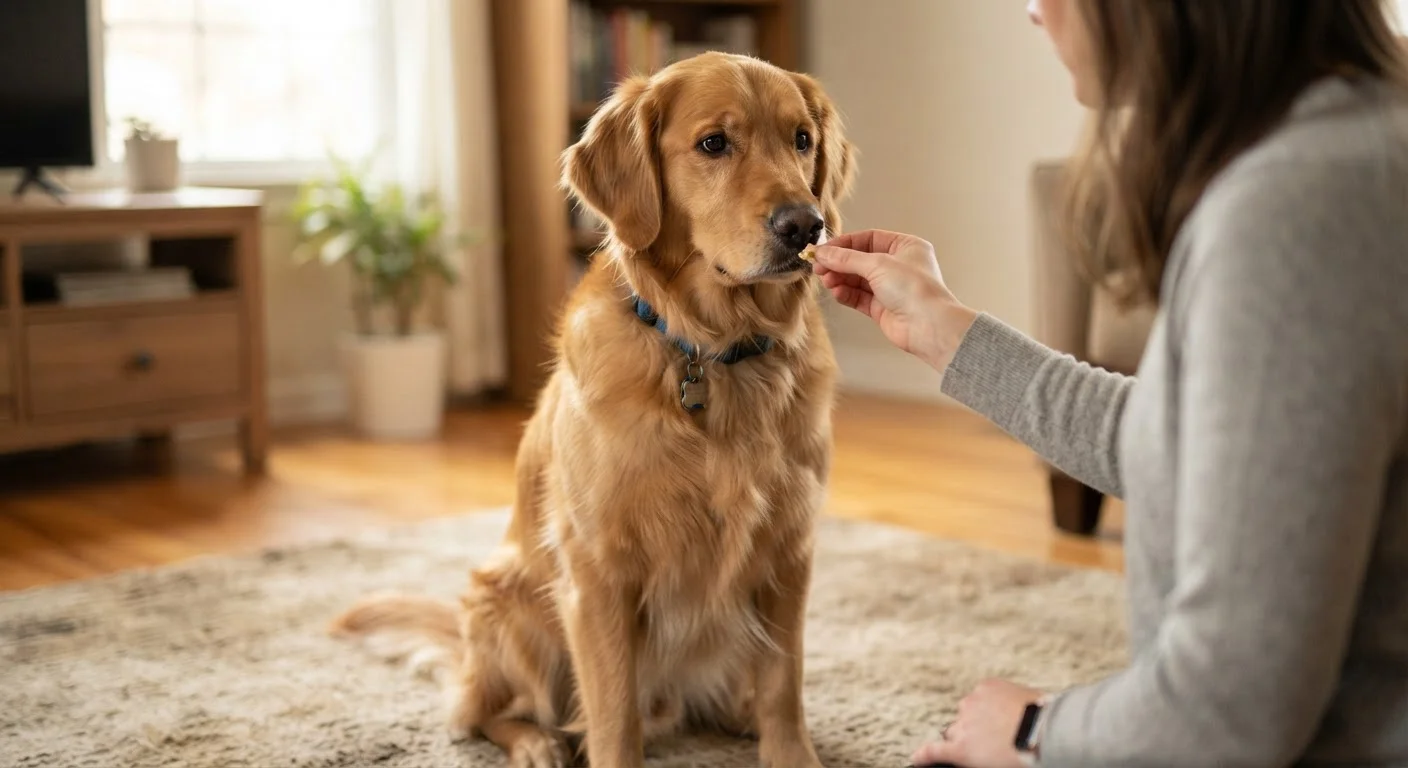
Food is a primary reinforcer — meaning animals are biologically motivated to seek it without any prior learning. That makes treats an almost universally effective tool for marking and rewarding desired behavior. When a treat arrives within a second or two of the correct action, your pet's brain links the behavior to the reward, making that behavior more likely to repeat. This is operant conditioning in its most practical form.
Most certified animal behaviorists and veterinary behaviorists recommend reward-based methods as a first-line approach. The evidence base is strong, the risk of side effects (fear, aggression, avoidance) is low, and the method is accessible to owners without specialized training experience. For a deeper look at the science, see why dogs respond to positive reinforcement.
Backed by decades of behavioral science research
Positive reinforcement through food rewards is one of the most studied training methods in animal behavior. It reliably accelerates skill acquisition across species, from dogs and cats to birds and small mammals.
Accessible to owners with no prior training experience
Unlike some methods that require precise timing of aversive events, treat delivery is intuitive for most people. A treat given within one to two seconds of a correct behavior is enough to build a clear association.
Low risk of fear or aggression side effects
Reward-based methods avoid the stress responses that punishment can trigger, making training sessions a positive experience that strengthens the pet-owner relationship rather than straining it.
Works across a wide range of behaviors and species
From basic obedience to complex behavioral modification, food rewards are versatile enough to address almost any training goal, regardless of the pet's age or prior history.
Speeds up the learning curve for new behaviors
Immediate food reinforcement creates a fast feedback loop that helps pets understand exactly which action earned the reward, shortening the time needed to establish reliable responses.
The Real Downsides Worth Knowing
No training method is without trade-offs, and daily treat use carries a few that are easy to overlook when things are going well.
Caloric creep is the most concrete risk. Training treats are small, but they add up — especially during intensive learning phases when you may deliver dozens in a single session. Many owners don't adjust meal portions to account for treat calories, which over time contributes to weight gain. Always factor treats into your pet's daily caloric budget, and consider using pieces of their regular kibble during sessions when appropriate.
Treat dependency is a subtler issue. If food is always present, some pets learn to perform only when they can smell or see a reward. This isn't a character flaw — it's a training oversight. The fix is systematic reward fading: once a behavior is reliable, reinforce it on an intermittent schedule rather than every single repetition. Intermittent reinforcement actually strengthens behavior over time, making it more durable.
Distraction and arousal can become a problem in highly food-motivated pets. An overly excited dog may be too focused on the treat to actually process what behavior earned it. In those cases, calmer rewards or a lower-value treat can help.
Daily treat calories can contribute to weight gain
Even small training treats add up when delivered across multiple sessions per day. Owners who don't adjust meal portions accordingly risk gradually overfeeding their pet, which carries real long-term health consequences.
Pets may only perform when food is visible
Without a planned fading strategy, some pets learn to check for treats before complying — performing reliably in the kitchen but not in the yard, or only when a treat bag is present.
High food motivation can create distraction and overarousal
Very food-driven pets may become too excited to absorb the lesson, lunging or losing focus. In these cases, the treat itself undermines the calm attentiveness that effective training requires.
Requires consistent treat management and planning
Effective treat training involves tracking treat volume, selecting appropriate value levels, and actively transitioning to intermittent reinforcement — all of which require more deliberate effort than it initially appears.
Not every pet responds to food as a primary motivator
Some animals — particularly anxious pets or those with certain health conditions affecting appetite — may not show reliable interest in food during training, limiting the method's effectiveness without supplementary strategies.
How to Use Treats More Strategically
The goal of treat-based training isn't to carry food forever — it's to use food as a teaching scaffold that you gradually remove as the behavior becomes habitual.
Timing Matters More Than Treat Size
Research in animal learning consistently shows that the timing of a reward is more important than its size. A tiny treat delivered within one second of the correct behavior is more effective than a larger reward given five seconds later. Focus on getting your timing sharp before worrying about which treat to use. A verbal marker or clicker can help bridge the gap between behavior and reward delivery.
- Start with high-value treats when teaching something new or difficult, then shift to lower-value rewards as the pet gains confidence.
- Pair treats with verbal markers (a word like "yes") or a clicker from the beginning. Over time, the marker itself gains reinforcing value, giving you more flexibility. See clicker vs. verbal marker methods for a comparison of these approaches.
- Introduce non-food rewards — praise, a brief play session, or a favorite toy — so your pet learns that good things come in more than one form. This reduces the risk of treat dependency significantly.
- Track your treat volume. If your dog or cat is getting multiple sessions daily, weigh or count the treats and subtract that from their meal portion.
If you're working on problem behaviors specifically, treat-based redirection can be particularly powerful when paired with the right technique. The redirect, reward, repeat approach offers a practical framework for exactly that.
~10%
Recommended daily treat calorie limit
Veterinary nutritionists generally recommend treats make up no more than 10% of a pet's total daily caloric intake to avoid dietary imbalance.
59%
U.S. dogs estimated overweight or obese
According to the Association for Pet Obesity Prevention's clinical survey data, a majority of dogs in the U.S. are above their ideal body weight, underscoring the importance of calorie-conscious treat use.
Putting It in Context
Treat-based training doesn't exist in a vacuum. It's one piece of a broader approach to communicating with your pet. Many myths circulate about what food rewards will and won't do — including the persistent idea that using treats means your pet is "only listening for the food" rather than respecting you. That framing misunderstands how learning works for animals. For a reality check on those misconceptions, common pet training myths is worth a read.
The trade-offs of daily treat training are real but manageable. Caloric awareness, a plan for fading food rewards, and a willingness to diversify reinforcement are all that's needed to make this method work reliably over the long term — without the downsides.
This article is for general informational purposes only and does not constitute veterinary or professional training advice. Consult a certified animal behaviorist or your veterinarian for guidance specific to your pet's needs.