

Key Takeaways
What Jumping Is Actually Telling You
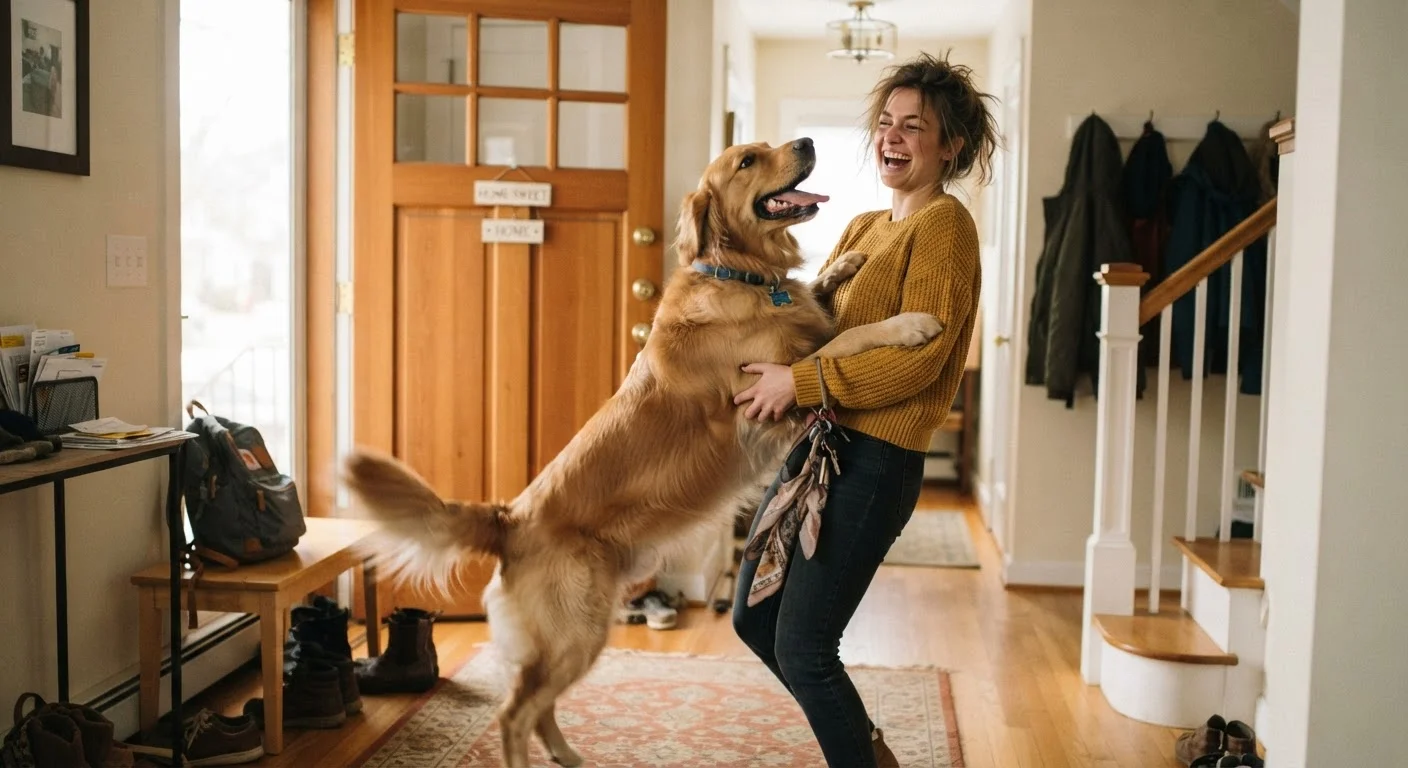
Dogs jump on people for one fundamental reason: it works. At some point — often when they were small, cute puppies — someone looked at them, laughed, and reached down. That moment wired in a lesson that has proven remarkably durable: jump up, get face-level contact, receive attention.
This is a social greeting behavior rooted in how dogs interact with each other. Young dogs jump toward the muzzles of adult dogs as a sign of deference and enthusiasm. When your dog launches themselves at your houseguest, they're not being aggressive or dominant — they're saying hello in the most natural way they know how.
Understanding this matters because it changes your approach. You're not dealing with a bad dog. You're dealing with a dog whose instinct has been accidentally reinforced, often by the very people who now want it to stop. For a broader look at how to channel unwanted behaviors into better habits, see our guide to redirection strategies.
The Most Common Mistakes Owners Make
Most owners are unknowingly perpetuating the behavior they want to stop. The errors below aren't signs of bad ownership — they're predictable reactions that happen to backfire given how dogs actually learn.
Pushing the dog away or saying 'No' without redirecting to an alternative behavior.
Why it happens: It feels like a correction, but any physical or verbal contact — even negative — is still attention, which is exactly what the dog wanted.
Allowing jumping sometimes — like when you're in casual clothes — but correcting it other times.
Why it happens: Owners make exceptions based on context (a muddy yard, a bad day), not realizing the dog has no way to read those situational cues.
Asking guests to 'just ignore' the jumping without coaching them on what to do instead.
Why it happens: Owners assume ignoring is enough, but unprepared guests often make eye contact, laugh, or reach out — all of which function as rewards.
Starting training only when guests are already at the door, with the dog already over-aroused.
Why it happens: Owners address the symptom in the moment rather than building the skill in advance through lower-stakes practice.
Expecting the behavior to disappear without teaching an explicit alternative command.
Why it happens: It's tempting to focus on stopping the bad behavior rather than installing a competing one. But dogs don't do nothing — they need a replacement.
If you're just getting started with training foundations, our beginner obedience guide covers the core commands that make managing greetings much easier.
Building a Greeting Routine That Holds
Consistency Is Non-Negotiable
If even one person in your household rewards jumping with attention — even briefly — the behavior is being reinforced. Dogs learn from patterns, and a single inconsistent response can reset weeks of progress. Before you start training, get everyone who interacts with your dog on the same page about the rules.
The most effective long-term fix is replacing jumping with an incompatible behavior — something the dog does instead, not just instead of jumping when corrected. A well-practiced sit is the most common choice. A dog sitting cannot simultaneously be jumping.
Here's a simple framework to build on:
- Train the sit in low-distraction settings first. Get a reliable sit-on-cue before you ever involve a door or a guest.
- Simulate arrivals daily. Have a family member walk in and out repeatedly. Reward calm greetings. Leave and re-enter if jumping starts.
- Control the environment initially. Use a leash or baby gate at the door until your dog can hold it together. There's no shame in managing the situation while the skill is still being built.
- Introduce real guests gradually. Start with patient friends who understand the training process before practicing with unpredictable or enthusiastic visitors.
Progress will feel slow at first and then suddenly click. The dog isn't being stubborn — they're working through a habit that's had months or years of reinforcement. Stay consistent, keep sessions short, and recognize small wins.