

Key Takeaways
Matter Protocol
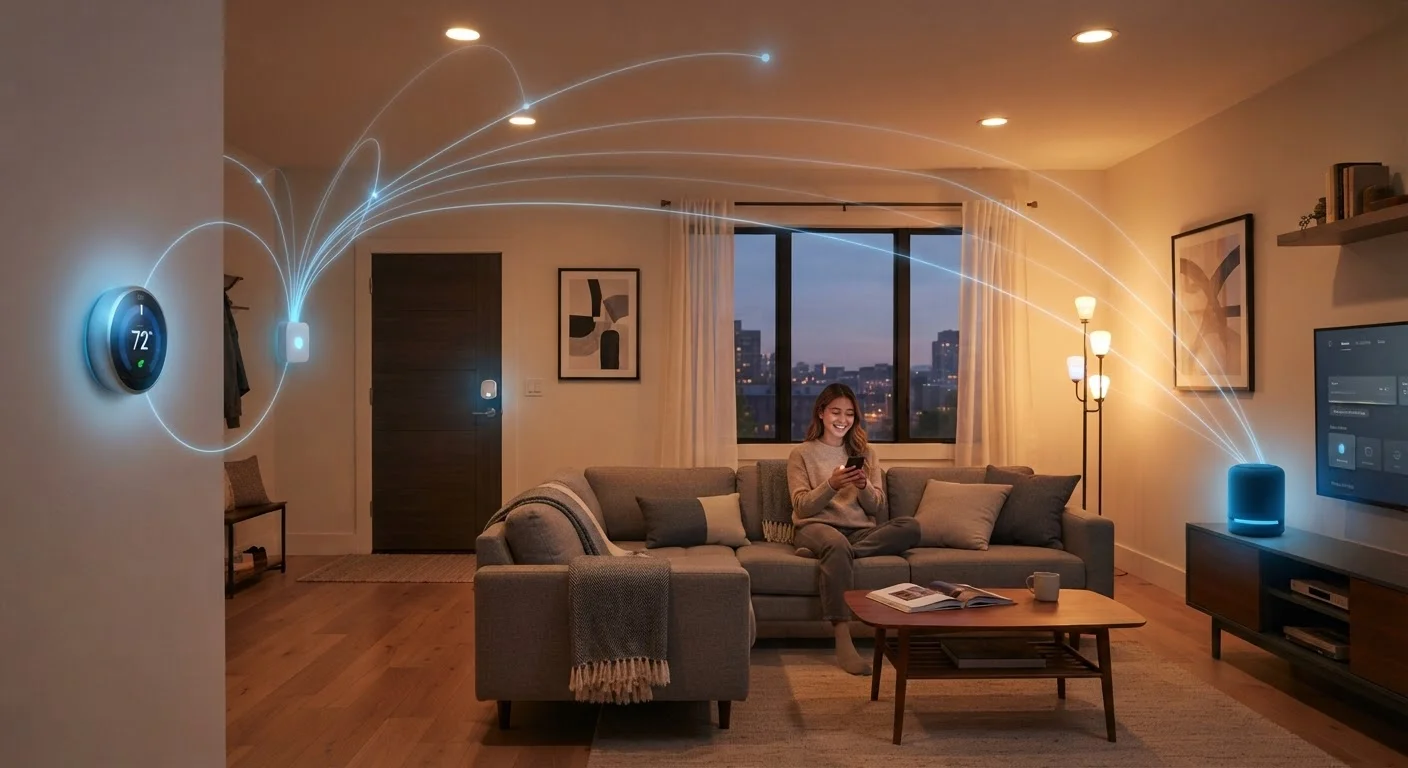
Matter is an open connectivity standard that allows smart home devices from different manufacturers to communicate with each other reliably. It was developed by a broad coalition of technology companies — including the major platform holders — to eliminate the frustrating incompatibility that has long plagued smart home setups. In practical terms, a Matter-certified device should work with any Matter-compatible app or voice assistant without requiring brand-specific workarounds.
Matter operates over existing home network technologies, primarily Wi-Fi and Thread (a low-power mesh networking protocol), using IP-based communication. Thread requires a border router — often built into a smart speaker or hub — to bridge devices to your home network.
Why Smart Home Compatibility Has Been Such a Problem
If you've ever bought a smart device only to discover it doesn't work with your existing setup, you've experienced the core frustration that Matter was created to address. For years, smart home technology has been organized around competing, closed ecosystems. A device built for one platform often simply wouldn't communicate with devices from a rival brand — not because the technology was incapable, but because the companies hadn't agreed on a common language.
The result for homeowners was a fragmented experience: separate apps, incompatible hubs, and the constant risk of betting on the wrong ecosystem. To understand why that matters in the bigger picture, see our plain-language overview of how smart homes fit together.
Matter emerged from a rare moment of industry cooperation. The standard is governed by the Connectivity Standards Alliance (CSA), a non-profit whose members include most of the major players in consumer technology. The goal was straightforward: define a shared protocol so that any certified device speaks a language every certified platform can understand.
What Matter Actually Changes for Homeowners
The most significant practical change Matter introduces is multi-admin: the ability to add a single device to more than one platform at the same time. Before Matter, a smart lock certified for one ecosystem usually lived entirely within that app. With Matter, that same lock could appear in your preferred voice assistant app and your spouse's preferred app simultaneously, without requiring separate hardware.
Matter also simplifies the setup process. Certified devices use a standardized commissioning flow — typically a QR code scan — that works consistently regardless of which app you're using to add it. This reduces the trial-and-error that has made smart home setup intimidating for many people.
550+
Matter-certified devices in the market
The Connectivity Standards Alliance reported over 550 Matter-certified products within the first year of the specification's launch.
4,000+
CSA member companies backing Matter
The Connectivity Standards Alliance, which governs the Matter standard, counts over 4,000 member companies as participants in its ecosystem.
3
Major platforms with native Matter support
Amazon Alexa, Google Home, and Apple HomeKit have all released Matter controller support, allowing Matter devices to work across all three.
For a deeper look at how the major platforms handle device compatibility, our platform comparison guide walks through the practical tradeoffs of each ecosystem.
What Matter Doesn't Fix Yet
Matter is a connectivity standard, not a feature standard. Two devices that both carry the Matter certification can still have very different app experiences, automation capabilities, and hardware quality. The protocol ensures they can talk to your platform — it does not dictate how rich that conversation is.
Device category coverage is also still maturing. Early versions of the Matter specification focused on the most common device types: lights, plugs, locks, thermostats, and sensors. More complex categories — like robot vacuums, washing machines, or video doorbells with advanced cloud features — are being incorporated gradually. If a device type you care about isn't yet in the specification, Matter won't help with it.
Cloud dependency is another nuance worth understanding. Some Matter devices still rely on a manufacturer's cloud service for advanced features like remote access or AI-powered automations, even if local control is also available. If that cloud service changes or is discontinued, some features may stop working regardless of Matter certification.
Understand the full landscape of what smart devices actually do and how they connect before committing to a setup built around any single assumption.
How to Use This Knowledge When Choosing Devices
Knowing what Matter is changes how you should evaluate smart device purchases. Here are the key questions to ask before buying:
- Is it Matter-certified? Look for the Matter logo or check the CSA's certified product database. Marketing language like "works with Matter" can be vague — certification is the reliable indicator.
- Does it use Wi-Fi or Thread? Thread devices need a border router. If you don't already have one built into a hub or smart speaker in your home, factor that into your setup plan.
- Which features require the manufacturer's app? Some advanced automations may not transfer to a third-party platform even with Matter. Identify which features matter most to you and confirm they're available through your preferred platform.
- Is your existing hub or speaker Matter-compatible? Not all older hubs support Matter. Check your current hardware before assuming it will work as a controller.
For practical, room-by-room guidance on which device types address real everyday friction, see smart devices worth considering room by room. If home security is a priority, our home security hub covers how smart locks, cameras, and sensors fit into a broader safety strategy.