

Car Know-How

The Seasonal Car Maintenance Checklist Every Driver Should Keep

Share
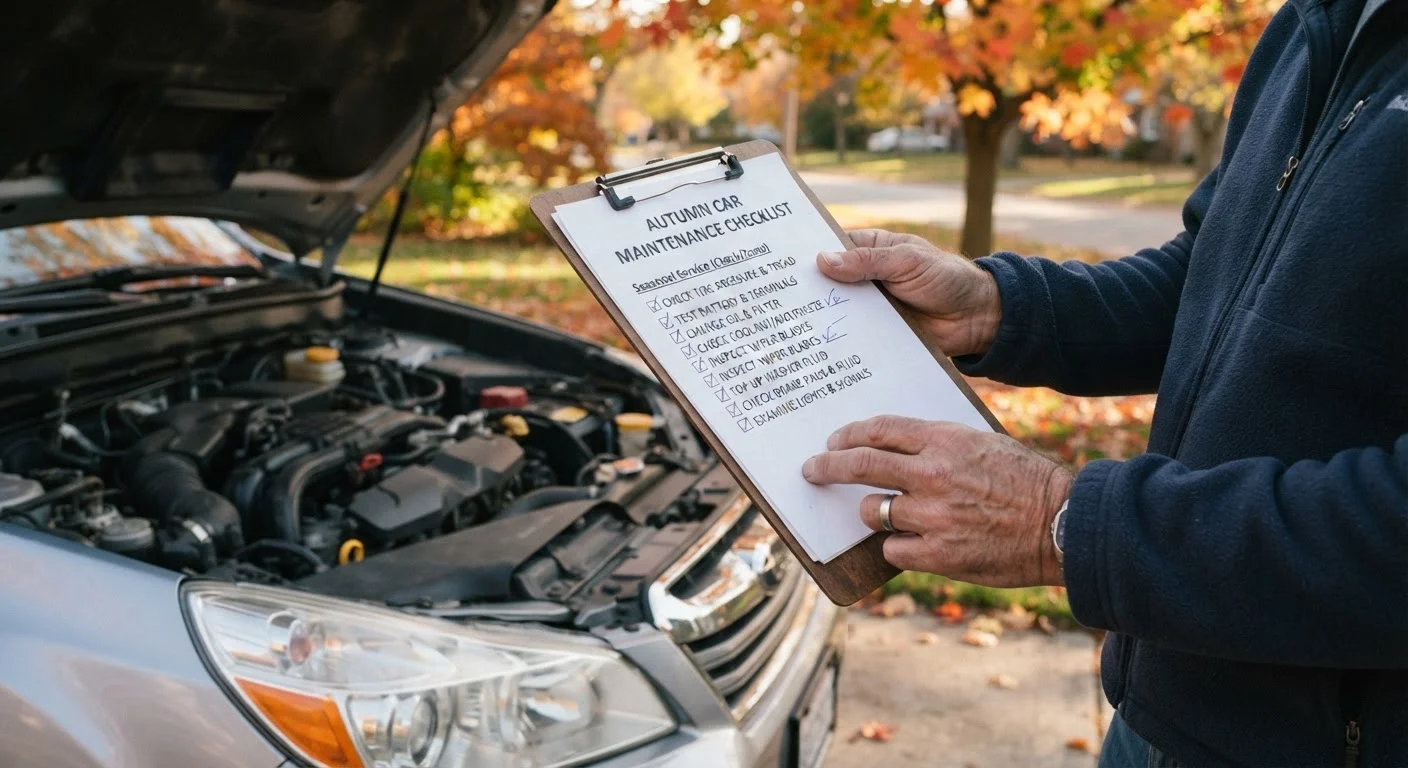
Driver holding a car maintenance checklist beside an open vehicle hood in autumn light.

Key Takeaways

Seasonal checks catch small problems before they become expensive repairs.
Most checklist items require no tools and take only a few minutes each.
Winter and summer place the most stress on batteries, tires, and fluids.
Keeping a maintenance log helps you stay on top of every interval.
Some tasks genuinely require a qualified mechanic — know which ones those are.
30–60 min

Summary

22 items · 30–60 minutes per seasonal check

Why Seasonal Maintenance Matters More Than One Annual Visit

A single annual service appointment is a starting point, not a complete strategy. Temperatures, road conditions, and driving demands shift dramatically across the four seasons — and your vehicle's needs shift with them. Extreme cold thickens engine oil and strains batteries; summer heat accelerates fluid breakdown and tire wear. Staying ahead of these changes is cheaper and safer than reacting to breakdowns.

This checklist is designed for everyday drivers who want to stay proactive without becoming amateur mechanics. Most tasks here are visual inspections or simple checks you can do in your driveway. When an item clearly calls for a professional — brake work, suspension diagnosis, electrical faults — we say so plainly.

Pair this checklist with a car maintenance log to track what you've done and when. That record pays off at resale time and helps you spot patterns before they become problems. For a deeper look at which services truly protect your car's lifespan, see what you can skip and what you can't.

Fall & Winter Preparation

Test your battery voltage or have it load-tested at an auto parts store — cold weather dramatically reduces cranking power, and a marginal battery that starts fine in October may fail in January. Must
Check tire tread depth and inflation pressure, adjusting for the fact that tire pressure drops roughly 1 PSI for every 10°F decrease in temperature. Must
Inspect windshield wipers and replace them if they streak or skip — consider winter-rated wiper blades if you live in a snowy region. Must
Top off or flush your engine coolant (antifreeze) and verify the freeze protection level with an inexpensive coolant tester strip. Must
Switch to a winter-weight or full-synthetic motor oil if your owner's manual recommends it for cold-climate operation. Should
Check all exterior lights — headlights, brake lights, and turn signals — since shorter days mean more time driving in the dark. Must

Spring Recovery & Summer Readiness

Inspect the undercarriage and wheel wells for rust or corrosion caused by road salt exposure over the winter months. Should
Check brake pads and rotors visually through the wheel spokes — if pads look thin or you hear grinding, schedule a professional brake inspection promptly. Must
Test your air conditioning system early in the season; if it blows warm or takes a long time to cool the cabin, have the refrigerant level checked by a certified technician. Should
Inspect belts and hoses for cracking, fraying, or softness — heat accelerates rubber degradation and summer is when these failures spike. Must
Replace your cabin air filter if it hasn't been changed in the past 12–15 months; a clogged filter reduces A/C efficiency and air quality. Should
Check windshield washer fluid and top off with a summer formula free of freeze inhibitors. Nice to have

Fluids & Filters (Every Season)

Check engine oil level and condition on the dipstick — oil that looks black and gritty rather than amber is overdue for a change. Must
Verify brake fluid level in the reservoir and note if it looks dark or cloudy, which indicates moisture absorption and a need for professional flushing. Must
Inspect the engine air filter and replace it if visibly dirty — a restricted filter reduces fuel efficiency and throttle response. Should
Check power steering and transmission fluid levels if your vehicle has accessible dipsticks for these; consult your owner's manual for intervals. Should

Tires & Safety Systems

Rotate your tires according to your owner's manual interval — typically every 5,000–7,500 miles — to promote even tread wear. Must
Inspect each tire sidewall for bulges, cuts, or embedded objects that could lead to a blowout. Must
Verify that your spare tire is properly inflated and that your jack and lug wrench are present and accessible. Should
Confirm all warning lights on the dashboard have been addressed — an illuminated check engine or TPMS light is not something to defer indefinitely. Must
Test your horn, emergency flashers, and parking brake function — basic safety checks that are easy to overlook. Nice to have

Tools and Resources You'll Want on Hand

You don't need a full garage setup to run through this checklist. A handful of basic items covers the vast majority of what's here.

Required

Tire pressure gauge

Check and adjust tire inflation to the manufacturer's recommended PSI each season.

Required

Flashlight or work light

Illuminate the undercarriage, engine bay, and tight areas during visual inspections.

Required

Coolant tester strips

Verify that your antifreeze provides adequate freeze protection before winter arrives.

Required

Clean lint-free rags

Wipe dipsticks cleanly to get accurate oil and fluid level readings.

Optional

Tread depth gauge

Measure remaining tire tread depth more accurately than the penny test allows.

Optional

Battery load tester

Assess whether your battery has adequate cranking power for cold-weather starts; available free at many auto parts stores.

For tasks that go beyond these basics — coolant flushes, brake inspections, transmission fluid changes — a licensed mechanic is the right call. Never skip professional service on safety-critical systems to save money on a single visit. Also worth bookmarking: our guide to overlooked maintenance items covers cabin air filters, coolant condition, and differential fluid — items rarely included in quick-lube visits but genuinely consequential.

Using This Checklist Through the Year

Run the full checklist at the start of each season — four times a year. If you live in a climate with mild winters, the cold-weather group still applies: even temperatures in the 40s°F affect tire pressure and battery output more than most drivers realize.

Don't Ignore Dashboard Warning Lights

A check engine light, battery warning, or TPMS alert is your car communicating a real condition — not a suggestion. Running a seasonal checklist does not replace diagnosing an active warning light. If a light comes on and stays on, have it read with an OBD-II scanner (available free at many auto parts stores) or schedule a professional diagnosis before your next long drive.

If you regularly drive before long road trips, the pre-trip safety walkthrough complements this seasonal checklist well — it focuses on the quick checks you should run each time you load up the car, not just four times a year. And the habits that extend your car's life piece shows how routine behavior behind the wheel reduces wear between maintenance intervals.

Seasonal maintenance doesn't require perfection — it requires consistency. A 45-minute walk-around every few months, paired with honest notes about what you found, puts you ahead of most drivers on the road.

Car Know-How Editorial Team is the collective byline for our editorial team and contributor network. Articles published under this byline or an editorial pen name are researched, written, and reviewed according to our editorial standards for clarity, consistency, and independence before publication.

View all articles by Car Know-How Editorial Team →
Disclaimer: The content provided on our blog site traverses numerous categories, offering readers valuable and practical information. Readers can use the editorial team’s research and data to gain more insights into their topics of interest. However, they are requested not to treat the articles as conclusive. The website team cannot be held responsible for differences in data or inaccuracies found across other platforms. Please also note that the site might also miss out on various schemes and offers available that the readers may find more beneficial than the ones we cover.