

Key Takeaways
Summary
22 items · 15–30 minutes
Why a Walkthrough Matters More Than You Think
Most highway breakdowns don't come out of nowhere. A slow tire leak, low coolant, or burned-out brake light are typically detectable before you pull onto the interstate — if you take ten minutes to look. The goal of this checklist isn't to turn you into a mechanic; it's to help you catch the obvious things that get missed when everyone's loading luggage and excited to leave.
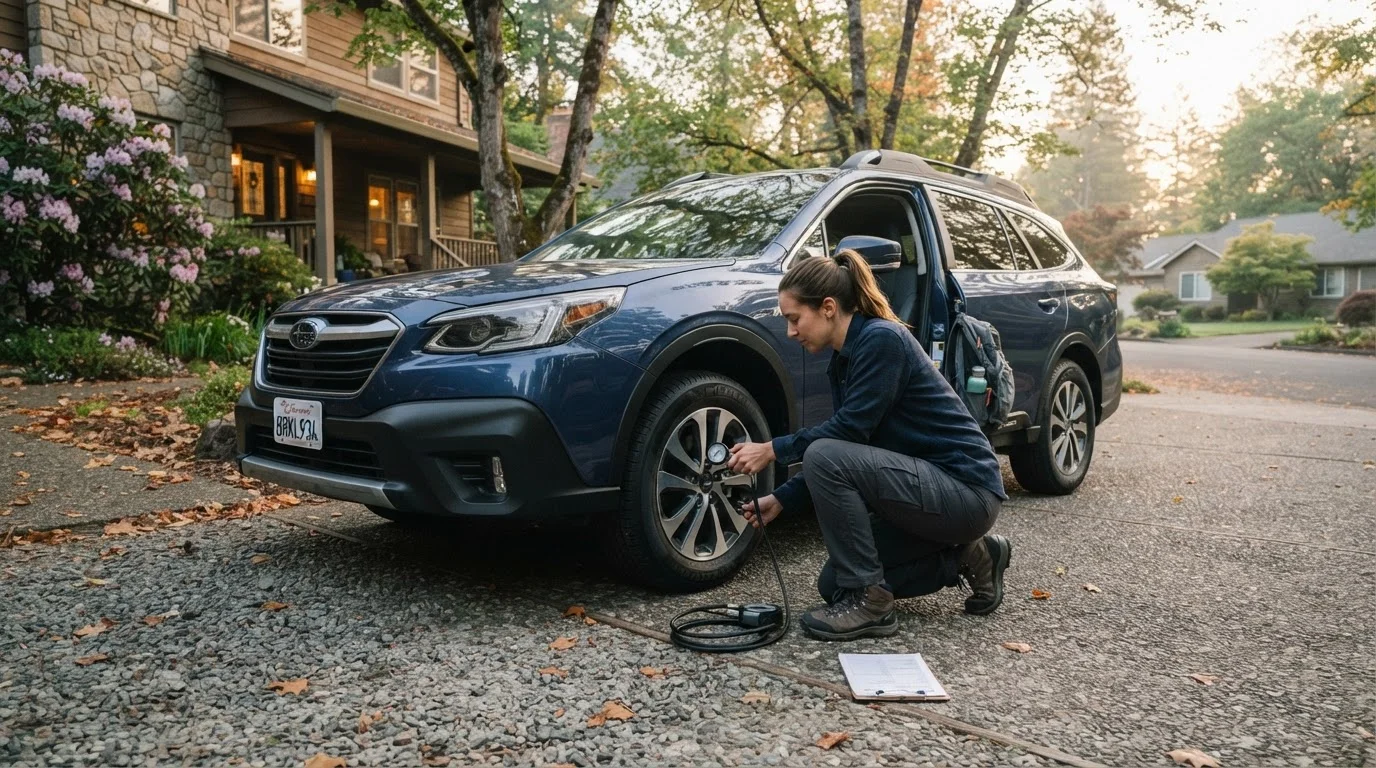
This walkthrough is designed to take 15–30 minutes and covers the areas that matter most on a long-distance drive: your tires, under the hood, exterior lights, visibility systems, and what you're carrying inside the car. Run it the evening before departure or the morning of — either works, as long as you actually do it.
For a broader look at keeping your vehicle road-ready year-round, see the seasonal car maintenance checklist that covers weather-specific prep from summer heat to winter cold.
Tires
Under the Hood
Exterior Lights
Visibility and Wipers
In-Car Essentials
What You'll Need to Run This Checklist
You don't need a tool kit or mechanical knowledge for most of these steps. A few basic items will make the walkthrough faster and more complete.
Tire pressure gauge
Accurately reads PSI in each tire so you can inflate or deflate to the correct level.
Portable air compressor or tire inflator
Lets you bring tires to proper pressure at home before the trip without a gas station stop.
Flashlight or phone torch
Helps you inspect tires, underhood compartments, and light housings in low-light conditions.
Clean microfiber cloth
Useful for wiping mirrors, dipstick, and interior glass before checking visibility.
Emergency kit
Provides basic roadside support — jumper cables, first aid supplies, and signaling tools — if something goes wrong en route.
If you notice a dashboard warning light illuminated during your pre-trip engine check, don't dismiss it. Review what your dashboard warning lights are actually telling you before deciding whether it's safe to proceed. Some lights indicate conditions that worsen quickly under highway driving.
Driving across multiple states? Laws on hands-free devices, seatbelt requirements, and speed limits vary. Check our guide on rules that change when you cross state lines before you go.
After the Walkthrough: Drive Confident
Working through this checklist doesn't guarantee a problem-free trip — no checklist can do that — but it significantly reduces the chances of being caught off guard by something preventable. Tire condition, in particular, has a direct effect on your ability to stop safely. For more context on how vehicle condition affects stopping distances, the article on everything that shapes your stopping distance is worth a read before any highway trip.
If you're driving in rain, fog, or winter conditions, the pre-trip bar is higher. Our companion guide on road trips in bad weather covers weather-specific preparation beyond what this walkthrough addresses.
This article is intended for general informational purposes. For vehicle-specific maintenance questions or safety concerns, consult a qualified mechanic.