

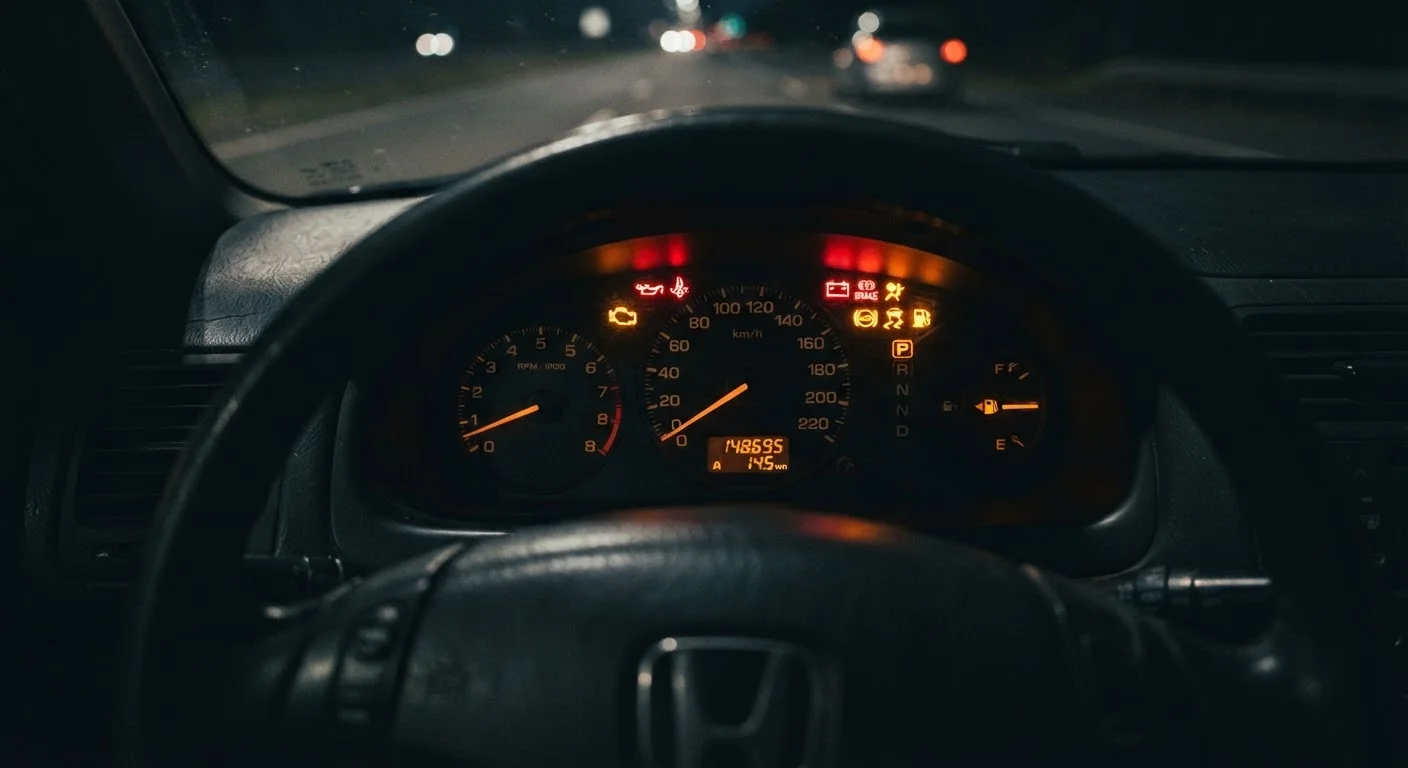
Why Dashboard Lights Exist — and Why They're Often Ignored
Modern vehicles monitor dozens of systems simultaneously, and dashboard warning lights are how they communicate problems. Despite that, many drivers either panic at every illuminated icon or, more commonly, dismiss them entirely — especially when the car seems to be driving fine.
Neither reaction is right. Some lights demand you pull over immediately; others simply flag something to address at your next service appointment. Understanding the difference is what separates informed drivers from ones who end up with preventable repair bills. For a broader picture of what tends to slip through the cracks, see our guide on maintenance items diligent drivers overlook.
The Most Common Warning Lights — and What They Actually Mean
Here's a plain-language breakdown of the lights most drivers encounter, grouped by urgency level.
Stop Immediately
- Oil Pressure (red oil can icon): Low or absent oil pressure means your engine isn't being lubricated. Continuing to drive can cause catastrophic engine damage within minutes. Pull over safely and turn off the engine. Do not restart until the cause is identified.
- Engine Temperature (red thermometer in water): Your engine is overheating. This can result from a coolant leak, a failed water pump, or a blocked radiator. Stop driving, let the engine cool, and do not open the radiator cap while hot. Learn more about how these fluids work in our guide to your car's fluid system.
- Battery (red battery icon): When this lights up while driving, your alternator may have failed and the car is running on battery reserve only. You may have limited time before electrical systems shut down.
Address Soon — Within a Few Days
- Check Engine (amber engine outline): This is the most misunderstood light on the dash. It can mean something as minor as a loose gas cap or as serious as a failing catalytic converter. A mechanic can read the stored diagnostic trouble code (DTC) with an OBD-II scanner to pinpoint the cause. Don't ignore it for weeks.
- TPMS (amber tire with exclamation point): One or more tires is significantly under-inflated. Under-inflated tires reduce fuel efficiency, handling, and can increase blowout risk. Check and inflate your tires to the pressure listed in your door jamb sticker — not the number on the tire sidewall.
- Traction Control / Stability Control (car with squiggly lines): If this light stays on rather than flashing momentarily, the system may be disabled or malfunctioning. These systems help prevent skids, so a persistent light warrants inspection.
Informational — Monitor and Plan
- Service Required / Maintenance Due (wrench or interval indicator): Your vehicle is due for scheduled service such as an oil change. Timing varies by manufacturer, but this is not an emergency — just don't let it sit for months.
- Low Fuel (fuel pump icon): You likely already know this one, but worth noting: running a fuel-injected vehicle frequently on fumes can stress the fuel pump over time.
OBD-II Scanner
A device that plugs into your vehicle's onboard diagnostics port (usually under the dash) to read stored fault codes. It helps identify what triggered the check engine light or other warning indicators.
DTC (Diagnostic Trouble Code)
A standardized alphanumeric code stored by your vehicle's computer when it detects a system fault. Mechanics use these codes to narrow down the source of a warning light.
TPMS
Tire Pressure Monitoring System. A sensor-based system that alerts the driver when one or more tires falls significantly below the recommended inflation pressure.
Alternator
A generator driven by the engine that recharges the battery while the car runs. If it fails, the vehicle runs on battery power alone, which is typically depleted within 30–60 minutes of driving.
Coolant
A fluid that circulates through the engine and radiator to regulate engine temperature. Low or leaking coolant is a leading cause of overheating.
Oil Pressure
The force at which engine oil is circulated through the engine's moving parts. A drop in pressure means inadequate lubrication, which can cause rapid, severe engine damage.
A Simple Rule for Deciding What to Do
Color is your first clue. Red generally means stop or act now. Amber/yellow means pay attention and address soon. Green or blue lights are typically informational — your high beams are on, or cruise control is active.
When in doubt: don't ignore a warning light, and don't assume the car is fine just because it's still moving. Have a qualified mechanic pull the diagnostic codes — many auto parts retailers offer free code scanning as a service. That single step often tells you whether you're dealing with a sensor glitch or something that genuinely needs repair.
Before any road trip, checking for active warning lights should be part of your pre-departure routine. Our pre-trip safety walkthrough covers exactly what to inspect before hitting the highway.
This article is for general informational purposes only. For diagnosis and repair, consult a qualified, licensed mechanic familiar with your specific vehicle.