

Key Takeaways
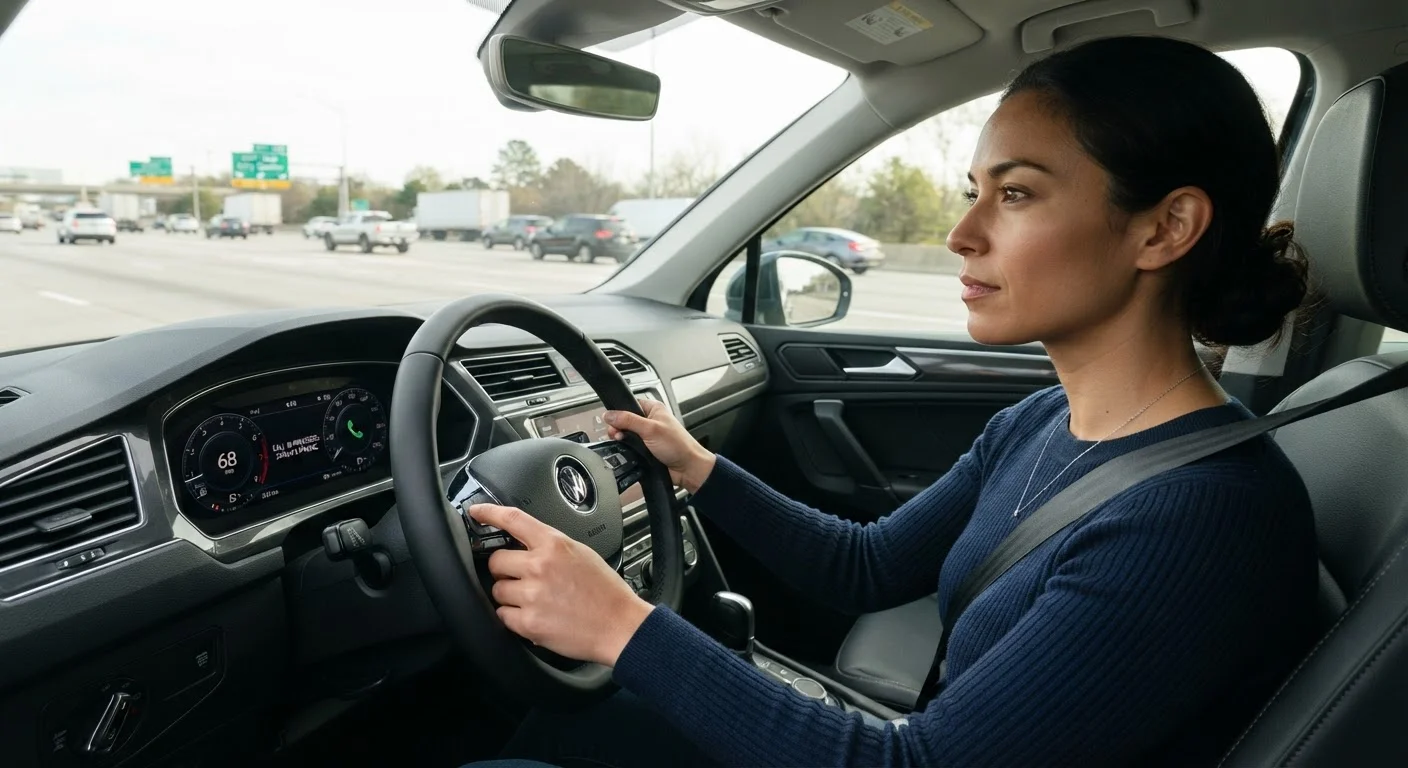
Keeps both hands on the steering wheel
Handheld phone use requires one hand to leave the wheel, reducing steering control. Hands-free eliminates this physical compromise, which matters most during sudden lane changes or emergency maneuvers.
Eyes remain forward rather than on a screen
Reading a text or dialing manually takes visual attention off the road for seconds at a time. Hands-free calling, especially when initiated by voice command, largely eliminates this visual distraction.
Legal in far more driving situations
Handheld phone use while driving is restricted or banned in a majority of U.S. states. Hands-free calling faces far fewer legal restrictions for adult drivers, significantly reducing the risk of traffic violations and fines.
Voice-command integration reduces setup distraction
Modern vehicle systems and smartphone assistants allow drivers to initiate or answer calls without touching anything. This removes the riskiest moment — fumbling with a device — from the equation.
Cognitive distraction persists regardless of hand position
Studies from the AAA Foundation for Traffic Safety and academic researchers have found that hands-free calls still slow reaction time and reduce situational awareness compared to undistracted driving. The conversation itself — not the phone — is the primary source of impairment.
Drivers look but don't always 'see'
A phenomenon called inattention blindness means a driver's eyes can be pointing at the road while their brain processes less of what's in front of them. Research suggests this effect occurs during phone conversations, not just when looking at a screen.
False sense of security can encourage risky behavior
Because hands-free feels legal and more accepted, some drivers may take calls in situations where they would otherwise wait. Perceived safety can sometimes lead to greater overall risk than acknowledged danger does.
Emotional calls escalate cognitive load unpredictably
A call that starts simple can quickly become stressful or demanding. Unlike a passenger who naturally pauses conversation in heavy traffic, a caller on the other end has no awareness of the road situation and keeps talking.
Our Verdict
Hands-free calling is meaningfully safer than handheld use because it eliminates manual and visual distraction — but it doesn't eliminate cognitive distraction, which is real and measurable. Treating hands-free as completely risk-free is a mistake. The safest choice in demanding driving conditions is still no call at all.
Drivers who need to take brief, low-stakes calls during light-traffic driving and want to do so legally and with reduced physical risk.
What 'Hands-Free' Actually Means
Hands-free calling covers any method that lets you speak on the phone without physically holding the device. That includes Bluetooth earpieces, speakerphone mounted in a cup holder, vehicle-integrated systems (like those built into modern infotainment screens), and voice-activated assistants that dial for you.
What these methods share: your hands stay on the wheel and your eyes stay on the road. What they don't eliminate: the mental load of holding a conversation while navigating traffic. Understanding that distinction is the key to thinking clearly about this topic.
It's also worth noting that the law treats hands-free and handheld very differently. Handheld phone use while driving is banned in many states for all drivers; hands-free is generally permitted for adults, though rules vary. For a broader look at common driving myths, see widespread myths about phone use and driving.
The Pros: Real Benefits Worth Acknowledging
Hands-free calling does provide genuine improvements over handheld use, and dismissing those gains entirely would be misleading.
Keeps both hands on the steering wheel
Handheld phone use requires one hand to leave the wheel, reducing steering control. Hands-free eliminates this physical compromise, which matters most during sudden lane changes or emergency maneuvers.
Eyes remain forward rather than on a screen
Reading a text or dialing manually takes visual attention off the road for seconds at a time. Hands-free calling, especially when initiated by voice command, largely eliminates this visual distraction.
Legal in far more driving situations
Handheld phone use while driving is restricted or banned in a majority of U.S. states. Hands-free calling faces far fewer legal restrictions for adult drivers, significantly reducing the risk of traffic violations and fines.
Voice-command integration reduces setup distraction
Modern vehicle systems and smartphone assistants allow drivers to initiate or answer calls without touching anything. This removes the riskiest moment — fumbling with a device — from the equation.
4x
Crash risk increase with any phone use
Research cited by the National Safety Council estimates that phone use while driving — including hands-free — quadruples crash risk compared to undistracted driving.
27%
Reduction in brain activity while driving and talking
A Carnegie Mellon University study using brain imaging found that merely listening to someone speak while driving reduced the brain's spatial processing activity by about 37% — illustrating the cognitive cost of conversation.
The Cons: Why It's Not a Complete Solution
The primary problem with hands-free calling isn't your hands — it's your attention. Research in cognitive psychology consistently shows that the brain doesn't multitask; it switches rapidly between tasks. Driving and holding a conversation compete for the same mental resources.
Cognitive distraction persists regardless of hand position
Studies from the AAA Foundation for Traffic Safety and academic researchers have found that hands-free calls still slow reaction time and reduce situational awareness compared to undistracted driving. The conversation itself — not the phone — is the primary source of impairment.
Drivers look but don't always 'see'
A phenomenon called inattention blindness means a driver's eyes can be pointing at the road while their brain processes less of what's in front of them. Research suggests this effect occurs during phone conversations, not just when looking at a screen.
False sense of security can encourage risky behavior
Because hands-free feels legal and more accepted, some drivers may take calls in situations where they would otherwise wait. Perceived safety can sometimes lead to greater overall risk than acknowledged danger does.
Emotional calls escalate cognitive load unpredictably
A call that starts simple can quickly become stressful or demanding. Unlike a passenger who naturally pauses conversation in heavy traffic, a caller on the other end has no awareness of the road situation and keeps talking.
This cognitive narrowing is particularly dangerous in situations that demand full attention — merging onto a highway, navigating an intersection, or driving in poor weather. Those are exactly the moments when reaction time matters most, and also when a conversation pulls hardest on your focus. For context on how distraction compares to other impairments behind the wheel, see how distracted and impaired driving compare.
Passengers vs. Phone Callers: A Key Difference
Research suggests that in-person passengers actually pose less distraction than phone callers in many situations. A passenger can see the road, naturally pause the conversation when traffic gets complex, and even help navigate. A phone caller has no awareness of the driving environment and keeps talking regardless. This distinction helps explain why hands-free calling carries more risk than simply 'talking to someone.'
When the Risk Is Highest
Not all hands-free calls carry equal risk. A brief exchange — confirming an address, telling someone you're five minutes away — places less cognitive load on a driver than an emotionally charged argument or a complex work discussion.
Risk climbs when: the conversation is emotionally intense, traffic conditions are demanding, the driver is inexperienced, or fatigue is already a factor. New drivers are especially vulnerable; the first year behind the wheel carries a disproportionately high crash risk even without phone distractions. Parents of teen drivers should factor this in — what parents and teens should understand about early driving habits covers this in detail.
Tailgating compounds the danger further. A driver whose reaction time is slowed by a phone call and who is also following too closely has very little margin for error. Understanding stopping distance and gap distance becomes especially relevant here.
Practical Guidelines for Drivers
Given what the evidence shows, here's how to approach hands-free calling with realistic expectations:
- Use it for short, low-stakes calls only. Quick logistical exchanges are far less disruptive than extended conversations.
- Let complex calls go to voicemail. If you know the topic is emotionally loaded or will require real thought, wait until you're parked.
- Pull over if conditions demand it. Heavy rain, construction zones, and congested highways are not the time to be on any call.
- Use voice commands to dial — don't look at your phone to initiate the call. The setup moment is often when visual distraction occurs.
- Know your state's laws. Some states have stricter hands-free requirements, particularly for newer drivers or in school zones.
This article is for general informational and educational purposes. Laws regarding phone use while driving vary by state and are subject to change. Always verify current rules in your jurisdiction and consult official sources before making decisions about phone use while driving.