

Key Takeaways
Option A
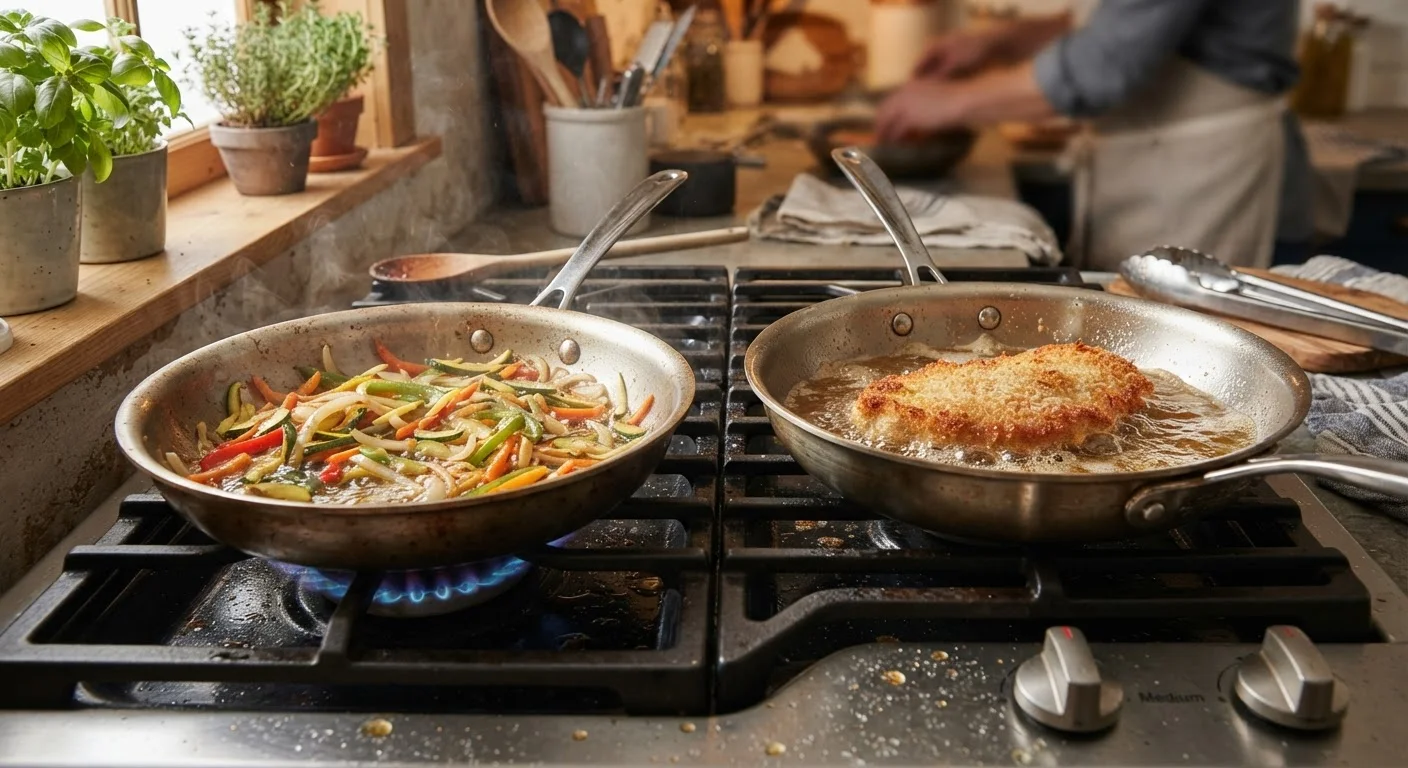
Sautéing
The quick, high-heat technique for tender, lightly browned results.
Best for: Best for small or thin cuts of food that cook fast — think diced onions, shrimp, sliced mushrooms, or bite-sized chicken pieces.
Option B
Pan-Frying
The steady, moderate-heat method that builds a substantial crust.
Best for: Best for thicker, bone-in, or breaded foods that need time to cook through while developing a deep, even crust — like pork chops, fish fillets, or breaded cutlets.
If you want a fast weeknight side of cooked vegetables or a quick protein
Sautéing
High heat and constant motion cook small pieces in minutes, making sautéing ideal when time is short and the pieces are bite-sized or thin.
If you're cooking a thick chicken breast, fish fillet, or breaded cutlet
Pan-Frying
More fat and sustained moderate heat give thicker cuts time to cook through evenly while forming a substantial, crisp crust.
If you're building a sauce or stir-fry base from aromatics
Sautéing
Rapidly softening onions, garlic, and peppers in a hot pan with minimal oil is exactly what sautéing is designed to do.
If you want a restaurant-style golden crust on a pork chop or breaded protein
Pan-Frying
A shallow pool of hot oil and undisturbed contact time are what create that deep, even crust — sautéing would move the food too much and use too little fat.
The Core Difference: Heat, Fat, and Movement
Sautéing and pan-frying both happen in a skillet on the stovetop, which is why people often treat them as the same thing. They're not. The differences — heat level, amount of fat, and whether you move the food — change the final result in ways that genuinely matter for everyday cooking.
Sautéing uses high heat, a thin coating of fat (just enough to prevent sticking), and frequent movement. The word comes from the French sauter, meaning "to jump." You're keeping food in near-constant motion, cooking it quickly before it has a chance to form a deep crust. The result is food that's cooked through, lightly browned, and tender — not crispy.
Pan-frying uses moderate heat and a noticeably larger amount of fat — not deep-frying territory, but enough to come partway up the side of the food. Crucially, you leave the food alone. That undisturbed contact with a hot, fat-coated pan is what builds the substantial golden crust pan-frying is known for.
| Criterion | Sautéing | Pan-Frying |
|---|---|---|
| Heat level | High | Moderate |
| Amount of fat | Very little (thin coating) | More (up to ⅓ of food height) |
| Food movement | Frequent — toss or stir often | Minimal — let it sit undisturbed |
| Best food size | Small, thin, or diced pieces | Thick, whole, or breaded portions |
| Typical cook time | 2–5 minutes | 5–15 minutes depending on thickness |
| Resulting texture | Tender, lightly browned | Crisp, substantial crust |
| Risk if done wrong | Steamed instead of browned | Scorched outside, raw inside |
When the Ingredient Should Make the Decision for You
You don't need to memorize rules — your ingredient will usually point you toward the right method if you pay attention to its size and thickness.
Use sautéing for:
- Diced or sliced vegetables (onions, peppers, zucchini, mushrooms)
- Small shrimp or scallops
- Thin strips of chicken, beef, or pork
- Leafy greens that wilt quickly
Use pan-frying for:
- Bone-in chicken pieces
- Thick fish fillets
- Breaded or battered proteins (cutlets, crab cakes)
- Pork chops ¾ inch or thicker
A useful mental shortcut: if the food is thin enough to cook through in under five minutes, sauté it. If it needs longer than that to reach a safe internal temperature, pan-fry it. Trying to rush thick food over high sauté heat leaves the outside scorched and the inside undercooked — a common frustration that the right method prevents.
Spacing matters for both techniques. Crowding traps steam and kills browning in either case. See our guide to pan crowding for exactly how much space ingredients actually need.
Fat, Pan, and Heat: Getting the Setup Right
Because these methods make different demands on your equipment, small setup decisions have a real impact on results.
For sautéing
- Pan: A wide skillet or sauté pan with sloped sides gives you room to toss and stir without losing food over the edge.
- Fat: A high-smoke-point oil (such as avocado, grapeseed, or refined vegetable oil) handles the intense heat without burning. Use just enough to coat the pan.
- Heat: Preheat the pan before adding oil, and add oil before adding food. The pan should be hot enough that food sizzles immediately on contact.
For pan-frying
- Pan: A heavy skillet — cast iron or stainless steel — holds heat evenly and won't cool dramatically when cold food is added.
- Fat: Use enough oil to reach roughly one-third of the way up the food. This is more than it feels like it should be, but it's what produces the even crust.
- Heat: Moderate and steady. Too hot and the crust forms before the inside cooks; too cool and the food absorbs oil instead of frying in it.
These habits — preheating, right fat amount, correct heat level — are among the instincts that experienced home cooks develop early and apply without thinking.
A Word on Butter vs. Oil
Butter adds flavor but has a relatively low smoke point, making it more suitable for moderate-heat pan-frying (or added at the end of a sauté for finishing flavor) than for the high heat of a full sauté. A common approach is to use a neutral high-smoke-point oil for the cooking itself, then swirl in a small amount of butter at the very end for richness. This is a practical workaround rather than a rule — the right fat depends on the dish and the heat you need.
Putting It Into Practice
Once you understand the logic, switching between methods becomes automatic. Cooking diced chicken for a stir-fry? Sauté. Cooking a whole chicken thigh for dinner? Pan-fry. Planning meals for the week and wondering how to use these techniques efficiently? The approach overlaps with how batch cooking and meal prepping use different strategies toward the same goal — the right method for the right task saves time and produces better food.
If a recipe simply says "cook in a skillet" without specifying which technique, look at the ingredient size and how long the recipe expects it to take. Those two clues will tell you whether the writer meant to sauté or pan-fry, even if they didn't say so explicitly. That kind of reading-between-the-lines confidence is what separates a cook who follows recipes mechanically from one who actually understands what's happening in the pan.