

Key Takeaways
Why Crowding Ruins the Sear
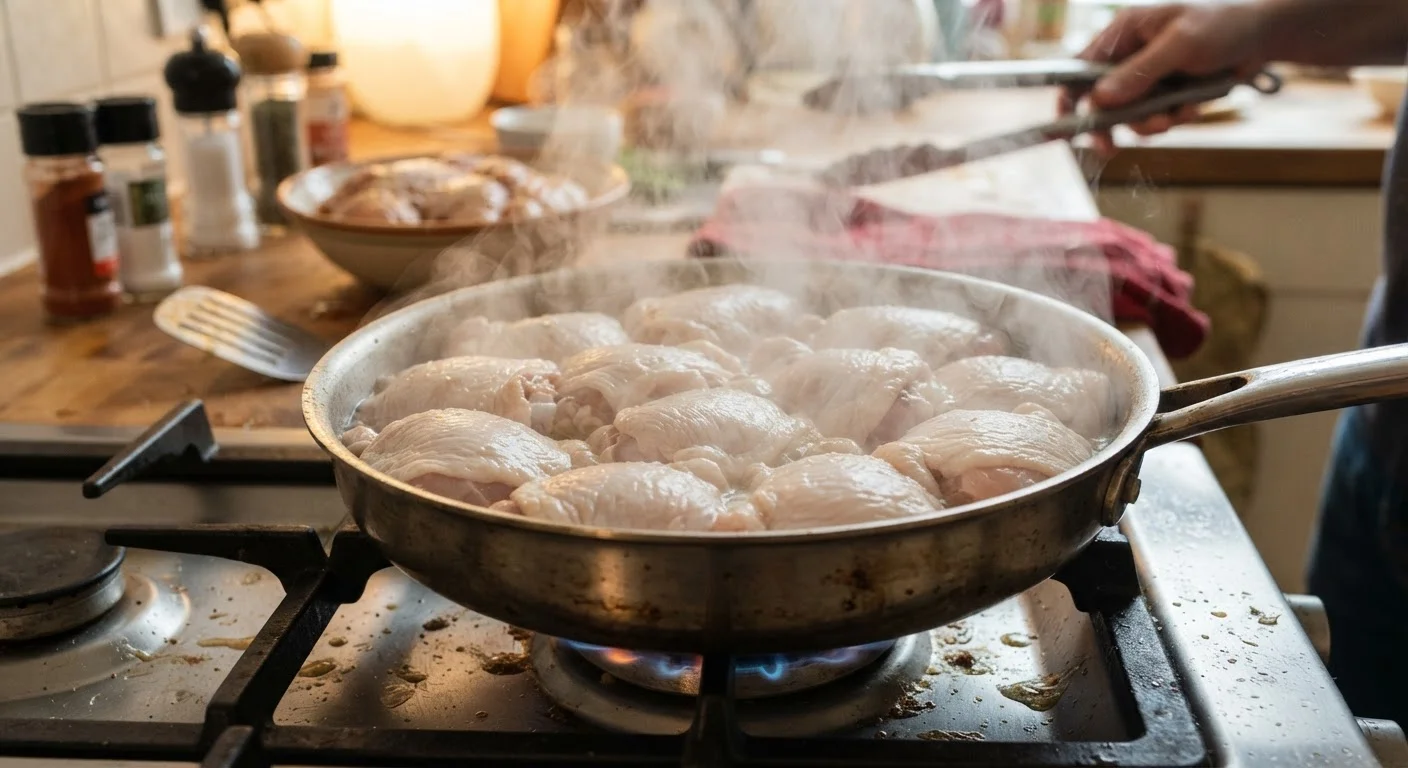
A good sear is built on one simple condition: dry, intense heat meeting the surface of your food. When you crowd a pan, every piece of food brings its own surface moisture into a confined space. That moisture evaporates, fills the air above the pan, and drops the temperature of the cooking surface. Instead of searing, your food steams.
The chemistry behind browning — known as the Maillard reaction — requires food surface temperatures that far exceed the boiling point of water. As long as steam is present, the surface of your food stays close to 212°F, which isn't hot enough for browning to occur. The result is food that's cooked through but pale, soft-surfaced, and missing the deep savory flavor that comes from a proper crust.
212°F
Temperature at which water turns to steam
Steam forms the moment surface moisture hits this threshold, immediately competing with the dry heat needed for browning.
~300°F
Minimum surface temp for Maillard browning
The Maillard reaction — the chemical process behind browned crusts — generally requires food surface temperatures well above the boiling point of water.
This isn't a matter of technique or timing — it's physics. Once a pan is overcrowded and steaming has begun, there's no way to recover the sear in that batch. Understanding this is the first step toward fixing it.
The Mistakes That Cause It — and How to Fix Each One
Overcrowding is rarely careless — it usually comes from specific habits or misconceptions that are easy to correct once you know what's driving them. The mistakes below are the most common culprits, along with straightforward ways to address each one.
Adding all the protein to the pan at once regardless of quantity.
Why it happens: Recipes list total ingredient amounts, and home cooks naturally add everything together to save time and avoid washing extra dishes.
Using a pan that is too small for the recipe.
Why it happens: Cooks often reach for a familiar pan out of habit rather than sizing up based on what they're actually cooking.
Stirring or moving food too frequently to compensate for crowding.
Why it happens: When food isn't browning quickly, the instinct is to keep moving it around — which actually prevents the sustained contact needed for a crust to form.
Not accounting for how much moisture the food itself releases during cooking.
Why it happens: Mushrooms, zucchini, and other high-water vegetables look small and manageable raw, but shed significant liquid once heat is applied.
Treating a cold or under-heated pan as equivalent to a properly preheated one.
Why it happens: Preheating feels like wasted time, especially on busy weeknights, so food goes in before the pan is ready.
For a broader look at the instincts that separate experienced cooks from beginners at the stove, see what experienced home cooks do differently. Many of those habits connect directly to pan management.
Applying This to Vegetables and Roasting
The same principle applies beyond the stovetop. Roasting vegetables in an overcrowded sheet pan produces the same steaming problem — moisture released during cooking has nowhere to escape, and the vegetables end up soft rather than caramelized. Roasting vegetables so they caramelize instead of steam covers the specific adjustments needed for the oven, including spacing, temperature, and pan choice.
Wet Ingredients Compound the Problem
Adding food straight from a marinade, or placing freshly washed vegetables in the pan without drying them first, introduces extra surface moisture that accelerates steaming. Even with a properly sized batch, wet ingredients will stall browning. Pat proteins dry with a paper towel and shake off excess liquid from vegetables before they hit the pan.
Whether you're working a skillet on the stovetop or a sheet pan in the oven, the fix is the same: give your food room. Spread ingredients in a single layer with space between each piece, and use enough pans to make that possible. Cooking in two batches adds maybe ten minutes to your total time — the improvement in texture and flavor is worth it every time.
If you're looking for ways to understand the difference between stovetop methods before applying these techniques, sautéing vs. pan-frying explains how each method uses heat differently and when one serves you better than the other.
Steam Is the Enemy of a Good Sear
When moisture trapped between crowded ingredients converts to steam, it lowers the pan temperature and surrounds food in humidity. Under those conditions, browning cannot occur — even in a very hot pan. No amount of extra cooking time will recover a proper sear once steaming has begun; the surface texture changes too early in the process.