

Key Takeaways
The Maillard Reaction
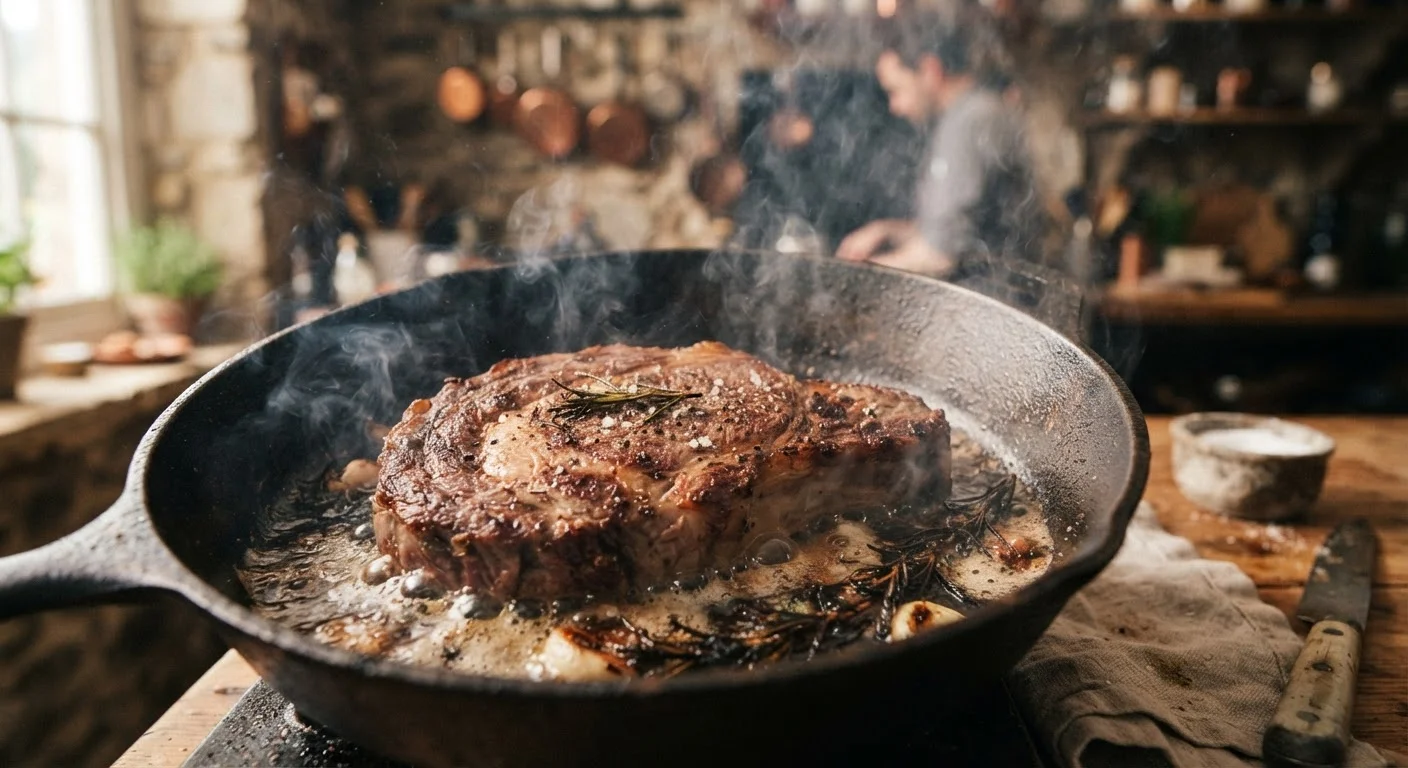
The Maillard reaction is a chemical process that happens when proteins and sugars in food are exposed to heat, typically above 280–300°F (140–150°C). It produces hundreds of new flavor and aroma compounds, turning food brown and creating the complex, savory, roasted taste we associate with well-cooked meat, bread crusts, and seared vegetables. Without it, food tastes flat and pale.
Named after French chemist Louis-Camille Maillard, who described the reaction in 1912, it is distinct from caramelization, which involves only sugars breaking down — not proteins.
What's Actually Happening When Food Browns
Most home cooks learn early that browned food tastes better — a seared steak beats a gray boiled one, toasted bread beats plain white bread. But the reason why is concrete chemistry, not mystery.
When proteins and certain sugars in food reach high enough surface temperatures, they begin reacting with each other rapidly, forming hundreds of new molecules in the process. These molecules produce the golden-brown color you see and — more importantly — the roasted, savory, complex aroma and flavor that makes food taste satisfying. This is the Maillard reaction at work.
It's not simply burning. The reaction happens in a specific temperature window, generally between about 280°F and 330°F at the food's surface. Below that, food cooks but doesn't brown. Above roughly 350°F and higher, you start getting actual char, which tastes bitter. The goal is that productive middle zone.
“The Maillard reaction is responsible for the flavor of roasted coffee, seared meat, toasted bread — it is arguably the most important flavor-generating reaction in all of cooking.”
— Harold McGee, Food science author, On Food and Cooking
Why Moisture Is the Biggest Obstacle
Water boils at 212°F. Until all surface moisture has evaporated, the food's exterior cannot exceed that temperature — no matter how hot the pan is underneath. This is why placing a wet chicken breast in a skillet produces a lot of sputtering steam but very little browning for the first several minutes.
The practical fix is straightforward: pat food dry with a paper towel before it goes in the pan. This one step removes the moisture barrier and lets the surface temperature climb quickly into browning range. Overcrowding the pan creates a related problem — too many pieces release too much moisture at once, turning the pan's environment steamy rather than dry.
Salt can also draw moisture to the surface through osmosis. Applied early enough — at least 45 minutes before cooking, or the night before — it gives that moisture time to be reabsorbed, actually improving the interior texture. Applied right before cooking, it can sit on the surface and interfere with browning. Salt's timing matters more than most cooks realize.
How to Apply This at the Stove and Oven
Understanding the Maillard reaction gives you a framework for diagnosing problems and making better decisions, not just for one dish but across everything you cook.
- Preheat properly. A pan that isn't hot enough when food goes in will struggle to reach browning temperatures before the food begins releasing moisture. Give cast iron and stainless pans two to three minutes over medium-high heat before adding oil.
- Don't move food too soon. Food naturally releases from the pan surface once a proper crust forms. If it's sticking, it usually means the crust hasn't finished developing — wait another 30 to 60 seconds.
- Spread vegetables out. In a hot oven, vegetables need space so moisture can escape rather than pool. Roasting vegetables so they caramelize rather than steam comes down to this exact principle.
- Choose the right method. Sautéing and pan-frying both produce Maillard browning, but the heat level and fat quantity differ — knowing which you're doing helps you manage the reaction intentionally.
A Simple Test: Listen to Your Pan
When food hits the pan, you should hear an immediate, assertive sizzle. A weak or delayed sizzle usually means the pan or the oil wasn't hot enough. A violent, spattering sizzle with smoke suggests you're over temperature. Aim for a steady, confident sound — that's the zone where the Maillard reaction runs well without burning.
Once you start recognizing when browning is or isn't happening — by sound, smell, and color — cooking instincts develop naturally. Experienced home cooks rely on these sensory cues constantly.
Where the Maillard Reaction Shows Up in Everyday Cooking
The reaction isn't limited to restaurant techniques. It's behind many of the most satisfying flavors in everyday home cooking, and recognizing it helps you replicate those results consistently.
280°F
Minimum surface temperature for browning
Below this threshold, proteins and sugars in food do not meaningfully react — food cooks but stays pale and mild-tasting.
700+
Flavor compounds potentially created
Food science research has identified several hundred distinct volatile compounds produced during the Maillard reaction, contributing to aroma and flavor simultaneously.
212°F
Boiling point of water — browning's ceiling
Because water cannot exceed 212°F at sea level, boiling and steaming methods keep food's surface below the browning threshold regardless of heat input.