

Key Takeaways
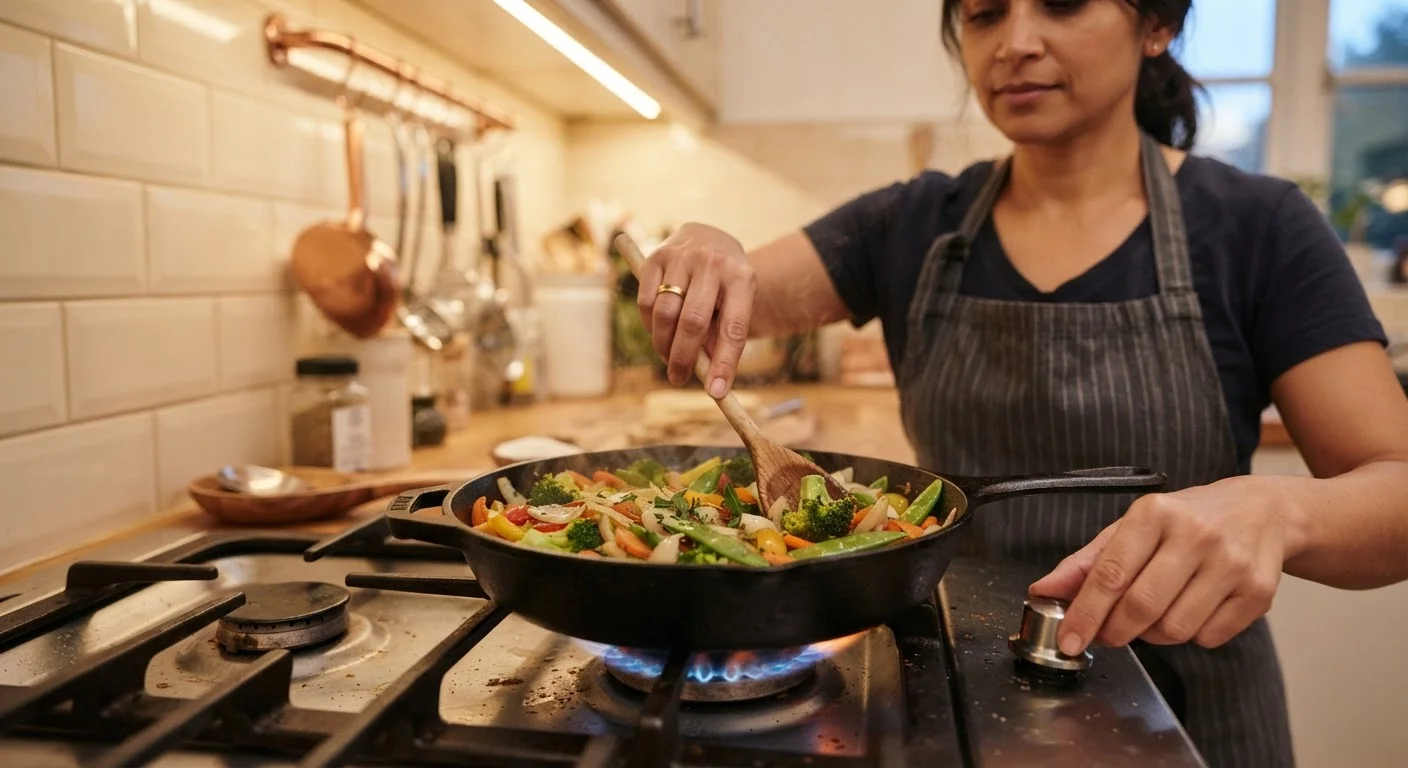
They Treat the Burner Dial as an Active Tool
Most home cooks set a burner to medium and leave it there. Experienced cooks treat the dial as something they adjust constantly — raising heat to build a sear, dropping it the moment a sauce starts to sputter, cutting it entirely to let residual heat finish delicate proteins.
The key insight is that stovetop cooking rarely needs a single temperature for the whole cook. Onions soften best over medium-low; a pan sauce needs a quick blast of high heat to reduce. Getting comfortable moving between settings — rather than setting and forgetting — is one of the most transferable skills at the stove. For a deeper look at how different heat levels interact with ingredients, see our guide on dry heat vs. moist heat cooking methods.
Adjust burner heat throughout cooking, not just at the start.
Different stages of a dish require different temperatures. Treating the dial as fixed leads to overcooked proteins, scorched sauces, and uneven results.
Taste at each major step and season incrementally.
Seasoning added early has time to integrate into the dish, while last-minute fixes can feel harsh or unbalanced. Tasting regularly also helps you catch problems before they become irreversible.
Always preheat your pan before adding oil or food.
A hot pan creates the surface contact needed for browning reactions. A cold pan causes food to stick, steam, and turn out pale and soft instead of golden and flavorful.
Cook in batches rather than overcrowding the pan.
Too much food at once drops the pan temperature and traps moisture, turning a sear into a steam. Batches take slightly longer but produce dramatically better texture.
Complete all prep work before turning on the burner.
High-heat stovetop cooking moves fast. Having every ingredient chopped, measured, and within arm's reach means you can focus entirely on the cooking — not on catching up.
They Taste Constantly — and Adjust Before the End
Tasting only at the finish line is one of the most common habits that holds home cooks back. By then, a dish that's under-salted, over-acidic, or missing depth requires emergency fixes that don't always work cleanly.
Seasoned cooks taste after each significant step: after sweating aromatics, after adding liquid, after the simmer, before plating. Salt added early has time to integrate; acid added at the end brightens without cooking off. This iterative approach — taste, evaluate, adjust — is how dishes end up tasting layered rather than flat. Salt does far more than just season — it draws out moisture, suppresses bitterness, and activates other flavors at every stage of cooking.
They Preheat the Pan and Don't Crowd It
Two habits that separate confident stovetop cooks from frustrated ones: they wait for the pan to be genuinely hot before adding food, and they resist the urge to pile everything in at once.
A properly preheated pan creates immediate contact heat, which drives the browning reactions that build flavor. Add food to a cold or lukewarm pan and it steams instead of sears — you'll get pale, soft results where you wanted a golden crust. Understanding why this matters is easier once you've read about the Maillard reaction and why browned food tastes better.
Overcrowding compounds the problem. Too much food in the pan lowers the surface temperature rapidly, trapping steam and preventing browning. Cook in batches when needed — it takes a few extra minutes but produces noticeably better texture and flavor. This principle applies directly to techniques like sautéing and pan-frying, where pan temperature is everything.
They Set Up Before They Turn on the Heat
Experienced cooks rarely scramble mid-recipe because they've already done the work before anything hits the stove. This is the principle behind mise en place — a French culinary term meaning "everything in its place" — where ingredients are measured, chopped, and ready before cooking begins.
At the stove, this matters most during high-heat cooking, where a recipe can move from one step to the next in under a minute. If you're searching for the garlic while your onions brown too fast, the dish suffers. Our prep checklist for smoother meals covers exactly how to build this habit into your routine. Solid prep pairs naturally with knife skills every home cook actually needs, since faster, cleaner cutting means setup takes less time.