

| Dry heat temperature range | 300°F–550°F+ depending on method |
| Moist heat temperature ceiling | 212°F at sea level (boiling point of water) |
| Primary dry heat methods | Roasting, baking, broiling, grilling, sautéing, pan-frying, deep-frying |
| Primary moist heat methods | Boiling, simmering, steaming, poaching, braising, stewing |
| Best for tough cuts | Moist heat — dissolves collagen into gelatin over time |
| Best for surface browning | Dry heat — enables Maillard reaction above 280°F |
Why This Distinction Matters
When a recipe says "braise," "roast," or "steam," those aren't just different words for applying heat. Each term describes a specific relationship between heat, moisture, and the food itself. Understanding that relationship — rather than just following instructions — is what lets you adapt on the fly, rescue a tough cut, or explain why your roasted vegetables taste so much better than the steamed version.
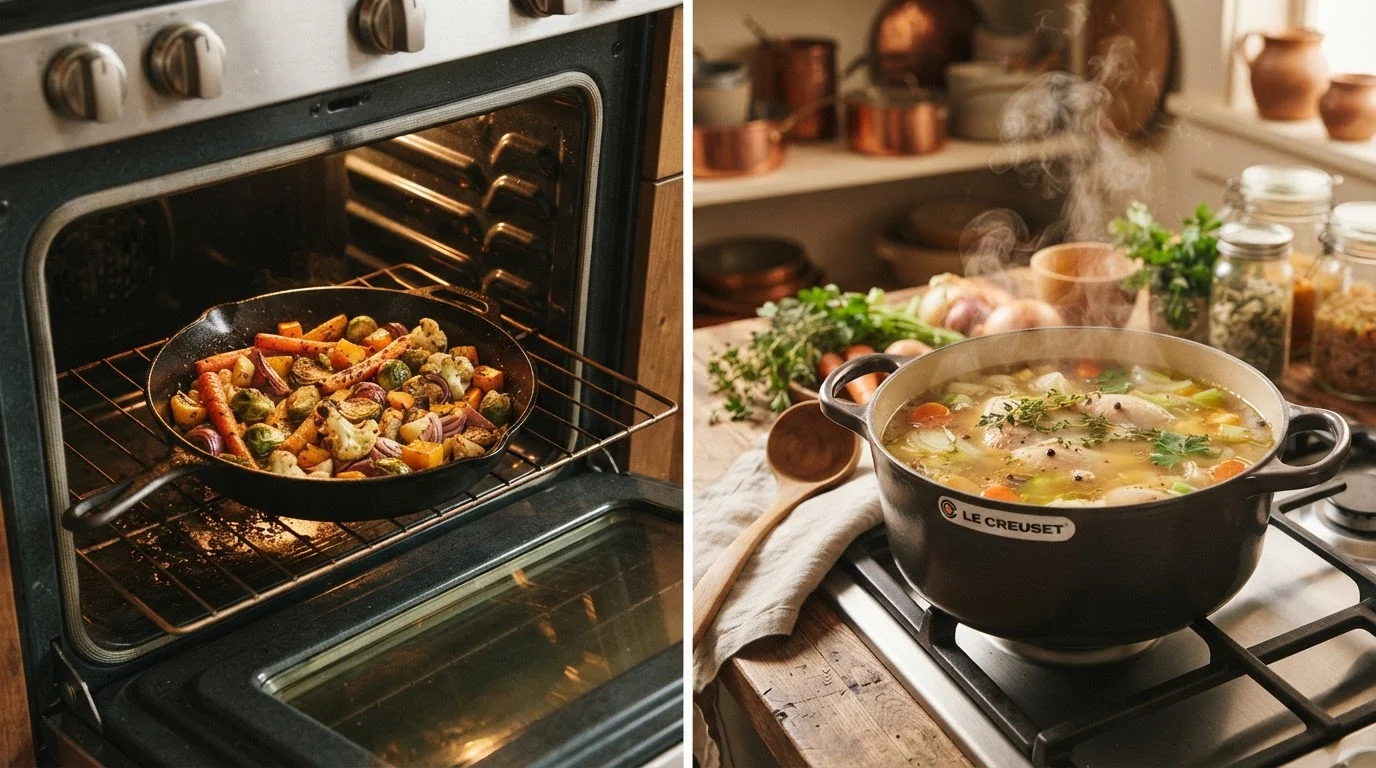
Every cooking method falls into one of two categories: dry heat or moist heat. Dry heat methods cook food through direct contact with hot air, fat, or a hot surface. Moist heat methods cook food using water, steam, or another water-based liquid as the heat transfer medium. The choice between them determines whether food browns and crisps or stays tender and moist — and it shapes flavor just as much as any seasoning. For a closer look at how seasoning interacts with heat and moisture, see how salt affects texture and flavor at every stage of cooking.
| Dry heat temperature range | 300°F–550°F+ depending on method |
| Moist heat temperature ceiling | 212°F at sea level (boiling point of water) |
| Primary dry heat methods | Roasting, baking, broiling, grilling, sautéing, pan-frying, deep-frying |
| Primary moist heat methods | Boiling, simmering, steaming, poaching, braising, stewing |
| Best for tough cuts | Moist heat — dissolves collagen into gelatin over time |
| Best for surface browning | Dry heat — enables Maillard reaction above 280°F |
Dry Heat Methods: What They Are and When to Use Them
Dry heat methods work at higher temperatures and produce surface browning through a chemical process called the Maillard reaction — the same reaction responsible for the crust on a seared steak or the color on a toasted slice of bread. Because there's no water to moderate temperature, dry heat can exceed 212°F (100°C), enabling textures and flavors that moist heat simply cannot create.
- Roasting and baking: Both use dry oven heat, but roasting generally refers to proteins and vegetables while baking applies to breads, pastries, and casseroles. The circulating hot air dehydrates the surface, concentrating flavor.
- Broiling: Direct radiant heat from above. Fast and intense — ideal for finishing a dish or caramelizing a surface quickly.
- Grilling: Direct radiant heat from below, with the added dimension of flavorful smoke and char.
- Sautéing and pan-frying: Both use a hot pan and fat, but differ in the amount of fat and the size of food being cooked. The difference between sautéing and pan-frying matters more than most cooks realize.
- Deep-frying: Food is fully submerged in hot fat. Rapid, even heat produces a crisp exterior and a moist interior.
Dry heat is generally the right choice for tender cuts, most vegetables, and anything where you want surface texture, color, and concentrated flavor.
Dry heat cooking
Any method that cooks food using hot air, direct radiation, or hot fat — without water as the primary heat carrier. Temperatures can rise well above 212°F, enabling browning and crisping.
Moist heat cooking
Any method that uses water, steam, or water-based liquid to transfer heat to food. Limited to approximately 212°F at sea level, making it ideal for long, slow cooking of tough ingredients.
Maillard reaction
A chemical reaction between amino acids and sugars that occurs when food surfaces reach roughly 280–330°F. It produces the complex brown colors and savory flavors associated with searing, roasting, and grilling.
Braising
A two-stage method that begins with a dry-heat sear, then finishes the food partially submerged in liquid in a covered pot at low heat. It is especially effective for tough, collagen-rich cuts of meat.
Collagen
A tough connective tissue protein found in heavily used muscles. Under prolonged moist heat (around 160–180°F and above), collagen breaks down into gelatin, giving braised meats their characteristic tenderness and rich mouthfeel.
Poaching
A gentle moist-heat method where food is submerged in liquid held between roughly 160–180°F — below a simmer. Suited to delicate proteins like fish, poultry breasts, and eggs that would toughen at higher temperatures.
Moist Heat Methods: Gentle, Slow, and Transformative
Moist heat methods rely on water or steam — both of which cap out at 212°F at sea level under normal pressure. That ceiling is actually an advantage when you're working with tough proteins and connective tissue. Low, slow, wet cooking dissolves collagen into gelatin, turning a hard-working muscle like a beef chuck into something fork-tender.
- Simmering: Liquid held just below boiling (roughly 185–205°F). The go-to method for soups, stocks, and long-cooked beans or grains.
- Boiling: Full rolling boil at 212°F. Used for pasta, potatoes, blanching vegetables, and hard-boiled eggs.
- Steaming: Food is suspended above boiling water. The steam carries heat without submerging the food, preserving water-soluble nutrients well.
- Poaching: Food is gently cooked submerged in liquid held at 160–180°F — lower than a simmer. Ideal for delicate proteins like fish and eggs. See how poaching works for eggs compared to other preparation methods.
- Braising and stewing: Both combine an initial dry-heat sear with a long, covered moist-heat finish. Braising uses less liquid and often whole or large pieces; stewing uses more liquid and smaller, cut pieces.
Moist heat is the right call for tough cuts, dried legumes, grains, and delicate proteins that would dry out under direct heat.
Putting the Map to Use
The practical payoff is this: once you know what a method does mechanically, you can match it to any ingredient. A chicken breast is lean and tender — it benefits from dry heat that crisps the skin without a long cook time. Chicken thighs have more fat and connective tissue — they reward braising or slow moist cooking. The same logic applies to vegetables: roasting a zucchini concentrates its flavor; steaming it preserves a cleaner, lighter taste.
Combining both methods is also fair game. A classic braise starts with a sear (dry heat) to build Maillard flavors, then finishes low and slow in liquid (moist heat). That combination is why seasoned cooks manage heat in stages rather than setting one temperature and walking away.
If you cook in batches or prep ahead, knowing which method best suits each ingredient can also shape your weekly plan. Batch cooking and meal prepping each favor different techniques — and understanding the underlying method helps you plan more efficiently.