

Key Takeaways
Option A
Stock
The body-building base for sauces and braises.
Best for: Recipes that need richness, depth, and a sauce that clings — soups, gravies, pan sauces, and risottos.
Option B
Broth
The ready-to-drink, seasoned all-purpose liquid.
Best for: Light soups, cooking grains, deglazing, or any recipe where you want flavor without added thickness.
If you're making a sauce, gravy, or braise that needs to reduce
Stock
Stock's gelatin content creates a silky, full-bodied texture as it reduces — broth stays thin and watery under the same conditions.
If you're cooking grains, deglazing a pan, or making a quick light soup
Broth
Broth is ready to use as-is, already seasoned, and works perfectly where body and gelatin aren't needed.
If you want maximum control over the salt level in your dish
Stock
Traditional stock is unsalted, so you decide how much seasoning goes into the final dish without fighting pre-added sodium.
If you need something to sip on its own or use as a simple base for noodle soup
Broth
Broth is seasoned and flavorful enough to drink straight or serve as a light base without any additional doctoring.
What Each One Actually Is
The confusion between stock and broth is understandable — they're both savory liquids simmered with aromatics like onion, celery, and carrots, and they live in nearly identical cartons at the grocery store. The real difference comes down to what you simmer, and for how long.
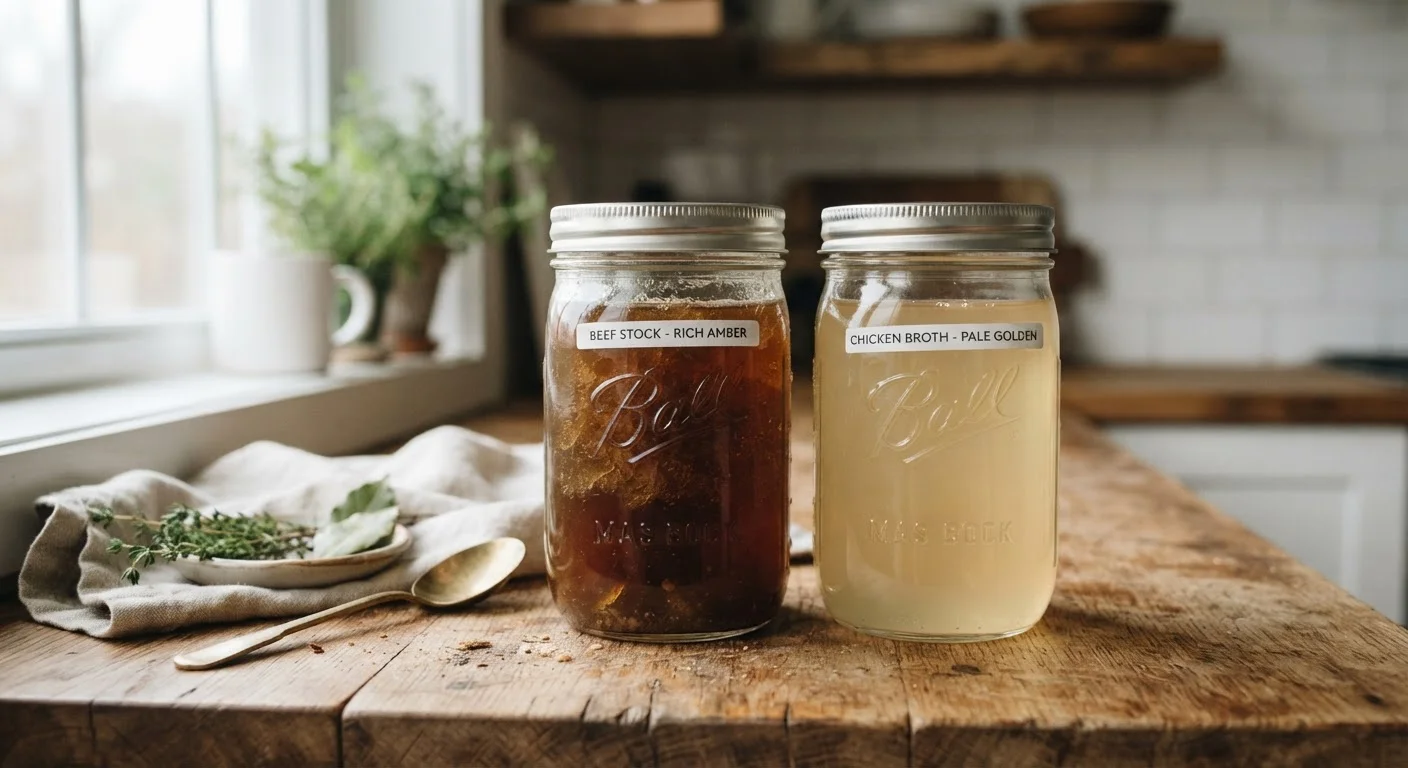
Stock is built from bones — chicken carcasses, beef knuckles, fish frames — simmered low and slow for anywhere from two to twelve hours. During that long cook, collagen from the connective tissue breaks down into gelatin. That gelatin is what gives stock its body. If you refrigerate homemade stock overnight, it should set into a soft, jiggly gel. That's a sign it was made correctly. Stock is traditionally left unsalted so it can be reduced without becoming too salty, and so the cook controls seasoning at the end.
Broth, by contrast, is simmered primarily from meat — whole chicken pieces, beef scraps — rather than bones. The cook time is shorter, and the result is a thinner liquid with a cleaner, more immediately savory flavor. Because broth is meant to be drinkable and usable on its own, it's almost always salted and seasoned before it's packaged or served.
Understanding this distinction is a foundational kitchen skill — much like knowing when to sauté versus pan-fry, it changes how you approach a recipe from the start.
How They Behave When You Cook with Them
The gelatin in stock is what makes it cook so differently from broth. When you reduce stock in a pan, the gelatin concentrates and the liquid transforms into a glossy, slightly sticky sauce that clings to food. This is the backbone of classic pan sauces and the reason professional kitchens keep quarts of stock on hand. Broth, reduced by the same amount, simply becomes a more intensely flavored thin liquid — it won't develop that coating quality.
| Criterion | Stock | Broth |
|---|---|---|
| Primary ingredient | Bones (with some meat) | Meat (minimal or no bones) |
| Gelatin content | High — sets when chilled | Low — stays liquid when chilled |
| Typical salt level | Unsalted or very low | Seasoned and salted |
| Texture when reduced | Silky, coating, glossy | Thinner, more watery |
| Cook time (homemade) | 2–12 hours | 45 minutes–2 hours |
| Best used for | Sauces, gravies, braises | Soups, grains, light cooking |
| Drinkable on its own | Not typically | Yes — already seasoned |
For everyday cooking, this matters most in a few situations. If you're making a gravy, finishing a braise, or building a risotto, stock will give you results that broth simply can't replicate without adding a thickener like cornstarch. On the other hand, if you're cooking rice, simmering lentils, or making a quick vegetable soup, broth works beautifully — it adds flavor without heaviness, and its seasoning is already balanced.
Salt is the other practical difference. Because broth is pre-seasoned, adding it to a dish that will reduce significantly can make the final result too salty. Stock's low sodium base lets you reduce freely and season at the end — a technique experienced home cooks rely on instinctively. If you're using salt as a layering tool throughout cooking, starting with unsalted stock gives you far more control.
Substituting One for the Other
In most everyday recipes, stock and broth are interchangeable without dramatic consequences — especially in soups and stews where the difference in body is less noticeable. If a recipe calls for stock and you only have broth, go ahead and use it; just taste before adding additional salt. If you're using stock where broth is called for, the result may be slightly richer than intended, which is rarely a problem.
Where substitution breaks down most visibly is in sauces. Using broth in place of stock when making a pan sauce or reduction will leave you with a thinner result that lacks that glossy finish. You can compensate somewhat by adding a small amount of butter or a cornstarch slurry at the end, but the texture won't be identical.
If you want to build stock-making into your routine, it pairs naturally with the kind of advance prep described in batch cooking versus meal prepping — save bones in the freezer through the week, then simmer a batch on the weekend. The result keeps well refrigerated for up to five days and frozen for several months.
When buying either product at the store, check the sodium content on the label. Some commercial broths and stocks are very high in sodium, which limits your flexibility. Low-sodium versions of both give you much more control over the final dish.