

Key Takeaways
Theme Nights & Anchor Meals
Theme nights and anchor meals are a simple weekly dinner framework that assigns a loose food category or cooking style to specific days of the week. Instead of choosing a completely different meal from scratch every night, you work within a familiar structure — pasta night, soup night, grain bowl night — and vary the details as you like. Anchor meals are the reliable standbys you return to week after week because they're easy, affordable, and well-liked by your household.
This approach is sometimes called a 'meal rhythm' in food psychology research, where decision fatigue is reduced by narrowing choices rather than eliminating them entirely.
Why Decision Fatigue Derails Weeknight Dinners
The most common reason weeknight dinners go sideways isn't lack of skill or time — it's the mental overhead of deciding what to cook at 5:30 p.m. when you're already tired. This is decision fatigue in action: by the end of a full day, even simple choices feel hard.
Theme nights solve this by making the category of dinner a standing decision rather than a nightly one. If Thursday is always some form of pasta, you're not choosing what to cook — just which version. That single shift dramatically reduces the planning burden without removing flexibility.
If you're new to meal planning entirely, see our starting guide to weekly meal planning for the core building blocks before layering in a theme system.
How to Build a Theme Night Framework
Start by identifying four or five dinner categories your household already likes. Common themes that work well for most American households include:
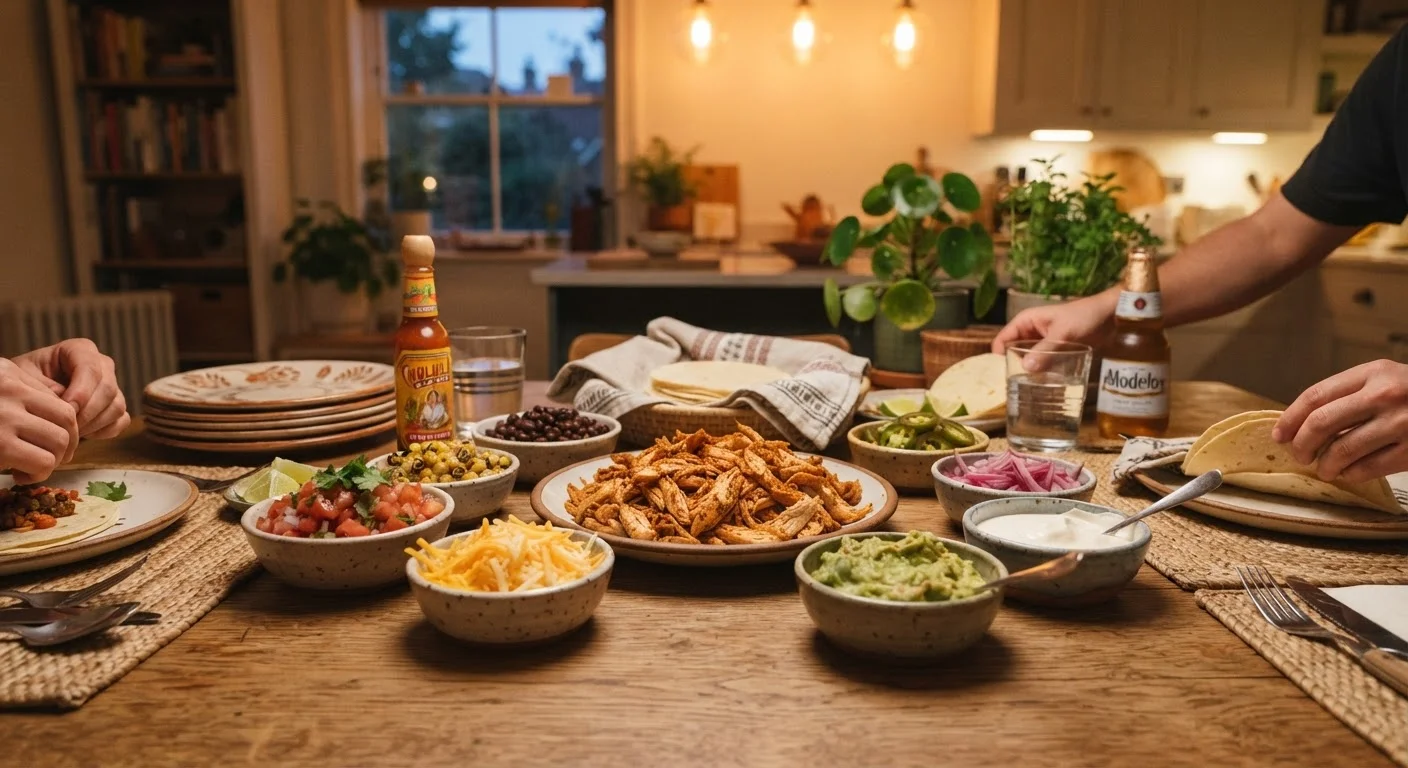
- Mexican-inspired: tacos, burrito bowls, quesadillas, enchiladas
- Pasta or Italian: spaghetti, baked pasta, simple sauces with whatever's on hand
- Soup or stew: especially useful in fall and winter; works with nearly any vegetable or protein
- Grain bowls or salad-based: flexible, fast, good for using up produce
- Seafood or protein-focused: fish tacos, shrimp stir-fry, roasted chicken thighs
Assign these loosely to weekdays. Leave at least one night open for leftovers — a realistic weekly plan always builds in that kind of breathing room.
Start With Just Two or Three Themes
You don't need to fill every night right away. Pick two or three evenings where you consistently struggle to decide what to cook, and assign a theme to those nights first. Once those feel automatic, expand the system from there.
Once your themes are set, your grocery list becomes more predictable. You'll consistently buy staples that support those categories rather than starting from scratch each week.
What Makes a Good Anchor Meal
An anchor meal is a specific dinner — not just a category — that you return to regularly because it checks all the practical boxes: fast to make, affordable, requires no special ingredients, and reliably eaten without complaint.
Good anchor meals tend to share a few traits:
- They use versatile, budget-friendly staple ingredients like beans, eggs, canned tomatoes, or whole grains.
- They can be adapted based on what's available — a frittata works with almost any vegetable, for example.
- Prep time is 30 minutes or under on a typical weeknight.
Most households naturally have two or three anchor meals already — they just haven't named them. Identifying and intentionally rotating them is the step that turns an accidental habit into a reliable system.
~40%
Of daily decisions linked to food and eating
Researchers at Cornell University estimated that adults make over 200 food-related decisions per day, a finding that highlights why structured defaults like theme nights can meaningfully reduce mental load.
31%
Of food purchased in U.S. households goes to waste
According to USDA estimates, roughly one-third of food purchased at the household level is never consumed — a figure that consistent shopping patterns built around themes can help reduce.
Keeping the Framework Flexible Enough to Last
A theme night system only works long-term if it doesn't feel like a straitjacket. The goal is to reduce effort, not to enforce rules. A few principles help keep it sustainable:
- Themes define a category, not a specific dish. 'Soup night' can be a slow-cooker chili or a quick vegetable broth with noodles — whatever fits the week.
- Swap nights freely. If Monday's grain bowl sounds better on Wednesday, move it. The structure is a default, not a schedule.
- Don't plan every single night. Rigid plans often fall apart by mid-week. See the case for flexible meal planning for an honest look at why total rigidity backfires.
A well-organized kitchen also makes the whole system faster to execute. Kitchen organization basics — like keeping theme-relevant staples grouped together — can cut prep time noticeably on busy weeknights.
For a broader view of how theme nights fit into an end-to-end food management routine, the full picture on meal planning covers shopping, prepping, and reducing mid-week scramble in one place.