

Key Takeaways
Option A
Zero-Based Budgeting
The meticulous, dollar-by-dollar approach.
Best for: People who want complete control over every spending category and are willing to put in regular budget maintenance.
Option B
The 50/30/20 Rule
The streamlined, percentage-driven framework.
Best for: People who want a simple, low-maintenance structure that covers the big categories without micromanaging every purchase.
If you have variable income or irregular expenses
Zero-Based Budgeting
Building a fresh budget each month lets you adjust every category to match what you actually earned and what bills are due — critical when income fluctuates.
If you're new to budgeting and want a quick start
The 50/30/20 Rule
Three broad categories are far easier to implement immediately than itemizing dozens of line items, making it a realistic entry point for first-time budgeters.
If you're working to pay off debt aggressively
Zero-Based Budgeting
Allocating every dollar deliberately makes it easy to redirect spending toward debt payments and see exactly where the money is going each month.
If you have a stable salary and modest financial complexity
The 50/30/20 Rule
Consistent income makes the percentages predictable, and the low maintenance burden suits people who don't want to spend hours on their budget each month.
If you want to build detailed savings goals alongside spending control
Zero-Based Budgeting
Named savings categories — vacation fund, emergency fund, car repair — make progress visible and harder to accidentally spend.
How Each Framework Actually Works
Understanding the mechanics of each approach makes it much easier to decide which one is realistic for your situation.
Zero-Based Budgeting
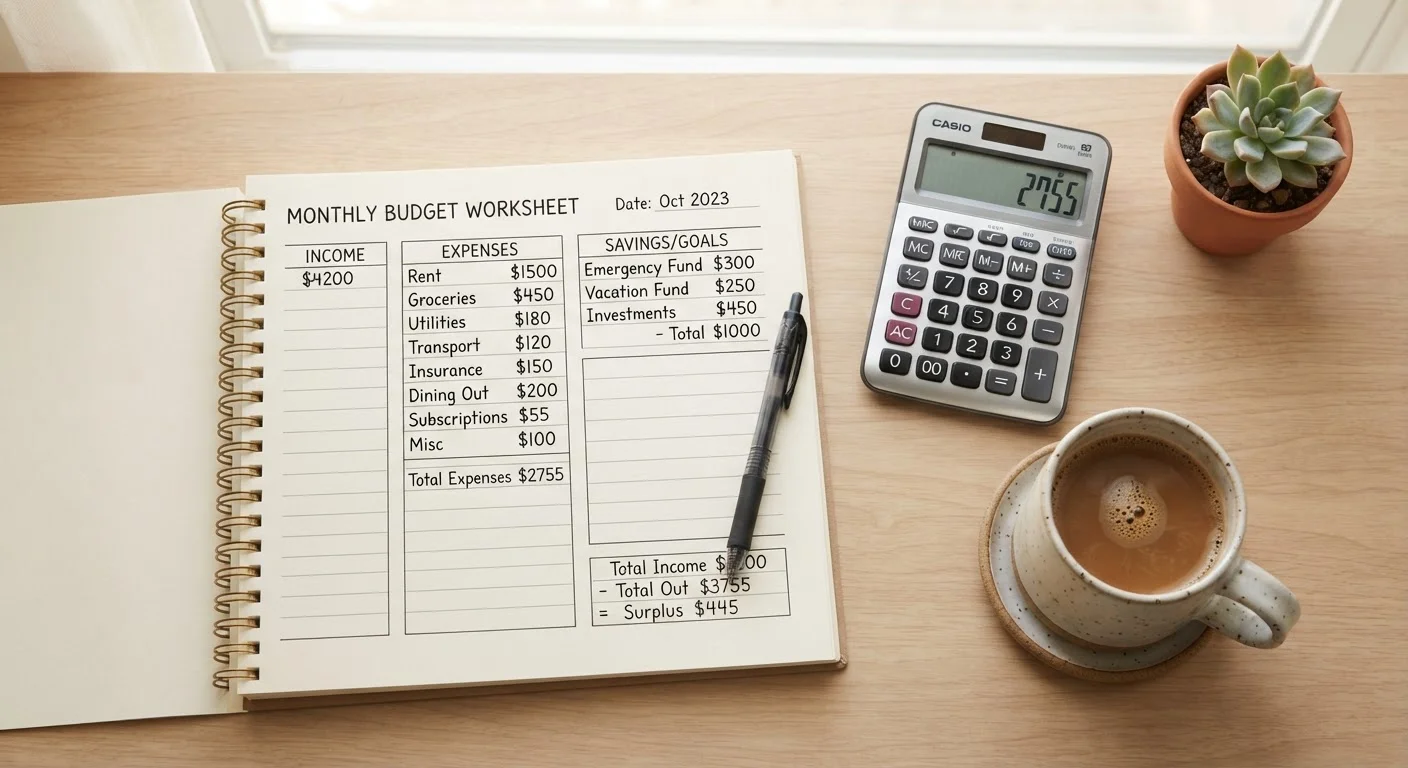
With zero-based budgeting, you start with your total monthly income and assign every single dollar to a category — rent, groceries, utilities, savings, debt payments, even entertainment — until the remaining balance hits zero. Zero doesn't mean you've spent everything; it means every dollar has a designated purpose. If you earn $3,800 a month, your budget categories must add up to exactly $3,800.
You rebuild this budget at the start of each month, which is what makes it flexible but also time-consuming. For a deeper walkthrough of how to set one up from scratch, see our complete starting-point guide for your first monthly budget.
The 50/30/20 Rule
The 50/30/20 rule, popularized by Senator Elizabeth Warren and her daughter Amelia Warren Tyagi in their book All Your Worth, divides after-tax income into three categories: 50% toward needs (housing, utilities, groceries, insurance), 30% toward wants (dining out, streaming services, hobbies), and 20% toward savings and debt repayment beyond minimums. The percentages stay fixed, so the math is the same every month — only the dollar amounts shift if your income changes.
For a full breakdown of how this rule works in practice, our 50/30/20 rule explained guide goes deeper on each category.
| Criterion | Zero-Based Budgeting | The 50/30/20 Rule |
|---|---|---|
| Core concept | Every dollar gets a specific job | Income split into three percentage buckets |
| Setup time | High — rebuilt each month | Low — percentages stay fixed |
| Ongoing maintenance | Regular tracking required | Minimal — periodic check-ins |
| Best income type | Variable or irregular income | Stable, predictable salary |
| Spending visibility | Very detailed, category by category | Broad — by needs, wants, savings |
| Flexibility | High within each monthly rebuild | Limited to adjusting dollar amounts |
| Ideal for debt payoff | Yes — easy to redirect dollars | Partially — limited by fixed buckets |
| Learning curve | Steeper — more categories to manage | Gentle — three categories only |
Where Each Method Falls Short
No budgeting framework is perfect, and knowing the weak spots helps you plan around them.
Zero-Based Budgeting's Drawbacks
The main barrier is time. Rebuilding a detailed budget from scratch every month — and tracking spending closely enough to stay within each category — takes consistent effort. If you miss a week of tracking, the whole system can unravel. It's also less forgiving with irregular expenses: a surprise car repair can throw off carefully planned categories.
The 50/30/20 Rule's Drawbacks
The broad buckets can mask overspending. If you blow 40% of income on wants but hit the 30% target on average over three months, you might not notice the pattern. The rule also struggles in high cost-of-living areas where needs routinely consume more than 50% of take-home pay — leaving little room for the other two categories without adjustment. Additionally, the 20% savings-and-debt bucket doesn't distinguish between building an emergency fund and aggressively paying down high-interest debt, which can matter a lot depending on your situation.
What If 50% Isn't Enough for Needs?
In many major U.S. cities, housing alone can consume well over 30% of take-home pay, making the 50% needs target unrealistic without adjustments. If that's your situation, treat the 50/30/20 percentages as a directional guide rather than a strict rule. Adjust the splits to reflect your actual cost of living, and focus on keeping wants in check and maintaining some savings — even if the numbers don't match the textbook percentages exactly.
This article is for general informational purposes only and is not personalized financial advice. Consider speaking with a qualified financial professional about the approach that fits your specific situation.
Choosing the Right Fit — or Mixing Both
The best budgeting method is the one you'll actually use consistently. A few questions can help narrow it down:
- How steady is your income? Freelancers, gig workers, and commission-based earners often benefit from zero-based budgeting's month-by-month flexibility.
- How much time do you want to spend? If 15 minutes a month is your ceiling, the 50/30/20 rule is far more realistic than tracking 20 line items.
- Do you have specific financial goals right now? Named categories in a zero-based budget make progress on goals like an emergency fund or vacation savings more concrete and trackable.
You don't have to choose one method rigidly. Some people use the 50/30/20 rule as a quick monthly gut-check — then apply zero-based thinking inside each bucket to set spending limits by category. Others find that starting with 50/30/20 builds the habit, then graduating to zero-based as their financial picture grows more complex.
Our monthly budget setup checklist can help you gather what you need before committing to either approach. And if you're curious how zero-based budgeting compares to another highly structured method, our envelope budgeting explainer covers a cash-based alternative worth knowing about.
For a broader look at budgeting fundamentals and how these frameworks fit together, the budgeting from the ground up guide is a solid next read.