

Key Takeaways
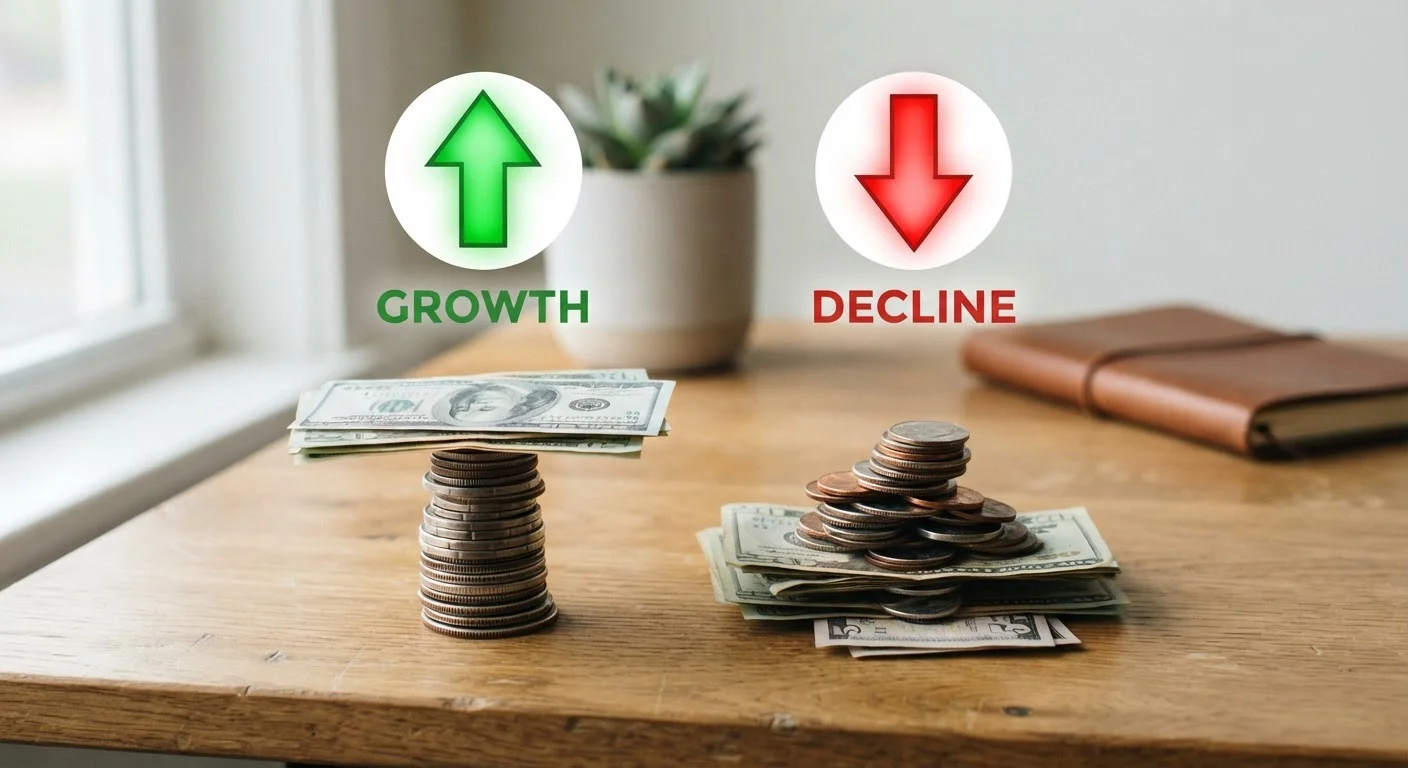
Option A
Good Debt
Borrowing that builds value or future earning power.
Best for: People financing education, a home, or other assets that are likely to appreciate or generate income over time.
Option B
Bad Debt
High-cost borrowing tied to depreciating or consumed goods.
Best for: Understanding what to minimize — debt used for everyday spending or discretionary purchases at high interest rates.
If you're deciding whether to take out a student loan
Good Debt (with caution)
Education debt can boost lifetime earnings, but only borrow what your expected salary can reasonably support — keep total student debt below one year's projected starting income as a general guideline.
If you're carrying a high-interest credit card balance
Bad Debt (prioritize paying it down)
Credit card interest rates often exceed 20%, meaning the cost compounds quickly and drains money that could go toward savings or productive debt repayment.
If you're weighing whether to pay off a mortgage early
Good Debt (evaluate carefully first)
Mortgage rates are often lower than other debt and the loan finances a real asset. Compare your rate against other financial priorities before accelerating payoff.
If you used a personal loan or buy-now-pay-later plan for discretionary spending
Bad Debt (address quickly)
These loans often carry high rates and fund items that lose value immediately. Focus on repaying them before taking on new borrowing.
What Makes Debt 'Good' or 'Bad'?
The label matters less than the logic behind it. When people call debt "good," they generally mean borrowing that meets two criteria: the interest rate is relatively low, and the money finances something that holds value, appreciates, or increases your ability to earn. When debt is called "bad," it typically means the opposite — high interest attached to purchases that lose value the moment you make them.
Think of it this way. A mortgage lets you live in and eventually own a property that may increase in value over decades. A student loan, used carefully, can raise your earnings over a career. These are examples commonly placed in the "good" category. On the other end, financing a vacation or a wardrobe on a credit card at 24% interest generates no lasting value — that's a textbook example of bad debt.
It's worth noting that these categories aren't perfectly rigid. An auto loan sits in the middle: cars depreciate quickly, but most people genuinely need reliable transportation to earn income. Context and terms both matter. For a deeper look at how debt types differ structurally, see how collateral changes the stakes.
Side-by-Side: How the Two Types Compare
The clearest way to separate good debt from bad debt is to look at specific attributes side by side. Interest rate, asset value, and repayment terms are the three most telling factors.
| Criterion | Good Debt | Bad Debt |
|---|---|---|
| Typical interest rate | Low to moderate (3%–8%) | High (15%–30%+) |
| What it finances | Assets that hold or grow value | Depreciating or consumed goods |
| Common examples | Mortgage, student loan | Credit card balance, payday loan |
| Net worth impact over time | Can be positive if managed well | Typically negative |
| Repayment terms | Structured, often long-term | Variable or short-term with high penalties |
| Risk level | Lower when borrowed responsibly | Higher; compounds quickly if unpaid |
Notice that the defining gap isn't just cost — it's whether the borrowed money does any productive work. A low-rate mortgage on a home you plan to occupy for years does productive work. A high-rate personal loan to cover dining and entertainment does not.
Why 'Good' Debt Can Still Go Wrong
Here's what the simple label misses: even debt that qualifies as "good" by category can become a serious burden if you borrow more than your income can support. Student loan debt is a prime example. Financing a graduate degree in a high-earning field at a manageable rate can pay off. Borrowing heavily for a credential that doesn't translate to higher income is a much riskier proposition, regardless of the interest rate.
The same logic applies to mortgages. Buying a home you can afford at a fixed rate is generally sound. Stretching beyond your means in hopes that property values rise indefinitely introduces real financial risk — something the 2008 housing crisis made painfully clear for millions of families.
A useful personal rule: any debt you take on should have a clear, credible plan for repayment built around your actual income — not hypothetical future income. For people with irregular paychecks, that planning is especially important. Our guide on managing debt on a variable income covers strategies for exactly that situation.
How to Use This Distinction Practically
Knowing the difference between good and bad debt should change two things: how you prioritize repayment and how you evaluate new borrowing decisions.
Repayment priority: If you're carrying both types, most financial educators suggest paying down high-interest debt first — typically credit cards and payday loans — before throwing extra money at lower-rate debt like a mortgage or subsidized student loans. The math is straightforward: eliminating a 22% interest obligation saves more than prepaying a 6% one.
New borrowing decisions: Before taking on any debt, ask three questions. What is the interest rate? What am I actually financing — something that holds value or something that won't? And do I have a realistic plan to repay this on my current income? Answering those honestly does more than any label can.
One common misconception worth clearing up: carrying a balance on a credit card does not build your credit score faster. If you've heard otherwise, learn why carrying a balance doesn't help your credit score. Paying interest unnecessarily is a form of bad debt that many people stumble into by accident.
For a broader foundation on how credit and debt work together, the complete guide to credit and debt is a useful next step.
This article is for general informational and educational purposes only and does not constitute personalized financial, legal, or tax advice. Consult a qualified financial professional before making decisions specific to your situation.