

Key Takeaways
Option A
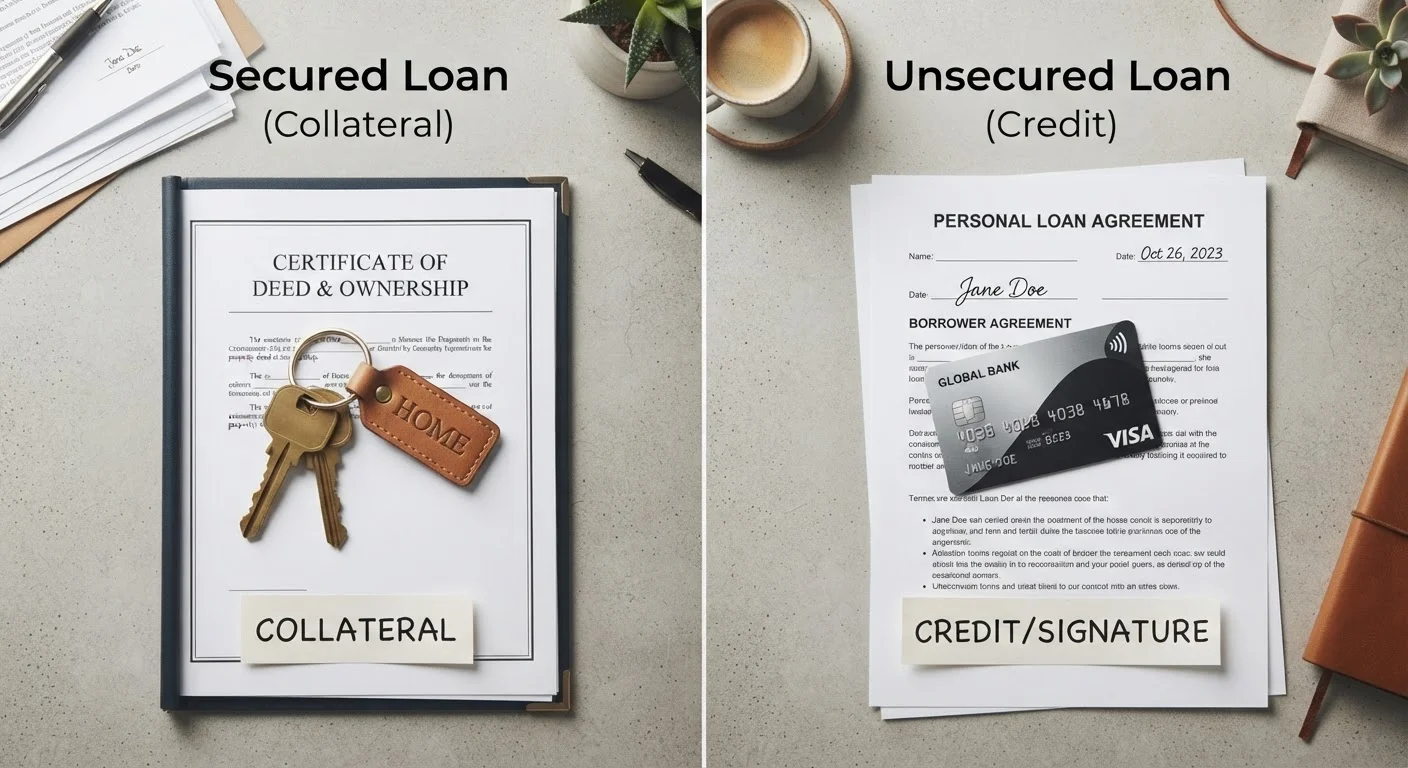
Secured Debt
Backed by an asset the lender can claim if you default.
Best for: Borrowers who need larger loan amounts or lower interest rates and are willing to pledge collateral like a home or vehicle.
Option B
Unsecured Debt
Based on your creditworthiness alone — no asset on the line.
Best for: Borrowers who need flexible, smaller-dollar borrowing without tying a specific asset to the loan.
If you're financing a home or vehicle purchase
Secured Debt
Mortgages and auto loans are structured as secured debt by design, typically offering lower rates in exchange for collateral. This is the standard path for these large purchases.
If you need funds for everyday expenses or emergencies without pledging an asset
Unsecured Debt
Credit cards and personal loans don't put a specific asset at risk, making them more flexible for short-term or variable needs — though interest rates are generally higher.
If you have limited credit history and want to build your score
Secured Debt
Secured credit cards and credit-builder loans use collateral to reduce lender risk, making approval more accessible for people still establishing credit.
If you're comparing borrowing costs and want the lowest interest rate possible
Secured Debt
Because lenders have recourse to an asset, they typically charge less interest on secured loans than on unsecured products for the same borrower profile.
What Makes Debt 'Secured' or 'Unsecured'?
At its core, the difference comes down to one word: collateral. Collateral is an asset — such as a home, car, or savings account — that you pledge to the lender when you borrow money. If you stop making payments, the lender has the legal right to seize that asset to recover what they're owed.
Secured debt is any loan or credit line backed by collateral. Common examples include mortgages (backed by your home), auto loans (backed by your vehicle), and secured credit cards (backed by a cash deposit). The lender's risk is limited because there's a tangible asset they can recover.
Unsecured debt has no specific asset attached to it. The lender extends credit based entirely on your promise to repay — supported by your credit history, income, and credit score. Credit cards, personal loans, student loans, and medical bills are typical examples. If you default, the lender can't immediately grab your property; instead, they may pursue collection activity or take you to court for a judgment.
For a broader look at how different types of debt compare in purpose and impact, see our guide on good debt vs. bad debt.
How Collateral Changes Interest Rates and Approval Odds
Lenders price risk. When a loan is secured, the lender's downside is capped — they can recoup losses by selling the collateral. That reduced risk usually translates into lower interest rates for borrowers. A mortgage, for example, typically carries a much lower annual percentage rate (APR) than an unsecured personal loan for the same borrower.
Unsecured debt is riskier for the lender because there's no safety net. To compensate, lenders charge higher rates and apply stricter credit standards. Someone with a strong credit score might qualify for a competitive rate on an unsecured personal loan, but someone with a thin or troubled credit history may face significantly higher rates — or be declined entirely.
| Criterion | Secured Debt | Unsecured Debt |
|---|---|---|
| Collateral required | Yes (home, car, deposit) | No |
| Typical interest rate | Generally lower | Generally higher |
| Loan amounts | Often larger | Often smaller |
| Approval requirements | Collateral reduces credit bar | Creditworthiness is key |
| If you default | Lender can seize asset | Collections, lawsuit, judgment |
| Common examples | Mortgage, auto loan, secured card | Credit card, personal loan, student loan |
This dynamic also affects how much you can borrow. Secured loans often allow larger loan amounts because the collateral provides a ceiling on the lender's loss. Unsecured loans are generally capped at lower amounts, especially for borrowers who haven't established strong credit.
What Happens When You Miss Payments
This is where the stakes diverge most sharply. With secured debt, the consequences of non-payment are concrete and fast-moving. Miss enough mortgage payments and you face foreclosure — the lender takes your home. Miss auto loan payments and your vehicle can be repossessed, sometimes with little notice. Both events cause serious, lasting damage to your credit.
With unsecured debt, there's no single asset on the line, but that doesn't mean the fallout is minor. Lenders can report late payments to credit bureaus (which damages your credit score), send the account to collections, and eventually sue you for repayment. If a court grants a judgment against you, the lender may be able to garnish wages or freeze a bank account, depending on your state's laws.
Neither outcome is painless. But understanding the specific consequences of each debt type helps you prioritize payments intelligently when money is tight. Most financial counselors suggest prioritizing secured debts first, since losing your housing or transportation creates cascading problems. That said, this article provides general information — your specific situation may call for different decisions, and a nonprofit credit counselor or licensed financial professional can help you think through your options.
Before you borrow, it's worth reviewing the pre-application checklist to make sure you're going in prepared.
How Each Type Appears on Your Credit Report
Both secured and unsecured debts show up on your credit report, and both affect your credit score. Payment history — whether you pay on time — is the single largest factor in most credit scoring models, regardless of debt type.
Where they diverge is in how credit utilization is calculated. Utilization — how much of your available revolving credit you're using — applies mainly to unsecured revolving accounts like credit cards. Keeping that ratio low (generally below 30%) is a key lever for maintaining a healthy credit score.
Secured installment loans like mortgages and auto loans also influence your score, particularly through your payment history and the mix of credit types you carry. Having a blend of account types can benefit your score over time, though this shouldn't be a reason to take on debt you don't need.
For more on how installment loans and revolving credit shape your credit profile differently, see revolving credit vs. installment loans.
If you want a comprehensive foundation on borrowing, credit scores, and managing debt, the Credit and Debt resource hub covers all the essentials in one place.
This article is for general informational and educational purposes only and does not constitute personalized financial, legal, or credit advice. Consult a qualified financial professional or nonprofit credit counselor for guidance specific to your situation.