

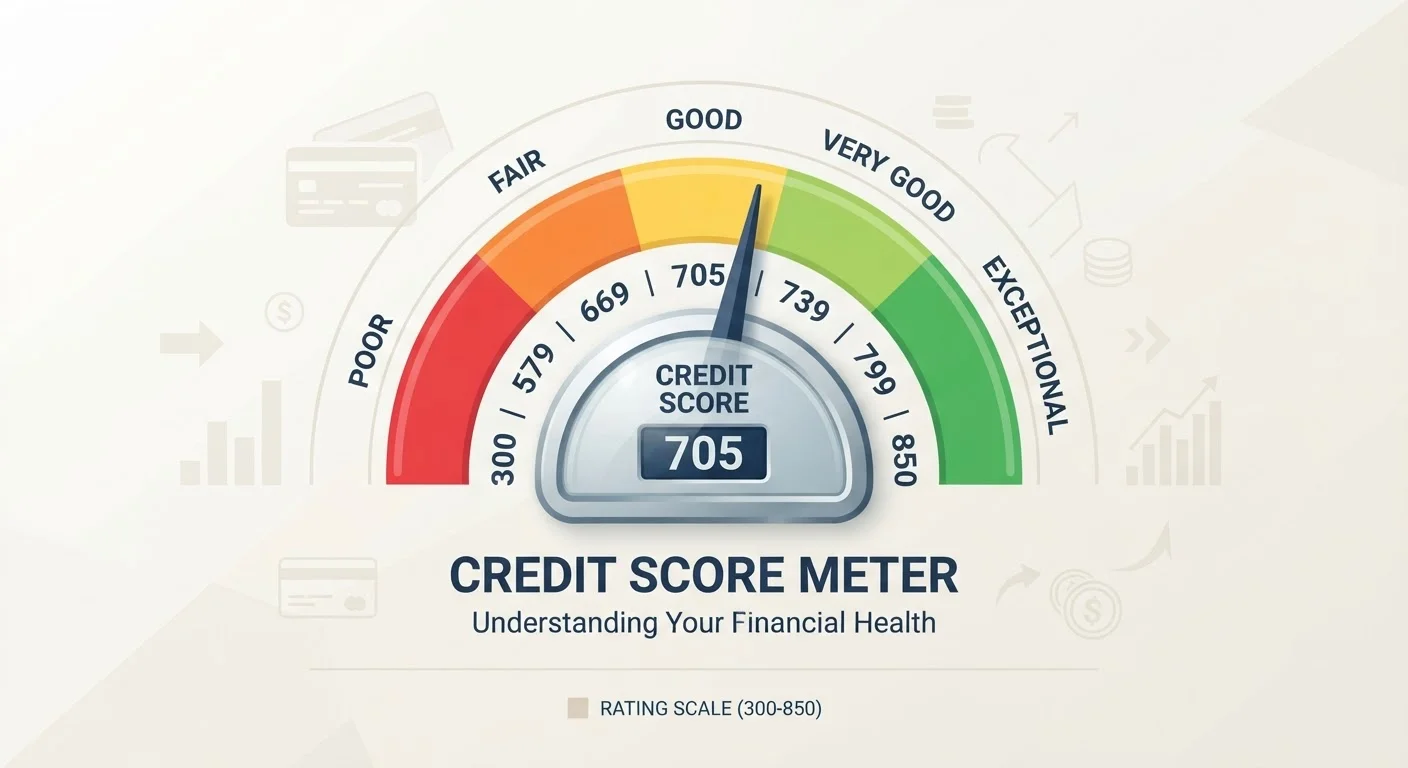
How Credit Score Ranges Are Structured
Most credit scores in the U.S. follow the FICO® scoring model, which runs from 300 to 850. VantageScore, a competing model developed by the three major credit bureaus, uses the same 300–850 range. While lenders may use different scoring models depending on the type of loan, understanding the standard tiers gives you a reliable starting point.
Here's how the FICO score tiers are generally defined:
- Exceptional (800–850): Borrowers in this range get the most favorable terms — lowest interest rates, highest credit limits, and the widest choice of products. Lenders see very low default risk.
- Very Good (740–799): You're likely to qualify for competitive rates, though not always the rock-bottom offer. Most lenders view this tier as low-risk.
- Good (670–739): This is close to the national average range. Most mainstream loans and cards are available, but rates may be slightly higher than those offered to borrowers in the top two tiers.
- Fair (580–669): Sometimes called "subprime." Approval is possible but comes with higher interest rates, lower limits, and stricter terms. Some lenders won't work with borrowers in this range at all.
- Poor (300–579): Getting approved for unsecured credit is difficult. Borrowers may need secured cards, co-signers, or credit-builder loans to begin rebuilding.
Your score is calculated from the data in your credit report — two different documents that work together. If you haven't looked at your report lately, see our guide on understanding credit reports to know what lenders are actually reading.
What Lenders Actually Do With Your Score
A credit score is a shorthand signal, not a final verdict. When you apply for a loan or credit card, the lender runs what's called a hard inquiry — a formal pull of your credit report — and your score is one input among several. Income, debt-to-income ratio, employment history, and the amount you're requesting all factor in.
That said, your score heavily influences three things:
- Approval or denial. Many lenders set minimum score thresholds. A mortgage lender might require a 620 minimum for a conventional loan; another product might require 680. These cutoffs vary by lender and loan type.
- Interest rate (APR). The difference between a 680 and a 760 score can translate to a meaningful difference in the interest rate offered — which compounds across the full life of a loan.
- Credit limit and loan amount. Lenders extend more credit to borrowers they see as lower risk. A higher score often means a higher limit or loan ceiling.
One commonly misunderstood point: checking your own score does not hurt it. Only hard inquiries from lenders affect your score — and even those typically drop it by only a few points temporarily. For more on what people get wrong here, see common credit score myths.
Key Factors Behind Your Score — and What You Can Influence
FICO scores are built from five weighted categories:
| Factor | Approximate Weight |
|---|---|
| Payment history | 35% |
| Amounts owed (utilization) | 30% |
| Length of credit history | 15% |
| Credit mix | 10% |
| New credit inquiries | 10% |
Payment history and utilization together make up nearly two-thirds of your score. Paying on time — every time — is the single most impactful habit. Utilization, or how much of your available credit you're using, is the second-biggest lever. Keeping that ratio below 30% is a common guideline, though lower is generally better. Learn more about how this works in our piece on credit utilization.
Credit mix — having both revolving accounts like credit cards and installment loans like auto loans or mortgages — also plays a role. These two types of accounts affect your profile differently, which is worth understanding before you open or close accounts. Our article on revolving credit vs. installment loans covers this in detail.
This article is for general informational purposes only and does not constitute personalized financial or credit advice. For guidance specific to your situation, consider consulting a certified financial counselor or credit advisor.