

Key Takeaways
Crate Training Supplies
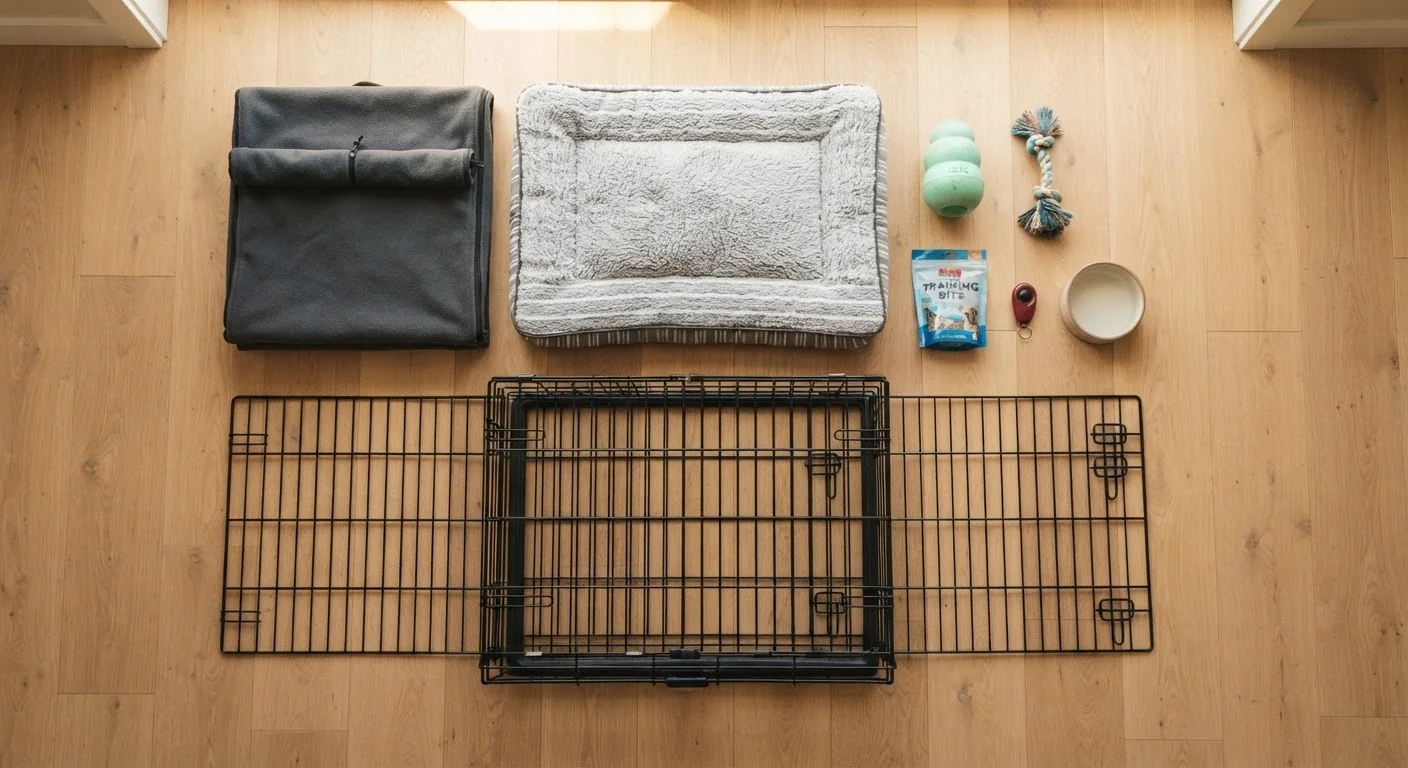
Crate training supplies are the collection of items used to introduce a dog or puppy to a crate as a safe, comfortable space. Each item serves a distinct purpose — from containing the dog safely to regulating the environment inside the crate. Understanding what each piece does helps owners avoid over-buying and ensures the setup actually supports training goals.
Veterinary behaviorists distinguish between confinement tools (the crate itself, dividers) and comfort items (pads, covers, chew toys), noting that the latter help reduce stress responses during the acclimation phase.
The Crate Itself: Sizing and Style Actually Matter
The crate is the centerpiece of the entire setup — but walking into a pet store and grabbing the largest one available is one of the most common mistakes new owners make. Crate size directly affects whether house training succeeds or stalls.
A properly sized crate gives your dog just enough room to stand, turn around, and lie down. No more. When there's excess space, a puppy will naturally use one end as a bathroom and sleep at the other — defeating the core premise of crate training, which relies on a dog's instinct to avoid soiling their sleeping area.
On the style question: wire crates collapse flat, offer airflow, and let dogs see their surroundings. Plastic travel crates feel more enclosed, which suits dogs that respond better to a den-like environment. Neither is categorically superior — the right choice depends on your dog's temperament and your household's practical needs. See our new pet owner's gear checklist for broader guidance on setting up before your dog arrives home.
Crate Dividers: The Underrated Puppy Essential
A crate divider is a panel — usually included with larger wire crates, or sold separately — that reduces the usable interior space of the crate without requiring you to buy a smaller crate as your puppy grows.
The logic is straightforward: puppies have small bladders and limited self-control, but they typically won't soil the space they sleep in. A divider creates a smaller zone that functions like a correctly sized crate for their current body. As the puppy grows and demonstrates reliability, the divider moves back incrementally, expanding the space.
One Crate With a Divider Beats Two Crates
Buying one appropriately sized adult crate with a divider panel is generally more practical than buying a small puppy crate and upgrading later. It's a single purchase that adapts over time, which also matters for households managing a budget. For a broader look at what's genuinely worth buying versus what's clever marketing, this breakdown of pet needs vs. pet aisle products is worth a read.
Buying one appropriately sized adult crate with a divider panel is generally more practical than buying a small puppy crate and upgrading later. It's a single purchase that adapts over time, which also matters for households managing a budget. For a broader look at what's genuinely worth buying versus what's clever marketing, this breakdown of pet needs vs. pet aisle products is worth a read.
Crate Pads and Bedding: Comfort With Practical Limits
A crate pad provides cushioning and insulation from the hard floor of the crate. For most dogs, some form of soft bedding makes the crate more appealing — which matters when you're trying to build a positive association with the space.
The practical caveat: puppies chew. Some dogs will shred foam-filled pads within minutes, creating both a mess and a potential ingestion hazard. During early training stages, a flat, durable pad — or even a folded blanket — often makes more sense than a plush, expensive option. Washability is non-negotiable; accidents happen, and a pad that can't be laundered easily becomes a hygiene problem quickly.
Once a dog is reliably house-trained and past destructive chewing phases, a more comfortable pad becomes a reasonable addition. The key is matching the bedding to the dog's current stage, not the ideal future scenario.
~80%
Dogs that accept crates when introduced gradually
Veterinary behavior literature consistently notes that gradual, positive introduction — rather than forced confinement — is the key factor in crate acceptance across most dogs.
8–10 weeks
Typical age puppies begin crate training
Most trainers and veterinarians recommend beginning crate introduction around the time of adoption, typically at 8 to 10 weeks of age, when routine-building is most effective.
2–4 hours
Maximum daytime crating duration for young puppies
The American Veterinary Society of Animal Behavior advises that very young puppies should not be crated for more than 2–4 hours at a stretch due to their limited bladder capacity.
Crate Covers: When They Help and When They Don't
A crate cover is a fabric cover — sometimes a repurposed blanket, sometimes a purpose-sewn cover — draped over the outside of the crate to reduce light and visual stimulation. The goal is to approximate the enclosed, den-like environment that many dogs find naturally calming.
Covers work well for dogs that are easily stimulated by household movement — a dog that can't settle because it keeps tracking people walking past the crate may respond well to a cover that blocks that sightline. They're also commonly used to signal "rest time" as part of a consistent crate routine.
They don't work for every dog, though. Some dogs become more anxious in enclosed spaces, and covering the crate can increase, rather than reduce, their stress. And regardless of temperament, always leave at least one side of the crate uncovered for airflow — particularly in warmer months. Observe your individual dog's response and adjust accordingly. For a consistent training routine to pair with your crate setup, the pre-session preparation checklist offers useful structure.
What You Probably Don't Need Right Away
Pet aisles are stocked with crate accessories beyond the four essentials above — automated feeders that attach to crates, scented pheromone inserts, multi-pocket organizers, and more. Some have legitimate uses in specific situations, but none of them belong on a beginner's must-have list.
The foundation of successful crate training is consistency and positive association — not product quantity. A crate that's the right size, a divider to match your puppy's growth stage, a washable pad, and possibly a cover is a complete functional setup for most dogs. Everything else is optional and should be introduced only if a specific need arises. The Pet Training Tips hub covers the behavioral side of crate acclimation in more depth, which is where most of the real work happens anyway.
Understanding each item's actual function — rather than buying the full shelf — keeps costs down and prevents the crate from becoming cluttered in ways that may actually interfere with training.