

Key Takeaways
Summary
28 items · 30–60 minutes to gather and organize
Why Less Is More on Day One
Walk into any pet supply store and you'll find entire aisles dedicated to products that most pets never need. New owners, understandably excited and a little anxious, often overbuy — only to discover that the elaborate puzzle feeder sits untouched while the cat obsesses over a cardboard box. This checklist cuts through that noise.
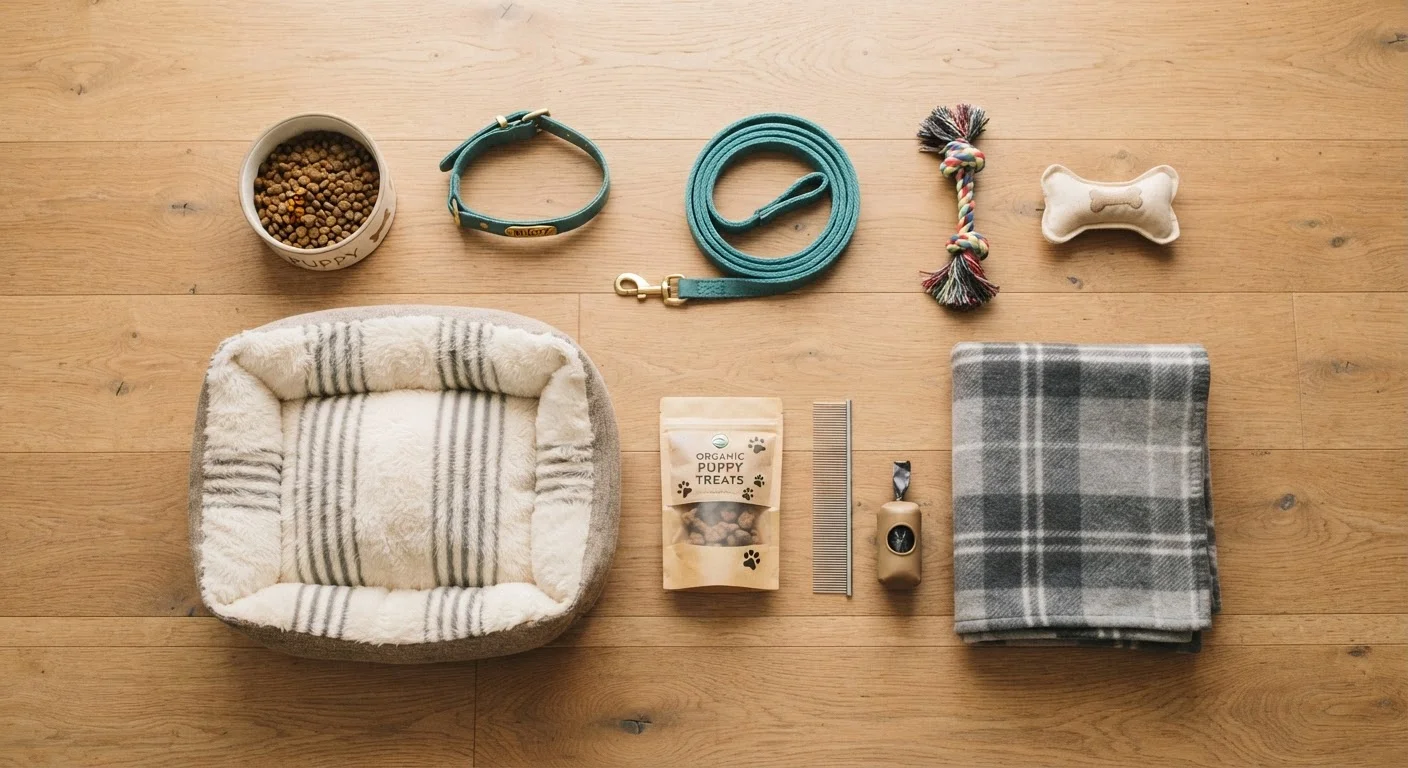
The goal isn't to have everything — it's to have the right things ready before your pet walks through the door. A stressed animal in a new home needs safety, comfort, and consistency, not novelty. Once you know your individual pet's preferences, you can add from there.
Note that this checklist covers dogs and cats as primary examples, with callouts for small animals where relevant. If you're bringing home a rabbit, guinea pig, or hamster, see our species-specific gear guide for supplies matched to each animal's actual needs.
Feeding and Hydration
Shelter and Sleeping
Safety and ID
Containment and Transport
Hygiene and Litter
Enrichment and Comfort
Tools and Resources You'll Want on Hand
Beyond physical supplies, a few resources help enormously during the first days and weeks. Being prepared with the right information — not just the right gear — is what sets confident new owners apart from overwhelmed ones.
Your Veterinarian's Contact Information
Identify and save a local vet's number before your pet arrives — including after-hours or emergency clinic details.
ASPCA Animal Poison Control Hotline
Keep this number accessible for urgent questions about potential toxin ingestion; fees may apply per call.
Measuring Tape or Body Weight Scale
Used to confirm accurate collar sizing, crate dimensions, and appropriate gear fit for your specific animal.
Enzymatic Cleaner (pet-formulated)
Breaks down biological odors from accidents at a molecular level, reducing the chance your pet returns to the same spot.
Feeding Log or Pet Journal
Track food intake, bathroom habits, and behavioral notes during the first weeks — invaluable data for your first vet visit.
Once your gear is assembled, your next priority is veterinary care. Our first-90-days health checklist walks you through vet visits, vaccines, parasite prevention, and microchipping so nothing critical slips through. And when you're ready to start building good behavior, basic obedience training for dogs is a solid starting point for new dog owners.
ID Before Anything Else
The single most urgent task before your new pet has unsupervised access to any space is proper identification. Collar tags should be on before the carrier is opened. Even indoor-only pets escape during the chaos of moving or arrival — a tag and a microchip together give you the best chance of a reunion if that happens. Do not wait until after the first vet visit to address this.