

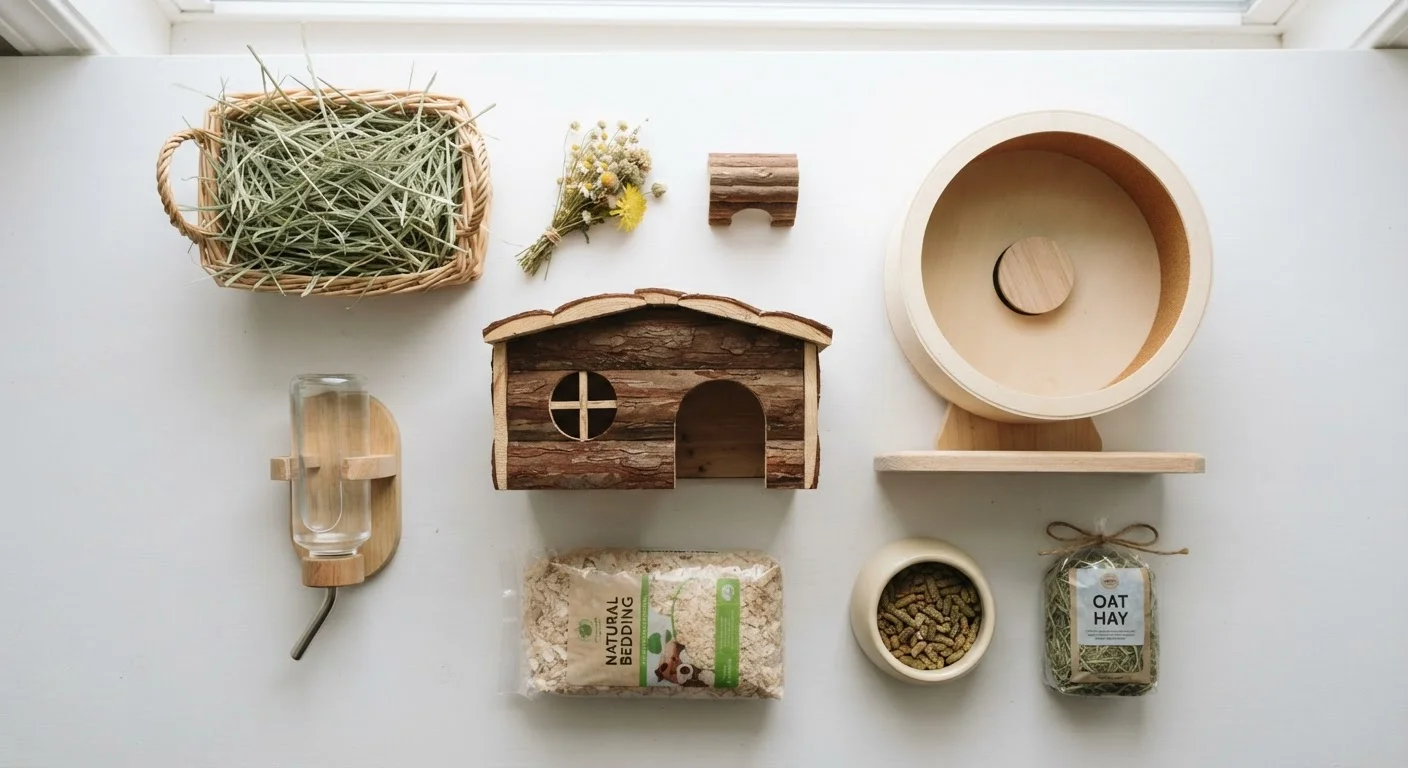
Key Takeaways
Why Small Pet Gear Gets So Confusing
Walk down any pet store aisle labeled "small animals" and you'll find a single category sheltering rabbits, guinea pigs, hamsters, and sometimes chinchillas, gerbils, and rats — all grouped together as if their needs were interchangeable. They aren't. A hamster thrives in a compact, burrowing-friendly setup. A rabbit needs floor space closer to what you'd give a small dog. A guinea pig is a social, hay-dependent herd animal that can develop serious health problems without a companion and unlimited grass hay.
The confusion isn't entirely the shopper's fault. Packaging often features whatever small, fluffy animal photographs well — not necessarily the species the product suits. Before buying a single item, it pays to understand what each animal genuinely requires. Our guide to separating real pet needs from marketing covers this broader problem in depth.
Check Species Labels Before Buying
Before purchasing any small pet product, look past the packaging image and check the label for which species it's designed for. A wheel marketed with a hamster photo may actually specify it's intended for mice — too small for any hamster. When in doubt, look for the species name in the product description, not just the photo.
Essential Gear by Species
Rabbits: Prioritize Floor Space Above Everything Else
Rabbits are active, ground-dwelling animals that need to run, jump, and stretch fully in multiple directions — behaviors that the small hutches commonly sold for them cannot accommodate. Veterinary and rabbit welfare organizations generally recommend a minimum of at least 8 square feet of enclosure space paired with several hours of daily exercise in a larger area, though more is always better.
Key gear considerations for rabbits include:
- Enclosure type: A large exercise pen, a dedicated room-within-a-room setup, or an x-pen works far better than most pet-store hutches.
- Hay: Unlimited grass hay (timothy or orchard grass) is not optional — it must make up the majority of a rabbit's diet and supports healthy digestion and dental wear.
- Litter box: Rabbits can be litter trained. A large, corner-style tray filled with paper-based litter and topped with a layer of hay makes this straightforward.
- Enrichment: Untreated wood chews, cardboard tunnels, and foraging opportunities address natural digging and gnawing instincts.
Most hutches sold for rabbits are too small — space is the single most critical variable.
Guinea Pigs: Never House Them Alone
Guinea pigs are highly social animals and, in several countries, it is actually considered animal welfare best practice to keep them in pairs or groups. A lone guinea pig can develop stress-related health and behavioral issues. This has a direct gear implication: whatever housing you choose needs to accommodate at least two animals comfortably.
Guinea pig housing essentials include:
- Enclosure size: A pair of guinea pigs needs a minimum of 7–8 square feet of floor space; more is better. C&C (cube and coroplast) cage systems are widely used because they're inexpensive and scalable.
- Hay: Like rabbits, guinea pigs need unlimited timothy or orchard grass hay. Unlike rabbits, they also cannot synthesize their own vitamin C, so fresh leafy greens are a required supplement to their diet.
- Hidey houses: Each guinea pig needs its own hide. One shared shelter between two animals often causes stress and conflict.
- Fleece bedding vs. paper bedding: Both work, but fleece liners require regular washing while paper bedding requires full replacement. Avoid cedar or pine shavings, which release aromatic compounds that can cause respiratory irritation.
Guinea pigs are social animals — solitary housing causes measurable stress and should be avoided.
Hamsters: Bigger Cages and Deeper Substrate Than You'd Expect
Hamsters are perhaps the most misrepresented small pet in mainstream retail. The small, brightly colored cages marketed for them are generally far too small and provide nowhere near enough substrate depth for natural burrowing. Research on hamster welfare increasingly supports a minimum of 450–600 square inches of floor space, with substrate depth of at least 6–10 inches in part of the enclosure.
- Enclosure type: Large glass tanks (often repurposed aquariums) or bin cages are widely used by hamster owners because they allow deep substrate without spills.
- Wheel size: A hamster wheel should be large enough that the animal's back stays flat while running — at least 10–11 inches in diameter for Syrian hamsters. Smaller wheels force an arched spine and can cause injury over time.
- Substrate: Paper-based or aspen bedding at sufficient depth allows natural digging and nest-building. Avoid scented or cedar-based options.
- Solitary by nature: Syrian hamsters are territorial and must be housed alone. Dwarf hamster species can sometimes coexist in same-sex pairs, but introductions require careful monitoring.
Hamsters need far more burrowing depth and wheel size than most starter cages provide.
Water Delivery: Bottles vs. Bowls, and Why It Matters
The default assumption for small pets is a sipper bottle mounted to cage bars, but this isn't always the right choice. Guinea pigs and rabbits often drink more readily from a heavy ceramic or stainless bowl, which encourages adequate hydration — a factor with real health implications, particularly for urinary tract function in rabbits.
Sipper bottles have a legitimate role: they stay cleaner in deep-substrate enclosures (like hamster setups) and don't risk flooding bedding. However, bottles should be checked daily because the ball mechanism can stick, cutting off the animal's water supply without any visible sign.
Whatever method you use, clean the water container daily — bacterial buildup in bottles and bowls is a common source of illness in small animals. See our guide on when cutting costs backfires for more on which supplies warrant higher quality standards.
A stuck sipper bottle can silently cut off an animal's water supply — check it every single day.
Enrichment: Match the Gear to Natural Behavior
Enrichment products for small pets span a wide range of usefulness. The most effective ones are grounded in what the animal actually does in the wild — and the least useful ones are designed primarily to appeal to the human buying them.
- Rabbits benefit from digging boxes (a container filled with shredded paper or soil), cardboard castles, and foraging opportunities like hay scattered in different locations.
- Guinea pigs explore and "popcorn" (leap erratically when excited) — they do well with tunnels, foraging mats, and varying their environment periodically rather than adding more plastic structures.
- Hamsters are natural hoarders and runners. A large, appropriately-sized wheel is among the most important enrichment items; hamsters in the wild may travel several miles per night. Scatter feeding — hiding food throughout bedding — also supports natural foraging behavior.
When evaluating any enrichment product, ask whether it supports a natural behavior the animal is motivated to perform. If the answer is unclear, it's worth skipping until higher-priority needs are fully met. The pet health basics hub has more on how environment and enrichment affect overall animal wellbeing.
The best enrichment supports a behavior the animal is naturally motivated to perform — not just what looks fun to a human.
Making Smart Choices Without the Overwhelm
The most common mistake new small-pet owners make is buying a "starter kit" bundle calibrated to what looks complete on a shelf rather than what the animal needs to stay healthy. Most kits under-deliver on space and hay, and over-deliver on colorful plastic accessories of questionable value.
When building your setup, start with the three non-negotiables for any small animal: an appropriately sized enclosure, species-correct food, and safe enrichment. Everything else — specialty water dispensers, themed hideouts, treat dispensers — should come after those boxes are checked. If you're weighing what feeding gear is genuinely worth having, our look at feeding tools vs. marketing noise is a useful read. And if you're still assembling your initial supply list, the new pet owner's gear checklist walks through what to have ready before your animal comes home.