

Key Takeaways
Automatic feeders support consistent meal timing
Pets thrive on routine, and a programmable feeder can maintain schedule even when an owner's day runs long. This is especially relevant for cats, who respond to irregular feeding with heightened stress behaviors.
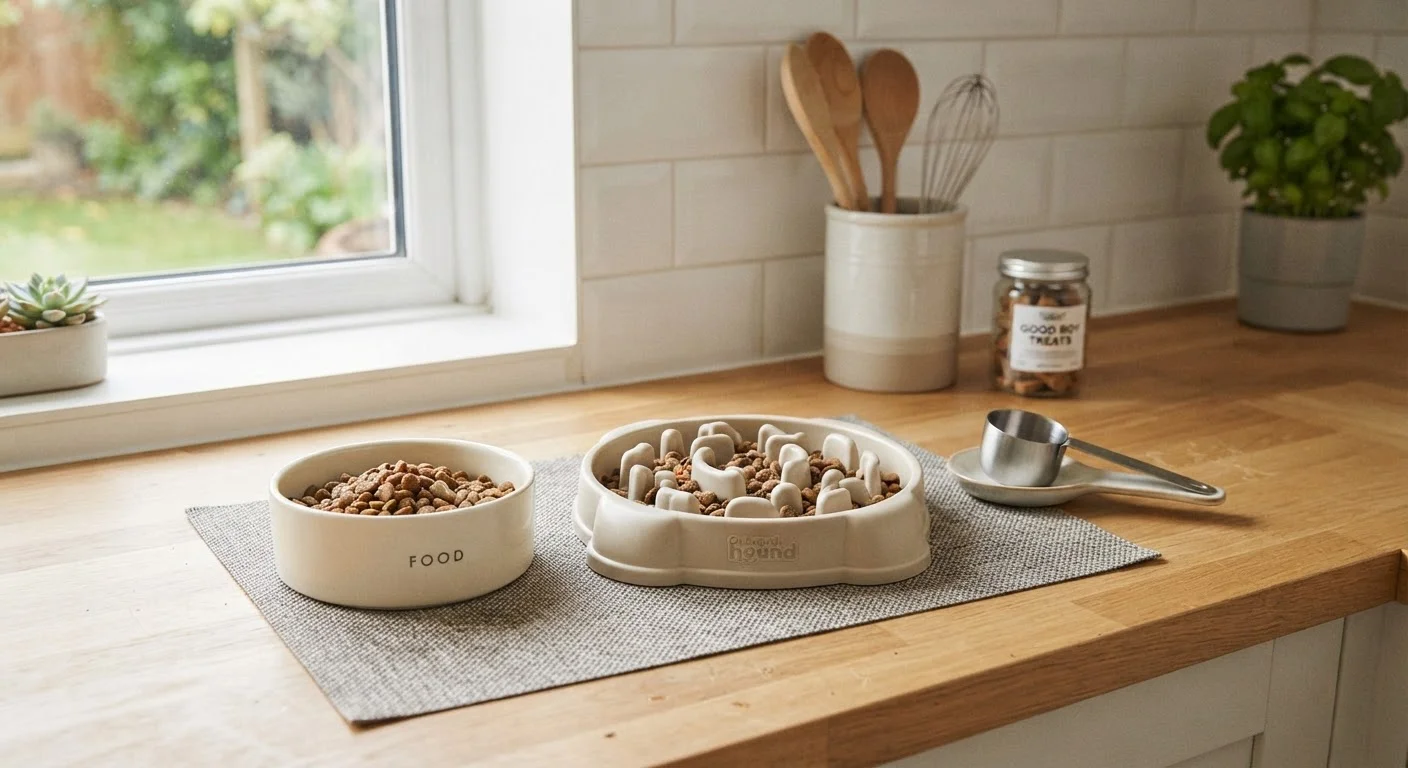
Slow feeders reduce gulping and digestive discomfort
Dogs that eat too quickly can experience bloating, regurgitation, and general digestive upset. Slow feeders physically pace eating without requiring owner supervision at every meal.
Puzzle feeders provide mental enrichment for indoor cats
Indoor cats lack opportunities to hunt or forage. Food-dispensing puzzle toys replicate a foraging experience and are widely recommended by veterinary behaviorists as enrichment tools.
Raised feeders may ease discomfort in senior or large dogs
Animals with arthritis or orthopedic conditions can find floor-level bowls uncomfortable to reach. Raised feeders reduce the need to strain the neck and shoulders at mealtimes.
Portion-control inserts help manage caloric intake
Some feeders include measured compartments that make overfeeding less likely, which is useful for pets on weight-management plans recommended by a vet.
Many products solve problems your pet doesn't have
A puzzle feeder is useful for a bored indoor cat but irrelevant for a calm, well-exercised dog. Buying gear without a clear problem to solve adds clutter and cost without benefit.
Complex designs are harder to clean thoroughly
Deep ridges, multiple parts, and textured surfaces trap food and moisture, creating conditions for bacterial growth. Poor hygiene at the food source can undermine a pet's health over time.
Automatic feeders can malfunction without warning
Battery or power failures, jammed dispensing mechanisms, or software glitches can result in missed meals. Relying solely on a device without a backup plan carries real risk, especially for owners who travel.
Raised feeders carry unresolved questions for some breeds
The relationship between raised feeders and bloat (gastric dilatation-volvulus) in large, deep-chested dogs remains debated in veterinary literature. Owners of high-risk breeds should consult their vet before switching.
Cost adds up for tools that see little use
Puzzle feeders and specialty bowls range from modest to expensive. Without testing whether a pet engages with a device, there's a real chance it ends up unused after the first week.
Our Verdict
Feeding accessories occupy a wide spectrum from genuinely useful to purely decorative. Automatic feeders, slow feeders, and puzzle bowls earn their place when matched to a real, identified need — fast eating, boredom, or an unpredictable owner schedule. When there's no underlying problem to solve, the simpler the setup, the better.
Pet owners with specific feeding challenges — gulping, irregular schedules, or an indoor cat needing mental stimulation — will get the most from targeted feeding gear.
Why the Feeding Aisle Feels Overwhelming
Walk into any pet store or scroll through an online retailer and you'll find dozens of feeding-related products competing for your attention: programmable automatic feeders, slow-feed bowls, lick mats, raised feeders, stainless steel vs. ceramic vs. silicone, puzzle feeders rated by difficulty level. It's a lot — and most of it is marketed as essential.
The honest starting point is this: pets need fresh food, clean water, and consistent timing. Everything else is either solving a specific problem or adding complexity for its own sake. Before spending anything, it helps to ask which category a product falls into for your animal. Our broader piece on separating genuine pet needs from marketing covers this filtering logic in detail.
The Case for Feeding Gadgets
Some feeding tools have a legitimate track record, particularly for animals with identifiable habits that cause problems.
Automatic feeders support consistent meal timing
Pets thrive on routine, and a programmable feeder can maintain schedule even when an owner's day runs long. This is especially relevant for cats, who respond to irregular feeding with heightened stress behaviors.
Slow feeders reduce gulping and digestive discomfort
Dogs that eat too quickly can experience bloating, regurgitation, and general digestive upset. Slow feeders physically pace eating without requiring owner supervision at every meal.
Puzzle feeders provide mental enrichment for indoor cats
Indoor cats lack opportunities to hunt or forage. Food-dispensing puzzle toys replicate a foraging experience and are widely recommended by veterinary behaviorists as enrichment tools.
Raised feeders may ease discomfort in senior or large dogs
Animals with arthritis or orthopedic conditions can find floor-level bowls uncomfortable to reach. Raised feeders reduce the need to strain the neck and shoulders at mealtimes.
Portion-control inserts help manage caloric intake
Some feeders include measured compartments that make overfeeding less likely, which is useful for pets on weight-management plans recommended by a vet.
Slow feeders and puzzle bowls are among the best-supported options. Dogs that inhale meals quickly are at greater risk of digestive discomfort, and slowing down the eating pace is a straightforward intervention. Puzzle feeders also serve indoor cats well — providing mental engagement that a plain bowl simply cannot. Veterinary behaviorists commonly recommend food-based enrichment for indoor cats as part of reducing boredom-related behaviors.
Automatic feeders address a real-world constraint: owners who work long or variable hours struggle to deliver meals at consistent times. For cats especially, irregular feeding can contribute to anxiety and pestering behavior. A reliable timer-based feeder removes that variable without requiring a neighbor's help.
Raised feeders have a narrower case — they're often recommended for large or giant breed dogs and for animals with orthopedic conditions that make bending uncomfortable. The evidence on whether raised feeders prevent or contribute to bloat in large breeds remains genuinely mixed, so this is worth discussing with a vet before purchasing.
Where Feeding Gadgets Fall Short
The cons of feeding gear mostly come down to misapplication, maintenance burden, and unnecessary cost.
Many products solve problems your pet doesn't have
A puzzle feeder is useful for a bored indoor cat but irrelevant for a calm, well-exercised dog. Buying gear without a clear problem to solve adds clutter and cost without benefit.
Complex designs are harder to clean thoroughly
Deep ridges, multiple parts, and textured surfaces trap food and moisture, creating conditions for bacterial growth. Poor hygiene at the food source can undermine a pet's health over time.
Automatic feeders can malfunction without warning
Battery or power failures, jammed dispensing mechanisms, or software glitches can result in missed meals. Relying solely on a device without a backup plan carries real risk, especially for owners who travel.
Raised feeders carry unresolved questions for some breeds
The relationship between raised feeders and bloat (gastric dilatation-volvulus) in large, deep-chested dogs remains debated in veterinary literature. Owners of high-risk breeds should consult their vet before switching.
Cost adds up for tools that see little use
Puzzle feeders and specialty bowls range from modest to expensive. Without testing whether a pet engages with a device, there's a real chance it ends up unused after the first week.
A puzzle feeder designed for cognitive stimulation is a sensible tool for an indoor cat. It's unnecessary for a dog that eats calmly and gets several hours of outdoor activity daily. The same device, in the wrong context, just makes mealtime harder without benefit.
Hygiene is a practical issue that's easy to underestimate. Bowls with deep grooves, multiple removable parts, or textured surfaces trap food residue and moisture — exactly the conditions that support bacterial growth. If a feeder can't be cleaned as thoroughly as a plain bowl, it may create more health risk than it prevents. This is especially true for wet food or raw diets.
Automatic feeders that rely on batteries or power carry the risk of mechanical failure. A malfunctioning feeder that doesn't dispense at the scheduled time leaves a pet without a meal, which is a more serious problem than the feeder was meant to solve. For pet owners who travel, this concern is real enough to warrant a backup plan regardless.
What Actually Matters at Mealtime
Portion size and food quality do more for a pet's health than the vessel it's served in. Understanding what goes into the bowl is foundational — reading a pet food label clearly is a more impactful skill than choosing between bowl materials.
A Simple Rule Before You Buy
Identify the specific feeding behavior you want to change before purchasing any product. If your pet eats calmly, finishes meals comfortably, and maintains a healthy weight, a plain bowl cleaned daily is fully adequate. Gear should follow a diagnosed problem — not precede one. When in doubt, a brief conversation with your vet about your pet's eating habits costs nothing and may save you from buying something unnecessary.
Consistency in timing matters for cats more than many owners realize. Cats are creatures of routine, and erratic feeding schedules can drive anxiety-related behaviors including excessive vocalization and food guarding. For dogs, timing is important but somewhat more flexible depending on breed and temperament.
If you're using food as part of training, that's a context where the type and quantity of food reward becomes its own consideration. The trade-offs of daily treat-based training covers how to balance food rewards against overall diet without overcomplicating either.
For senior pets, feeding setup may genuinely need to evolve — raised dishes or softer food textures can make a meaningful difference in comfort. Adapting gear for aging animals explains when those changes are worth making.