

Key Takeaways
Why the Scale Isn't Enough
Many pet owners assume a number on the scale tells them everything they need to know about their animal's weight. In reality, two dogs can weigh exactly the same and be at completely different health levels — one lean and muscular, one carrying excess fat. This is why veterinarians rely on body condition scoring (BCS), a structured physical assessment that evaluates fat coverage and muscle mass relative to the animal's individual frame.
BCS is typically rated on a 1–9 scale (used widely for dogs and cats), where 1 is severely underweight, 9 is severely obese, and 4–5 is the ideal range. Some vets use a 1–5 scale, which is simply a compressed version of the same concept. Either way, the assessment is based on what you can see and feel — not just a number on a scale.
Understanding BCS also helps you have a more productive conversation at your pet's annual wellness exam. See our guide to what happens at a routine vet visit for context on how your vet approaches this and other assessments.
What You'll Need Before You Start
No special tools are required. Good lighting, a calm pet, and your hands are all that's needed. A notepad to record your observations can be helpful if you plan to track changes over time.
What you will need
How to Perform a Body Condition Assessment
Work through each step methodically, and take notes as you go. Repeat this check monthly to track trends rather than relying on a single snapshot.
Look at Your Pet from Above
Stand directly above your pet while they are standing still on all four legs. You should see a visible narrowing — called a waist — behind the ribcage. In an ideal-weight dog or cat, this hourglass shape is apparent but not dramatic. If no waist is visible and the sides appear straight or barrel-shaped, excess fat is likely present. If the waist appears severely pinched, the animal may be underweight.
Look at Your Pet from the Side
Crouch to your pet's eye level and view them from the side. A healthy pet will show a slight upward tuck of the abdomen behind the ribcage — the belly line rises toward the hind legs. A sagging or pendulous belly with no tuck suggests fat accumulation. A severely tucked or 'herring-gutted' appearance may indicate underweight status.
Feel the Ribs
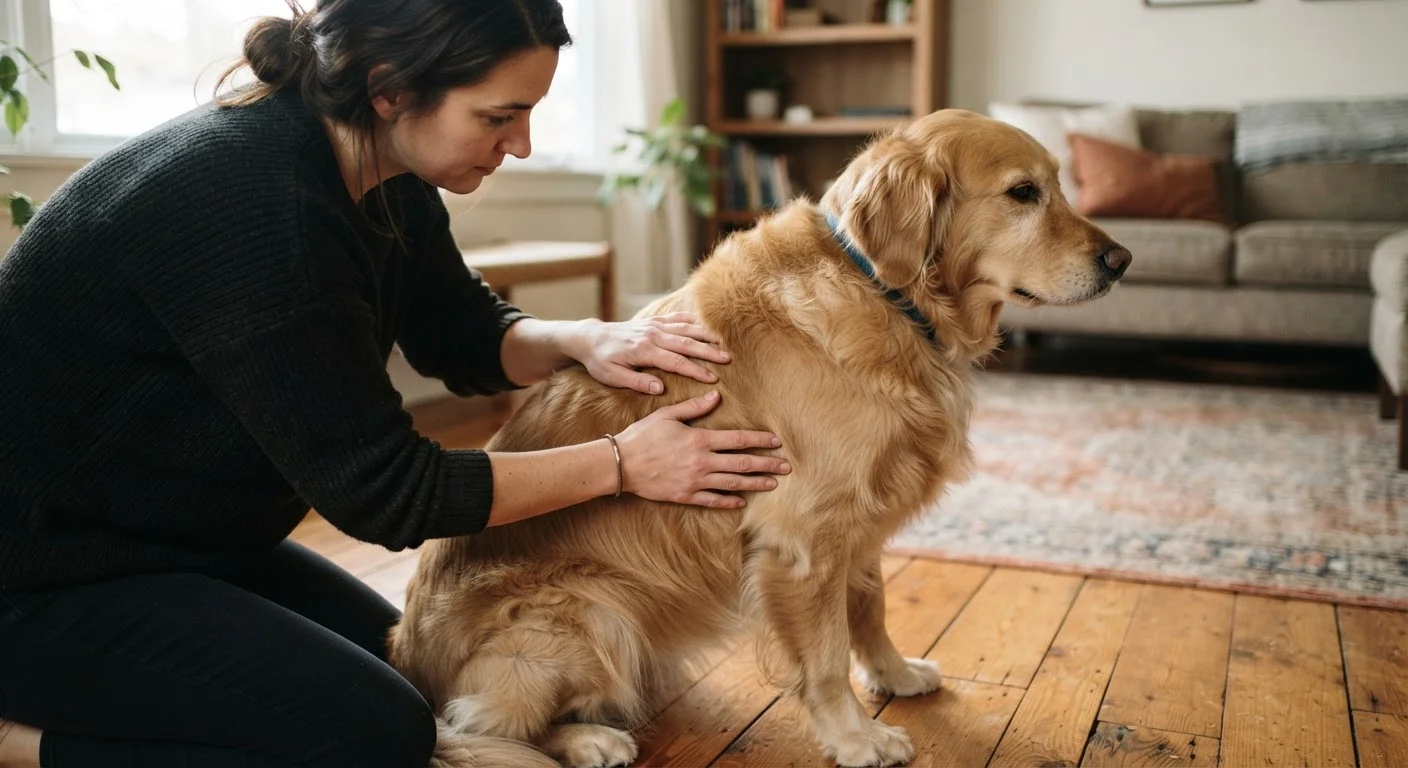
This is the most informative single test. Place both thumbs on your pet's spine and spread your fingers along both sides of the ribcage. Apply light pressure and move your fingers back and forth. In a healthy pet, you should be able to feel individual ribs easily — like knuckles under a thin layer of skin — without pressing hard. If you must press firmly to feel any ribs, there is likely excessive fat coverage. If ribs are immediately visible or feel sharp and prominent with no padding, the pet may be underweight.
Check the Spine and Hip Bones
Run your fingers gently along the spine and then over the hip bones. In an ideal-weight animal, these bones should be palpable (felt with light pressure) but not prominent. If the spine or hips feel sharp and protrude noticeably, the animal may be underweight. If you cannot feel them at all with moderate pressure, there may be significant fat coverage.
Assign a Preliminary BCS Score
Based on your observations, place your pet on the 1–9 scale:
- 1–3: Ribs, spine, and hips easily visible or very prominent; no palpable fat; little muscle mass
- 4–5: Ribs easily felt with light pressure; visible waist from above; slight abdominal tuck; this is the ideal range
- 6–7: Ribs felt only with firm pressure; waist absent or barely visible; abdominal tuck minimal or absent
- 8–9: Ribs not palpable; no waist; distended abdomen; fat deposits visible on neck, limbs, or base of tail
Record your score and date. Comparing scores over several months gives a clearer picture than any single assessment.
Track Changes Over Time
A single BCS reading is useful, but a pattern is more valuable. Note your score and the date each time you assess, and reassess monthly. Gradual weight gain in pets often goes unnoticed until it becomes significant — consistent home monitoring helps you catch drift early and bring concrete observations to your vet.
What Your Results Mean — and What to Do Next
If your pet scores in the 4–5 range on the 1–9 scale, their body condition is considered ideal. A score of 6–7 suggests mild to moderate overweight; 8–9 indicates obesity. Scores of 1–3 point to underweight or undernourished status, which can be just as medically serious.
If you suspect your pet is outside the ideal range, schedule a vet visit before making changes to their diet or exercise routine. Rapid dietary changes — especially in cats — can cause serious medical complications. Your vet can confirm the BCS, rule out underlying conditions such as hypothyroidism, and help you build a realistic plan.
Diet plays a major role in weight management, but understanding what's actually in your pet's food is a prerequisite to making smart adjustments. Our guide to reading pet food labels walks through ingredient lists and caloric density so you can make sense of what you're feeding.
This article is for general informational purposes only and is not a substitute for professional veterinary advice, diagnosis, or treatment. Always consult a licensed veterinarian about your individual pet's health needs.