

Key Takeaways
Cat Training
Cat training is the process of using consistent cues, rewards, and repetition to teach a cat to perform specific behaviors — or to stop performing unwanted ones. Unlike popular belief, cats are capable of learning a wide range of behaviors when the approach respects their nature. Training relies on positive reinforcement: rewarding the behavior you want so the cat is more likely to repeat it.
Feline learning is shaped by operant conditioning — the same framework used in dog and marine mammal training. Cats respond especially well to variable reward schedules once a behavior is established.
Why the 'Cats Can't Be Trained' Myth Persists
The idea that cats are untrainable is one of the most stubborn myths in pet ownership. It persists largely because people apply dog-training expectations to a species with a different social structure. Dogs evolved to work cooperatively with humans; cats domesticated themselves on their own terms. That difference doesn't make cats unteachable — it means the training relationship looks different.
Cats don't respond to authority or hierarchy the way dogs often do. They respond to what works for them. If sitting on command produces a delicious treat, a cat has every reason to do it again. If ignoring a cue costs nothing, they'll ignore it. Understanding this transactional nature is the starting point for any successful training effort.
Common pet training myths — including the belief that cats are untrainable — can set owners up to give up too early. The reality is that cats learn constantly; the question is whether their owner is directing that learning intentionally.
Start With What Your Cat Already Does
The easiest way to begin training is to capture a behavior your cat does naturally — like sitting or stretching — by rewarding it the moment it happens. This teaches the cat that interacting with you produces good things, building the foundation for more deliberate training. You don't need to 'create' a behavior from scratch to start making progress.
The Core Method: Positive Reinforcement
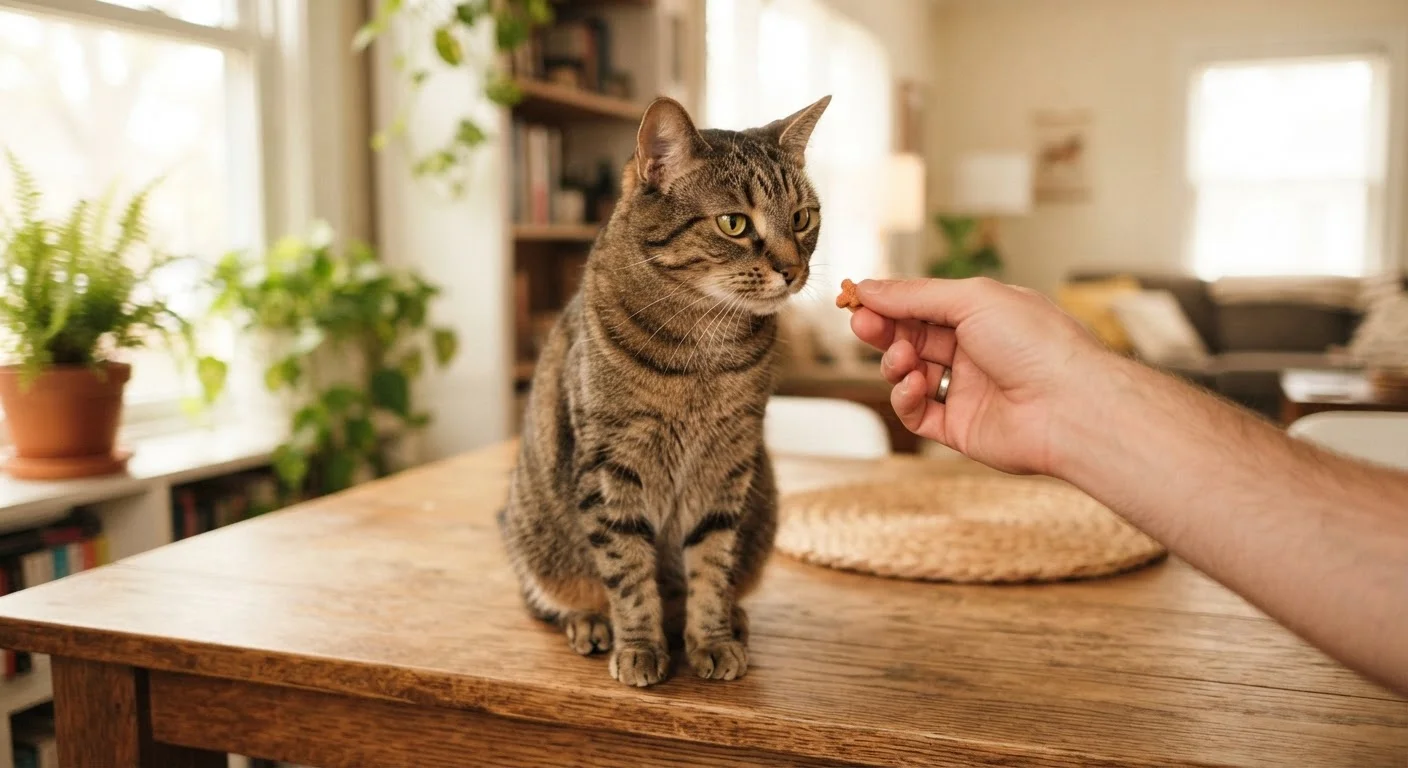
Positive reinforcement means adding something pleasant immediately after a behavior occurs, increasing the likelihood that the behavior will be repeated. For cats, this almost always means food. The timing is critical — the reward needs to arrive within one to two seconds of the desired behavior, or the cat will not connect the two.
A clicker (a small handheld device that makes a distinct clicking sound) can bridge the gap between behavior and treat delivery. You first teach the cat that a click always predicts a treat — this is called 'charging the clicker' — and then use the click to mark the exact moment the right behavior happens. Many owners find this dramatically speeds up learning.
What doesn't work: scolding, spraying with water, or physically forcing a position. These methods create stress and erode trust without teaching the cat what you actually want. A cat that associates training with negative experiences will simply avoid the interaction altogether.
Realistic Behaviors to Train and How to Start
Most cats can reliably learn the following with consistent practice:
- Sit: Hold a treat just above and slightly behind the cat's nose. As their head tilts up, their hindquarters naturally lower. The moment they sit, click (or say a marker word like 'yes') and deliver the treat. Add the verbal cue 'sit' once they're doing the motion reliably.
- Come when called: Start from a short distance, say the cat's name followed by 'come,' and reward immediately when they reach you. Gradually increase distance over multiple sessions.
- Target touching: Present a fingertip or a target stick. When the cat sniffs or touches it, reward. This becomes the foundation for directing movement and teaching more complex behaviors.
- Carrier comfort: Leave the carrier out as a regular resting spot, toss treats inside, and reward calm entry. This makes vet trips significantly less stressful for both cat and owner.
Keep sessions to 3–5 minutes maximum. Cats have shorter attention spans for structured tasks than dogs, and stopping while they're still engaged keeps them interested for the next session.
For related guidance on managing an indoor cat's broader environment alongside training, see setting up a safe, enriching indoor cat space.
Addressing Unwanted Behaviors
Training isn't only about teaching new tricks — it's also about redirecting behaviors owners find problematic. The guiding principle is the same: reinforce what you want, and make unwanted behaviors less rewarding rather than punishing them after the fact.
Scratching furniture, counter-surfing, and waking owners at night are common complaints. In most cases, the solution involves identifying the underlying need (scratching for claw maintenance, counter access for elevated views) and providing an appropriate outlet, then making the unwanted spot less accessible or appealing.
If a cat is eliminating outside the litter box, training may not be the right first response — this is often a medical or environmental signal. Understanding litter box habits can help you distinguish between a training issue and one that warrants a veterinary consultation.
3–5 min
Ideal cat training session length
Veterinary behaviorists generally recommend keeping feline training sessions brief to maintain attention and end on a positive note.
1–2 sec
Maximum reward delivery window
Animal learning science indicates rewards must follow the target behavior within one to two seconds for the cat to associate the two events reliably.
90%+
Cats that can learn basic cued behaviors
While precise population figures vary, veterinary behaviorists broadly agree that the vast majority of healthy cats can learn simple cued behaviors with appropriate training methods.
Setting Yourself Up for Consistent Progress
Consistency is the variable most owners underestimate. Using different cue words, rewarding sporadically, or practicing only occasionally will slow progress significantly. Every member of the household should use the same cues and follow the same response rules.
Practice at the same general time each day when possible — many cats are most alert and food-motivated just before meals. End sessions on a success, even if that means going back to a behavior the cat already knows confidently.
Cat training differs from dog training in pacing, not possibility. For a broader perspective on how training approaches vary across species and life stages, a lifelong look at pet training offers useful context. The core principles — clear communication, meaningful rewards, and realistic expectations — apply across the board.