

| Normal urination frequency | 2–4 times per day |
| Normal defecation frequency | Once per day (or every other day) |
| Recommended boxes per cat | One per cat, plus one extra |
| Minimum scooping frequency | Once daily |
| Recommended box length | 1.5× the cat's nose-to-tail-base length |
| Full box wash frequency | Monthly with mild, unscented soap |
What Normal Litter Box Use Looks Like
Most healthy adult cats urinate 2–4 times per day and defecate once per day, though once every other day can also fall within normal range depending on diet and hydration. Kittens and senior cats may go more frequently. Consistency matters more than exact counts — what you're looking for is a stable, repeatable pattern unique to your cat.
| Normal urination frequency | 2–4 times per day |
| Normal defecation frequency | Once per day (or every other day) |
| Recommended boxes per cat | One per cat, plus one extra |
| Minimum scooping frequency | Once daily |
| Recommended box length | 1.5× the cat's nose-to-tail-base length |
| Full box wash frequency | Monthly with mild, unscented soap |
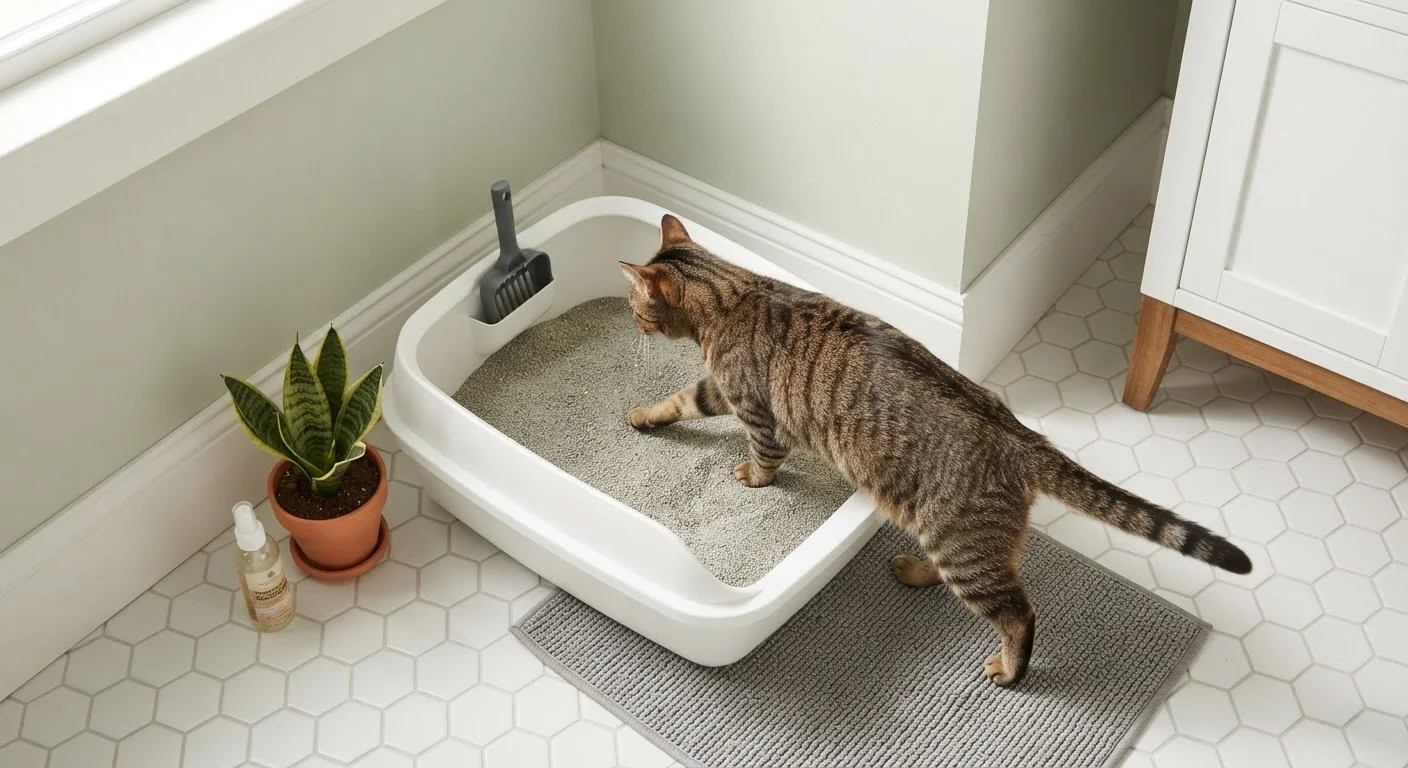
Healthy elimination should be relatively effortless. Cats typically enter the box, dig briefly, squat, eliminate, and cover. The entire process usually takes under two minutes. Straining, vocalizing, repeated failed attempts, or spending excessive time in the box are all signs that something may be wrong — either medically or behaviorally.
For a deeper look at what waste appearance and frequency can reveal about internal health, see what the litter box can tell you about your cat's health.
Common Deviations and What They Indicate
Not every litter box problem signals a retraining need. Many deviations point to a medical issue that must be addressed first. Use this breakdown to decide where to start.
Periuria
Urination that occurs outside the litter box. It can be caused by medical conditions such as UTIs or bladder stones, or by behavioral factors like box aversion. A vet evaluation helps distinguish between the two.
Feline Idiopathic Cystitis (FIC)
Inflammation of the bladder in cats with no identifiable infectious cause. It is often stress-related and can cause frequent, painful, or bloody urination — symptoms that look like behavioral litter box issues.
Spraying
A territorial marking behavior in which a cat backs up to a vertical surface and releases a small amount of urine. It differs from standard elimination and is more common in intact cats and in multi-cat households with social tension.
Substrate Aversion
A cat's learned dislike of a particular litter material, texture, or scent. Once formed, it can cause the cat to avoid the box entirely or eliminate just outside it, even if the box is otherwise clean and accessible.
Location Aversion
A cat's reluctance to use a litter box because of where it is placed — for example, near a noisy appliance, in a high-foot-traffic hallway, or too close to their food and water.
Elimination
The general term for a cat urinating or defecating. Veterinarians use this word to describe normal waste removal, as distinct from spraying or other scent-marking behaviors.
Likely Medical — See a Vet First
- Urinating outside the box with urgency or straining: Could indicate a urinary tract infection (UTI), feline idiopathic cystitis (FIC), or a blockage — the last of which is a medical emergency in male cats.
- Blood in urine or stool: Always warrants a veterinary evaluation before assuming behavioral cause.
- Sudden change in frequency: A cat who normally goes daily and suddenly stops, or one who begins going 6+ times per day, needs a checkup.
- Diarrhea lasting more than 48 hours: Can signal parasites, infection, or dietary intolerance.
Likely Behavioral — Retraining Is Appropriate
- Avoiding a box that has always been clean: May be a litter texture preference or location aversion.
- Going just outside the box: Often indicates the box is too small, sides are too high, or the litter level is too shallow or deep.
- Refusing a box after a household change: New pets, new furniture placement, or a move can trigger aversion.
- Spraying on vertical surfaces: Typically territory-marking behavior, more common in intact cats or multi-cat households with tension.
When in doubt, rule out medical causes before starting any retraining program.
When and How to Retrain
Retraining is appropriate once a vet has cleared your cat of underlying health problems. It isn't punishment-based — it's about removing friction and rebuilding positive associations with the box.
Step-by-Step Retraining Framework
- Audit the setup: The general guideline is one litter box per cat, plus one extra. Boxes should be in quiet, low-traffic areas and not next to food or water.
- Evaluate box size and type: Many commercial boxes are undersized. A good rule of thumb is that the box should be 1.5 times the length of your cat from nose to tail base. Covered boxes can trap odor and deter some cats.
- Review litter type: Unscented, fine-textured clumping litter is the preference most cats demonstrate in studies. Avoid heavy fragrance — cats have a far more sensitive sense of smell than humans. For a side-by-side comparison of litter materials, see cat litter types at a glance.
- Scoop daily, deep-clean monthly: Most cats will avoid a box they find dirty. Scoop at minimum once per day; wash the entire box with mild soap monthly.
- Confine and reintroduce: For persistent avoiders, temporarily confine the cat to a smaller space with easy box access. Gradually expand their territory as consistent use is re-established.
- Never punish: Placing a cat in the box forcibly or scolding near it creates aversion, not compliance.
Realistic feline training techniques can also support the retraining process by helping you build trust and structure throughout.
Litter box placement is also part of the broader indoor environment — see our guide to setting up a safe indoor cat space for placement tips in context.