

| Litter types covered | 4 (Clumping Clay, Crystal, Paper, Non-Clumping Clay) |
| Lowest dust production | Paper (recycled) |
| Longest time between full box changes | Crystal (silica gel) |
| Veterinary preference post-surgery | Paper litter (General veterinary guidance; confirm with your own vet) |
| Biodegradable options | Paper; some plant-based types |
| Lowest typical unit cost | Traditional non-clumping clay |
Why Litter Type Matters More Than You Think
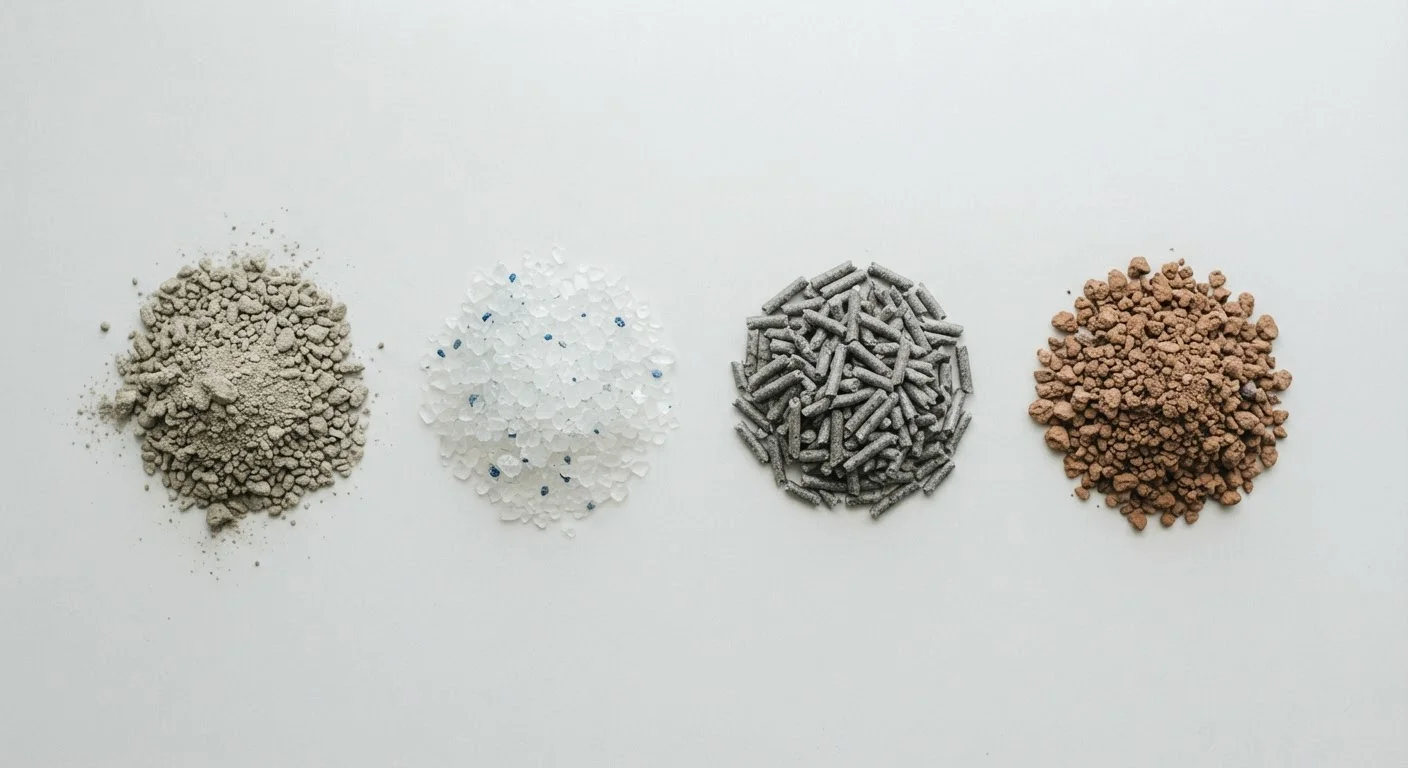
Walk the pet aisle of any store and you'll face dozens of litter bags with overlapping claims. Beneath the marketing, there are really just four core material types: clumping clay, crystal (silica gel), paper, and traditional non-clumping clay. Each handles moisture and odor through a different mechanism, and each suits a different household situation. Knowing how they work — not just what the bag says — is the fastest way to narrow your choice.
Your cat's preferences also matter. Cats have strong texture and scent sensitivities, and switching litters abruptly can lead to litter box avoidance. If you're evaluating options, see our guide on litter box habits and retraining to understand what normal use looks like before you experiment.
| Litter types covered | 4 (Clumping Clay, Crystal, Paper, Non-Clumping Clay) |
| Lowest dust production | Paper (recycled) |
| Longest time between full box changes | Crystal (silica gel) |
| Veterinary preference post-surgery | Paper litter (General veterinary guidance; confirm with your own vet) |
| Biodegradable options | Paper; some plant-based types |
| Lowest typical unit cost | Traditional non-clumping clay |
The Four Main Litter Types Explained
Clumping Clay
Made primarily from sodium bentonite, clumping clay absorbs liquid waste and binds it into firm, scoopable clumps. This makes daily spot-cleaning straightforward — you remove only the soiled material rather than replacing the entire box. The remaining clean litter stays in place. Odor control is generally strong because you're removing waste rather than just masking it. The tradeoff: clumping clay is heavier than other types, produces more dust during pouring, and is not biodegradable.
Crystal (Silica Gel)
Silica gel litter is made from tiny porous beads that absorb moisture rapidly and trap odor-causing bacteria inside the bead structure. It does not clump — liquid is absorbed and then evaporates, while solid waste is scooped. A single tray of crystal litter typically lasts longer between full changes than clay, and it produces very little dust. However, some cats dislike the texture underfoot, and the beads can feel sharp to sensitive paws. It is also typically higher in cost per bag.
Paper
Recycled paper litter is made from compressed newspaper or cardboard and is one of the softest options available. It produces virtually no dust and is the most commonly recommended type for cats recovering from surgery or with paw injuries, because it does not stick to wounds or sutures. Paper litter is biodegradable and often unscented. Its limitation is odor control: it absorbs moisture but does not trap ammonia odors as effectively as clay or crystal, so boxes need more frequent attention.
Traditional (Non-Clumping) Clay
Standard clay litter — usually made from fuller's earth or diatomite — absorbs liquid but does not form clumps. Solid waste is scooped, but the box must be fully emptied and cleaned more regularly since absorbed urine stays in the litter rather than being removed. It is typically the most affordable option and widely available. Odor control is weaker than clumping varieties unless baking soda or activated charcoal is added. See our deeper look at clumping vs. non-clumping litter for a full comparison of daily cleanup routines.
Sodium Bentonite
A naturally occurring clay mineral used in clumping litters. When it contacts liquid, it swells and binds into a firm mass that can be scooped cleanly from the box.
Silica Gel
A porous form of silicon dioxide used in crystal cat litter. Its microscopic pores absorb and trap moisture and odor-causing bacteria, then allow liquid to slowly evaporate.
Non-Clumping Litter
Any litter material that absorbs moisture without binding into removable clumps. The box must be fully replaced more frequently because urine stays dispersed throughout the litter.
Fuller's Earth
A natural clay material commonly used in traditional non-clumping litters. It has good absorption properties but does not form the firm clumps associated with sodium bentonite.
Dust Level
The amount of airborne fine particles a litter produces when poured or disturbed. High-dust litters can irritate respiratory tracts in both cats and humans, particularly in confined spaces.
Matching Litter Type to Your Situation
No single litter type is universally ideal. The right choice depends on your cat's age and health, your household's dust sensitivity, and how often you're realistically able to scoop.
- Post-surgery or senior cats with sensitive paws: Paper litter's softness and dust-free formula make it the standard veterinary recommendation.
- Multi-cat households: Clumping clay's efficient spot-removal keeps odor manageable when multiple cats share a box.
- Low-maintenance preference: Crystal litter requires less frequent full changes, though daily stirring and solid-waste removal is still needed.
- Budget-conscious households: Traditional clay has the lowest upfront cost, though more frequent full changes may offset savings.
- Environmentally conscious owners: Paper and some plant-based litters are biodegradable; clay and crystal are not.
Whatever type you choose, litter box placement and the number of boxes in the home are just as important as the litter itself. Our guide on setting up a safe indoor space for cats covers box placement as part of a broader home setup. And remember: changes in how your cat uses the box — frequency, output, or odor — can signal health issues. Our article on what the litter box reveals about your cat's health explains what to watch for.