

Key Takeaways
The Energy You're Paying For But Not Using
Most homeowners focus on the obvious: keeping the thermostat reasonable, turning off lights when leaving a room, running the dishwasher at night. Those habits matter. But for many households, a significant share of the monthly utility bill comes from sources that never make it onto anyone's mental checklist.
These hidden energy drains aren't exotic or unusual — they're baked into everyday home systems and product behaviors that most people never think to question. Identifying them is easier than you might expect, especially once you know what to look for. If you want to go deeper on what your bill is actually telling you, Reading Your Utility Bill breaks down the specific numbers that signal waste. The list below covers the places energy tends to quietly disappear — room by room, system by system.
Phantom Load from Electronics on Standby
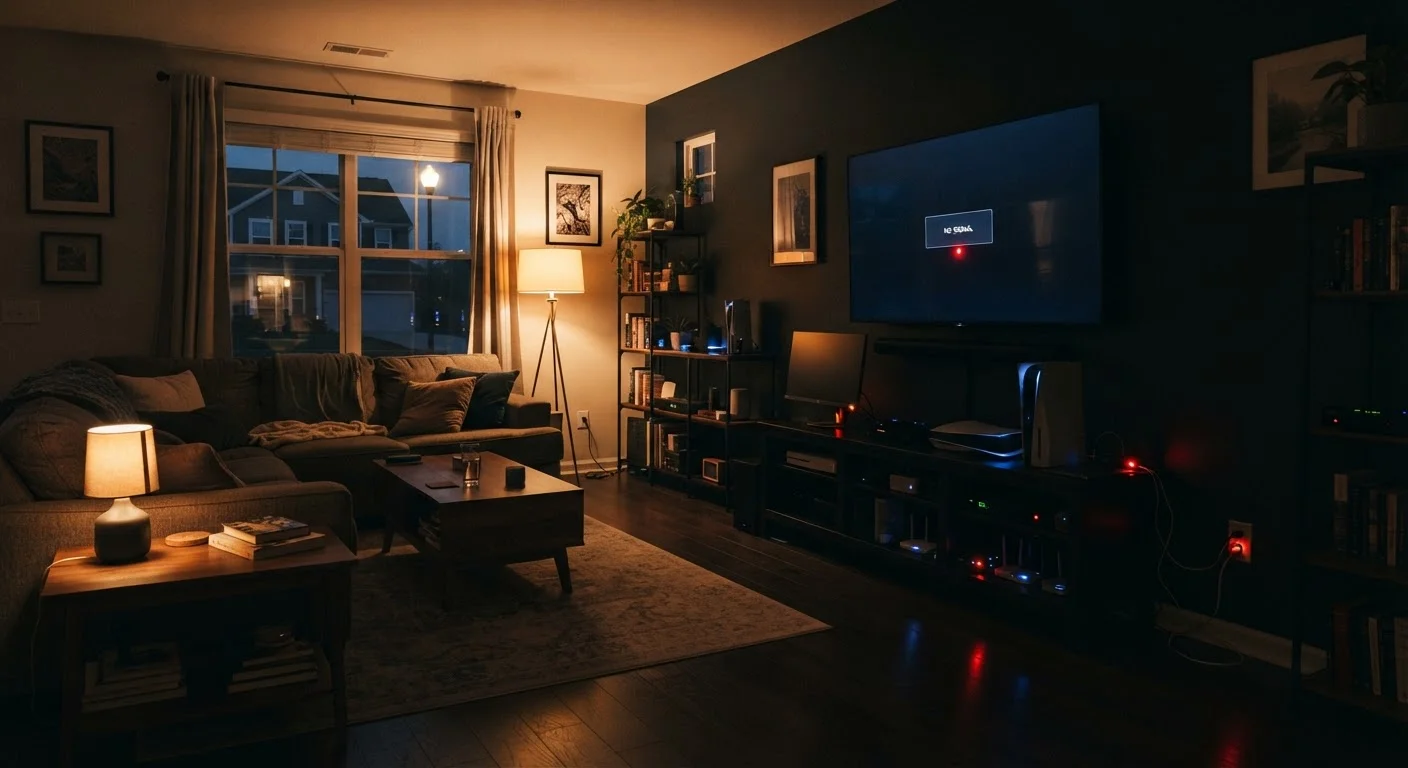
Most modern electronics — televisions, gaming consoles, cable boxes, phone chargers, and even microwave ovens — draw power continuously, even when you're not using them. This is called phantom load (also known as standby power or vampire draw). According to the U.S. Department of Energy, standby power can account for roughly 5–10% of a home's annual electricity use.
The fix is straightforward: plug related devices into power strips and switch the strip off when equipment isn't in use. Smart power strips can automate this by cutting power to peripheral devices when a primary device (like a TV) goes off. These are worth exploring if you want passive savings without changing your daily routine — check the Smart Devices hub for context on which types of devices tend to offer the most practical control.
Standby power can quietly consume 5–10% of your home's total annual electricity.
A Water Heater Set Too High — or Simply Too Old
Water heating typically represents around 14–18% of a home's energy use, making it one of the largest single consumers in most households. Two specific problems tend to compound this: water heaters set above the recommended 120°F (many arrive from the factory at 140°F), and units that are 10–15 years old and no longer operating efficiently.
Lowering your water heater's thermostat to 120°F is a quick, no-cost adjustment that reduces both energy consumption and the risk of scalding. For older units, sediment buildup in the tank forces the heater to work harder to reach temperature. An annual flush of the tank can extend the unit's life and maintain efficiency — though if your unit is significantly aged, a qualified plumber can help you assess whether replacement makes more financial sense long-term.
Lowering your water heater to 120°F costs nothing and reduces both energy use and scalding risk.
Leaky Ductwork Sending Conditioned Air Nowhere Useful
In homes with forced-air heating and cooling systems, the ductwork is supposed to deliver conditioned air precisely where it's needed. In practice, the U.S. Environmental Protection Agency estimates that the average home loses about 20–30% of the air moving through its duct system due to leaks, holes, and poor connections — often in unconditioned spaces like attics, crawl spaces, and garages.
You don't need expensive equipment to find obvious leaks. On a windy or very hot or cold day, hold your hand near duct joints and connections in accessible areas. Noticeable temperature differences, whistling sounds, or visible gaps are all signs worth investigating. Sealing accessible leaks with UL-listed metal tape (not standard duct tape, which degrades quickly) is a DIY-appropriate repair, but extensive or complex ductwork issues should be evaluated by a licensed HVAC technician.
Leaky ducts can silently waste up to 30% of the air your HVAC system works hard to condition.
Refrigerators and Freezers Working Harder Than They Should
Your refrigerator runs 24 hours a day, making its efficiency especially consequential. Several common situations cause it to consume far more energy than necessary: condenser coils clogged with dust (typically located at the back or bottom of the unit), door seals that no longer create an airtight closure, and temperature settings that are colder than food safety requires.
The FDA recommends a refrigerator temperature between 35°F and 38°F, and a freezer at 0°F. Anything significantly colder than these ranges wastes energy without meaningfully improving food safety. Cleaning the coils once or twice a year and testing door gaskets by closing a dollar bill in the door — if it slides out without resistance, the seal is failing — are simple maintenance steps any homeowner can perform.
Dusty coils and failing door seals can make your refrigerator work significantly harder than it should.
Air Leaks Around Windows, Doors, and Outlets
Heating and cooling a home is expensive. When conditioned air escapes through gaps around windows, under exterior doors, or even through electrical outlets on exterior walls, you're paying to condition air that immediately leaves your living space. This is especially impactful during winter — a topic explored in more depth in our article on why heating bills spike every winter.
A simple candle or incense stick test can reveal drafts around window frames and door edges — watch for flame or smoke movement on a windy day. Weatherstripping, door sweeps, and foam outlet gaskets behind switch plates on exterior walls are affordable fixes homeowners can typically handle themselves. For larger air sealing projects or whole-home assessments, a certified energy auditor can identify the highest-priority areas efficiently.
Air leaks around doors, windows, and outlets quietly undermine every dollar spent on heating and cooling.
Lighting That Hasn't Kept Pace with Technology
Incandescent bulbs convert roughly 90% of the energy they consume into heat rather than light — a dramatic inefficiency by modern standards. Even compact fluorescent bulbs (CFLs), which were once promoted as an upgrade, are now considered outdated compared to LED alternatives. LED bulbs use roughly 75% less energy than incandescents and last significantly longer, according to the U.S. Department of Energy.
If any fixtures in your home still use incandescent or halogen bulbs, replacing them with LED equivalents is one of the highest-return efficiency upgrades available — typically with a payback period of under two years. Focus first on fixtures used most frequently: kitchen overhead lights, living room lamps, and outdoor security or porch lighting that may run for hours each evening.
LED bulbs use roughly 75% less energy than incandescents, with a payback period often under two years.
Turning Awareness Into Action
None of these drains require a total home overhaul to address. Most start with a simple audit — walking through your home and noting which appliances are always plugged in, when your water heater was last serviced, and whether your ductwork has ever been inspected. Small, targeted changes often produce the most noticeable results on your bill.
Start With a Simple Walk-Through
Before spending money on upgrades, spend 20 minutes walking your home with a notepad. Note every device that stays plugged in around the clock, check for drafts near exterior walls, and locate your water heater's temperature dial. This informal audit often reveals the two or three changes most likely to move the needle on your bill. Pair this with a review of your utility billing history — usage spikes across months can point directly to the culprit.
For a broader view of what drives energy costs at home and which adjustments tend to have the most measurable impact, see our guide on small adjustments that reduce monthly utility bills. And if you want to understand the full picture — from your roof to your basement — the whole-home energy efficiency guide is a thorough starting point for American homeowners.