

Key Takeaways
Our Verdict
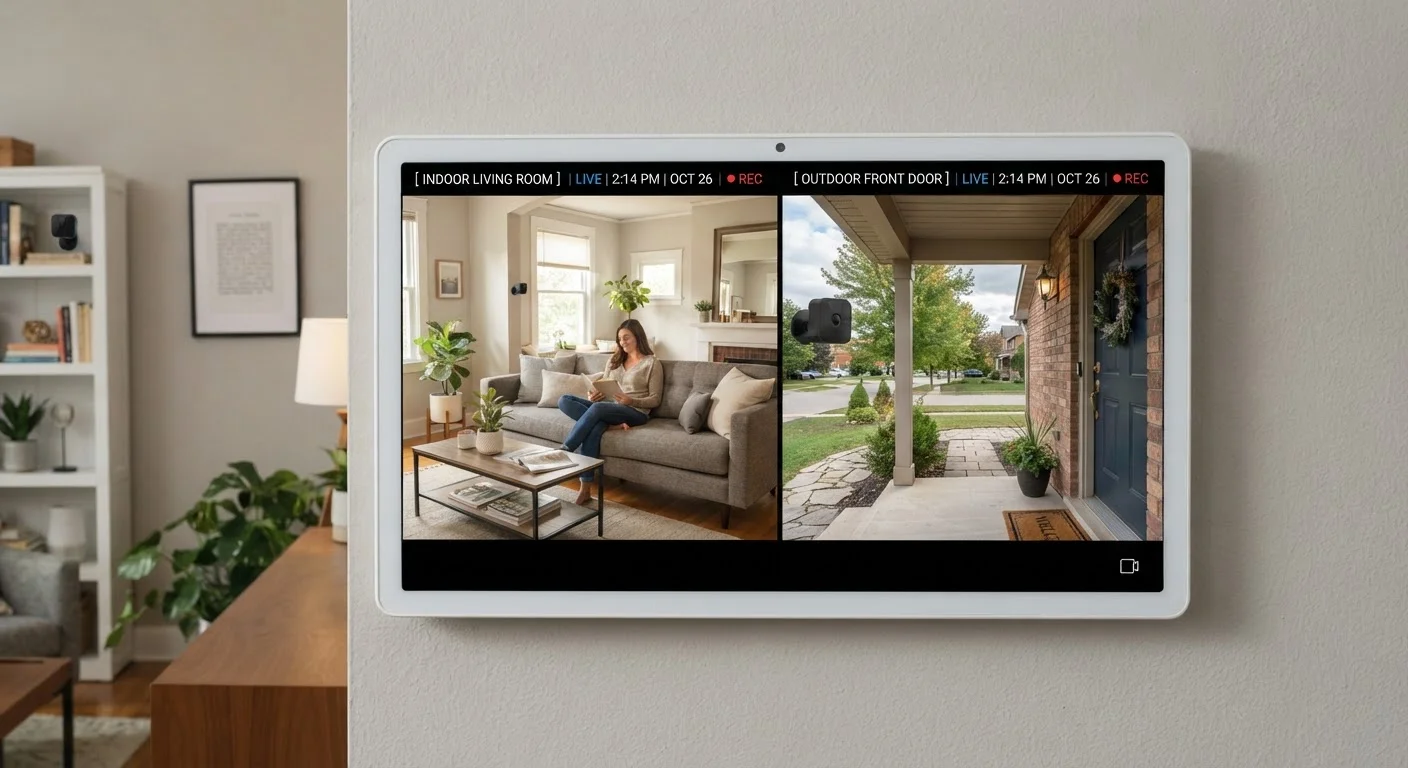
Indoor and outdoor security cameras are built around fundamentally different operating conditions, and using one where the other belongs creates gaps in coverage or unnecessary cost. Outdoor cameras prioritize weather resistance, wide-angle coverage, and long-range night vision, while indoor cameras focus on discreet form factors, privacy controls, and room-scale detail. A well-planned home security setup uses both types deliberately, matched to each zone's specific demands.
| Best for | Recommended |
|---|---|
| Monitoring entry points, driveways, and perimeter areas | Outdoor cameras with IP65+ rating and wide-angle lens |
| Watching interior spaces like entryways, living rooms, or nurseries | Indoor cameras with privacy shutter or on/off scheduling |
| Homeowners wanting one camera type to cover both roles | Weatherproof cameras with flexible mounting — verify indoor audio/privacy rules first |
| Renters or those needing low-impact installation | Wireless indoor cameras with minimal mounting requirements |
Why the Indoor vs. Outdoor Distinction Actually Matters
Many homeowners assume any camera will work anywhere in or around the home. In practice, indoor and outdoor cameras are engineered around very different environmental demands — and placing the wrong type in the wrong zone can mean failed hardware, blind spots, or even legal trouble.
Outdoor cameras must withstand rain, humidity, temperature swings, and direct sunlight. Indoor cameras are optimized for controlled environments with room-scale distances, lower light variation, and different privacy expectations. Understanding these differences is the foundation of a camera setup that actually holds up over time. For a broader look at how security systems fit together, see our complete guide to home security systems.
Outdoor Cameras: Built for the Elements
The most critical spec for any outdoor camera is its IP (Ingress Protection) rating — a two-digit code that indicates resistance to dust and water. For outdoor use, look for a minimum of IP65, which means the camera is dust-tight and protected against water jets. Cameras rated IP67 or higher can handle brief submersion, which matters in regions with heavy rain or snow.
Beyond weatherproofing, outdoor cameras typically feature:
- Wide-angle lenses (100°–180° field of view) to cover driveways, yards, and building perimeters
- Long-range night vision — often 30 to 100 feet of infrared or color night vision — needed to capture activity at distance in dark exterior spaces
- Vandal-resistant housing on higher-end models, with reinforced casings that resist tampering
- Motion zones that can be configured to ignore trees or passing cars while flagging human movement
Placement matters as much as the camera itself. Common placement gaps include side gates, garage side doors, and blind corners that a front-facing camera won't capture.
| Feature | Outdoor Cameras | Indoor Cameras | |
|---|---|---|---|
| Weatherproofing | Required — IP65 or higher | Not required | |
| Field of View | 100°–180° for wide coverage | 80°–110° for room scale | |
| Night Vision Range | 30–100 ft infrared or color | 15–30 ft typical | |
| Form Factor | Bulkier, mount-ready housing | Compact, tabletop or discreet | |
| Privacy Controls | Motion zones, angle adjustment | Shutters, scheduling, local storage | |
| Legal Considerations | State laws on audio, sightlines | Household consent, no private spaces |
Indoor Cameras: Optimized for Interior Conditions
Indoor cameras operate in a more forgiving physical environment but face a different set of practical and legal considerations. Because rooms are smaller and more contained, indoor cameras generally use narrower fields of view (80°–110°) and shorter infrared night vision ranges — typically 15 to 30 feet — which is sufficient for most interior spaces.
Form factor matters indoors. Many indoor cameras are compact, tabletop-style units designed to blend into a room without drawing attention. Key features to evaluate include:
- Two-way audio — useful for speaking to household members or deterring unexpected visitors inside
- Privacy shutters or scheduling — physical lens covers or app-controlled schedules let you disable recording when the home is occupied, which is important for household privacy and trust
- Local storage options — some indoor cameras support microSD cards so footage doesn't have to go to a cloud subscription
If you're integrating indoor cameras into a broader smart home setup, compatibility with your existing platform (voice assistants, automation hubs) is worth checking before purchase. Connecting security cameras to smart home systems introduces its own set of compatibility and reliability questions.
Privacy and Legal Considerations by Zone
Outdoor cameras that capture footage beyond your property line — including sidewalks, neighboring yards, or shared driveways — can raise legal issues depending on your state. Most states permit recording of public-facing areas from your own property, but audio recording laws vary significantly. Some states require all parties in a conversation to consent to being recorded. If your outdoor camera has a microphone pointed toward a shared space, check your state's wiretapping statute before enabling audio.
Indoor cameras carry their own set of considerations. Recording guests, housekeepers, or family members without disclosure can damage trust and, in some jurisdictions, create legal exposure. As a general principle, avoid placing cameras in bathrooms, bedrooms, or any space where people have a reasonable expectation of complete privacy.
Audio Recording Laws Vary by State
Several US states — including California, Florida, and Illinois — are 'all-party consent' states, meaning everyone being recorded must agree to audio capture. Outdoor cameras with microphones pointed at shared spaces or neighbors can create legal liability. Before enabling audio on any exterior camera, verify your state's recording consent requirements with a legal reference or local authority.
The question of wired versus wireless also interacts with placement decisions — outdoor runs are longer and more exposed, while indoor setups may benefit from flexibility. Wired vs. wireless trade-offs covers how each approach affects installation complexity and long-term reliability.
Choosing the Right Camera for Each Zone
A practical way to approach camera selection is to map your home zone by zone before shopping. Front door, back door, garage, driveway, and side gates are outdoor zones — each needs a weatherproof unit with appropriate night vision range. Living room, entryway, nursery, and home office are interior zones that benefit from smaller, privacy-conscious indoor models.
Some cameras are marketed as suitable for both environments. A weatherproof camera can technically be placed indoors, but consider whether its wider lens, brighter IR illumination, and bulkier housing make sense in a living space. Conversely, an indoor camera placed in a sheltered porch may survive mild weather but degrade faster without proper IP rating protection.
For a systematic view of where cameras tend to be underdeployed, reviewing common placement gaps can help you spot vulnerabilities in your current or planned layout before they become a problem.